
Which Extruded Aluminum Shape is Right for Your Project? (Standard vs. Custom)
Date: 2026-07-24Views: 538
Aluminum extrusion is one of the most versatile manufacturing processes available today, offering engineers and designers unmatched freedom. Whether you are sourcing standard structural components for an industrial frame or designing a highly complex custom profile for architectural doors, understanding the available extruded aluminum shapes and material properties is the crucial first step to optimizing your project's performance and budget.
In this comprehensive guide, we will break down the core categories of aluminum extrusions, advanced functional geometries, surface treatments, and alloy selection to help you find the exact solution you need.
1. The 3 Categories of Extrusion Profiles
Before diving into specific shapes, it is important to understand how manufacturers classify extrusion dies. All aluminum profiles fall into one of 3 fundamental categories based on their cross-sectional design:
- Solid Shapes: A solid extruded shape is any profile that does not enclose a void. These are the most common and generally the most cost-effective to extrude. Examples include flat bars, solid square bars, and simple angles.
- Hollow Shapes: A hollow shape completely encloses at least one void within its cross-section. Regardless of how complex the outer contour is, if there is a closed inner chamber (like in round tubing, square tubing, or multi-cavity profiles), it is classified as a hollow die.
- Semi-Hollow Shapes: A semi-hollow shape partially encloses a void. A typical example is a C-channel with a very narrow opening but a large internal cavity. These profiles require specialized tooling design due to the stress placed on the die tongue during the extrusion process.
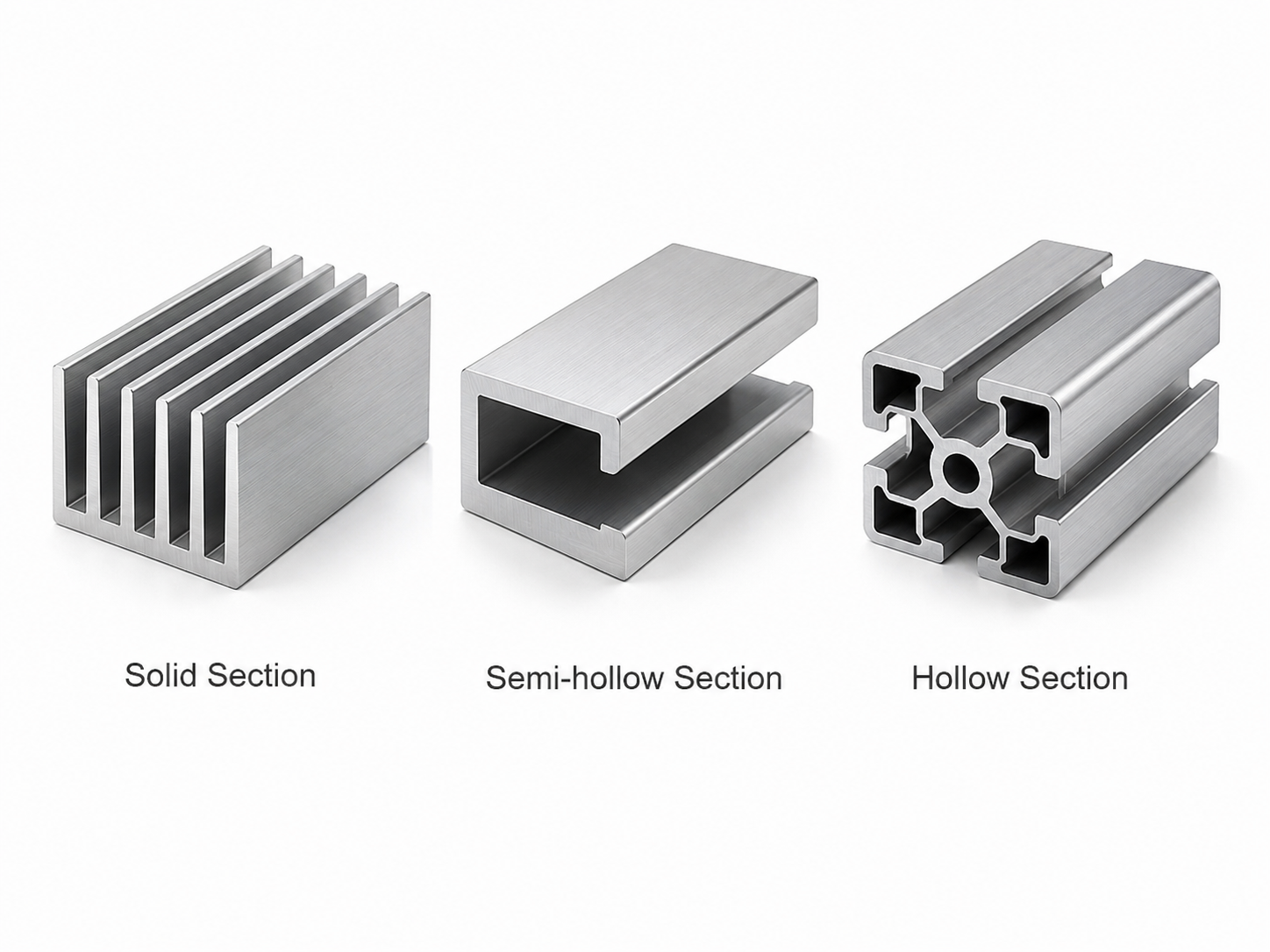
Fundamental categories of aluminum extrusion profiles based on cross-sectional design. 3D render for illustration only. All profiles can be customized according to technical drawings.
2. What Standard and Structural Shapes Can You Choose From?
Standard extruded aluminum shapes form the backbone of countless mechanical and structural applications. Since these are standard geometries, tooling is often already available, making them highly economical.
Bars & Rods
- Aluminum Flat Bar: Widely used for structural support and fabrication. We Shenghai Global also offer aluminum flat bars with rounded edges for safety and aesthetic requirements.
- Round & Square Bars: Solid profiles used in heavy-duty machining and structural framing.
Pipe & Tubing
- Round Tubing: Standard cylindrical tubes used in fluid transport, handrails, and framing.
- Square & Rectangular Tubing: Preferred for building frames, structural supports, and enclosures due to their flat surfaces which allow for easy joining and fastening.
- Oval Extrusion: Often utilized in aesthetic applications and ergonomic handles.
Structural Channels & Angles
- Aluminum Angles: Available in both Equal Angles (even sides) and Unequal Angles (uneven sides). They are essential for brackets, framing, and edge protection.
- U Channel Extrusions: A versatile shape used for edge trim, tracks, and framing.
- I-Beams & H-Sections: Heavy-duty structural profiles designed to bear significant loads in construction and mechanical frameworks.
Modular Framing Profiles
- T-Slot Aluminum Extrusions: The universal standard for modular industrial framing. Featuring continuous T-shaped grooves on one or multiple sides, these profiles (such as the 2020, 3030, and 4040 series) allow for rapid assembly of workstations, CNC machines, and automation enclosures without any welding.
- V-Slot Profiles: Similar to T-slots but with beveled inner edges, specifically designed to act as linear guide rails for wheels in 3D printers and camera sliders.
Letter Profiles (Specialty Cross-Sections)
- Tees (T-Bar / T-track): Used for intersecting surfaces and sliding track systems.
- Zees (Z-Bar / Z Extrusion): Commonly used as panel hangers, clips, and framing transitions.
- J-Caps & F-Shaped Extrusions: Typically applied in edge banding, panel finishing, and signage.
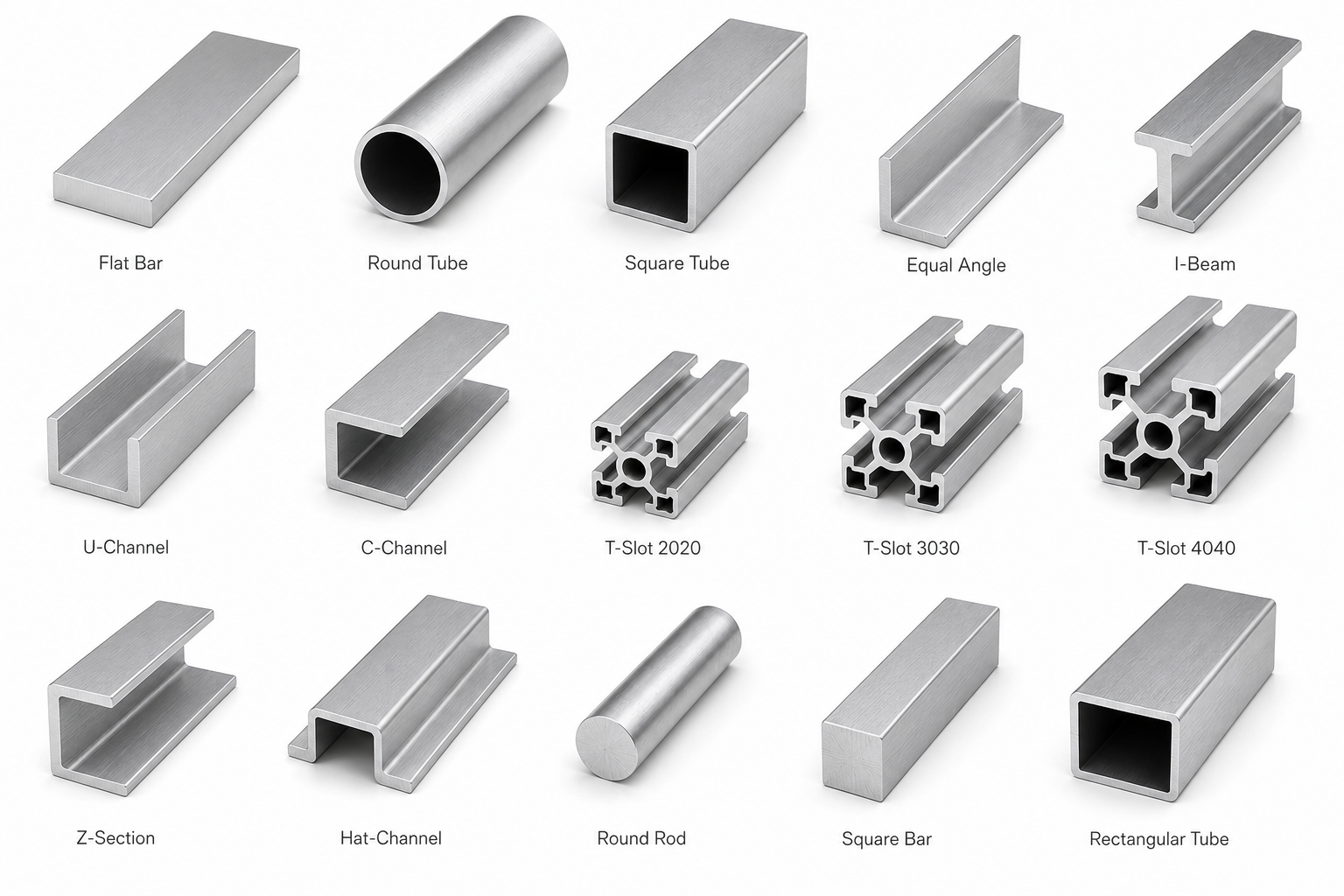
Overview of standard, structural, and modular aluminum extrusion profiles for industrial applications. 3D render for illustration only. All profiles can be customized according to technical drawings.
3. Advanced Functional Profile Designs
Beyond basic geometries, the true power of aluminum extrusion lies in its ability to integrate multiple functions into a single cross-section, eliminating the need for secondary welding or complex assembly:
- Hinged Profiles: Designed with interlocking mating features (ball and socket), allowing two extruded parts to rotate seamlessly without traditional mechanical hinges.
- Snap-Fit & Interlocking Profiles: Utilizing the natural elasticity of aluminum, these profiles feature cantilevered hooks for screwless, snap-together assembly.
- Screw Boss Profiles: Extruded with continuous internal circular channels, allowing screws to be driven directly into the profile end—ideal for electronic enclosures and panel framing.
- Multi-Port Extrusions (Micro-Channel): Featuring internal micro-passages, these are critical for heat exchangers and battery cooling plates in the EV (Electric Vehicle) industry.
- Heatsink Extrusions (Finned Profiles): Engineered with complex, densely packed fins to maximize surface area. These solid or semi-hollow profiles are essential for thermal management, actively dissipating heat away from LED light engines, computer processors, and automotive electronics.
- LED Aluminum Channels: Slim, highly customized U-channel designs engineered specifically to house LED strip lights. These profiles integrate precise micro-grooves to hold frosted polycarbonate diffusers and heat-dissipating backing for architectural lighting.
4. Industry-Specific Applications
Different industries have evolved specific shapes to meet their unique demands. We provide tailored extrusion solutions for:
- Architecture & Custom Door Systems: We specialize in Thermal Break Profiles, which utilize a polyamide (PA66) structural strut mechanically rolled between two aluminum extrusions to completely insulate heat transfer. We also manufacture complex multi-track profiles for sliding doors with integrated weatherstripping grooves and drainage systems.
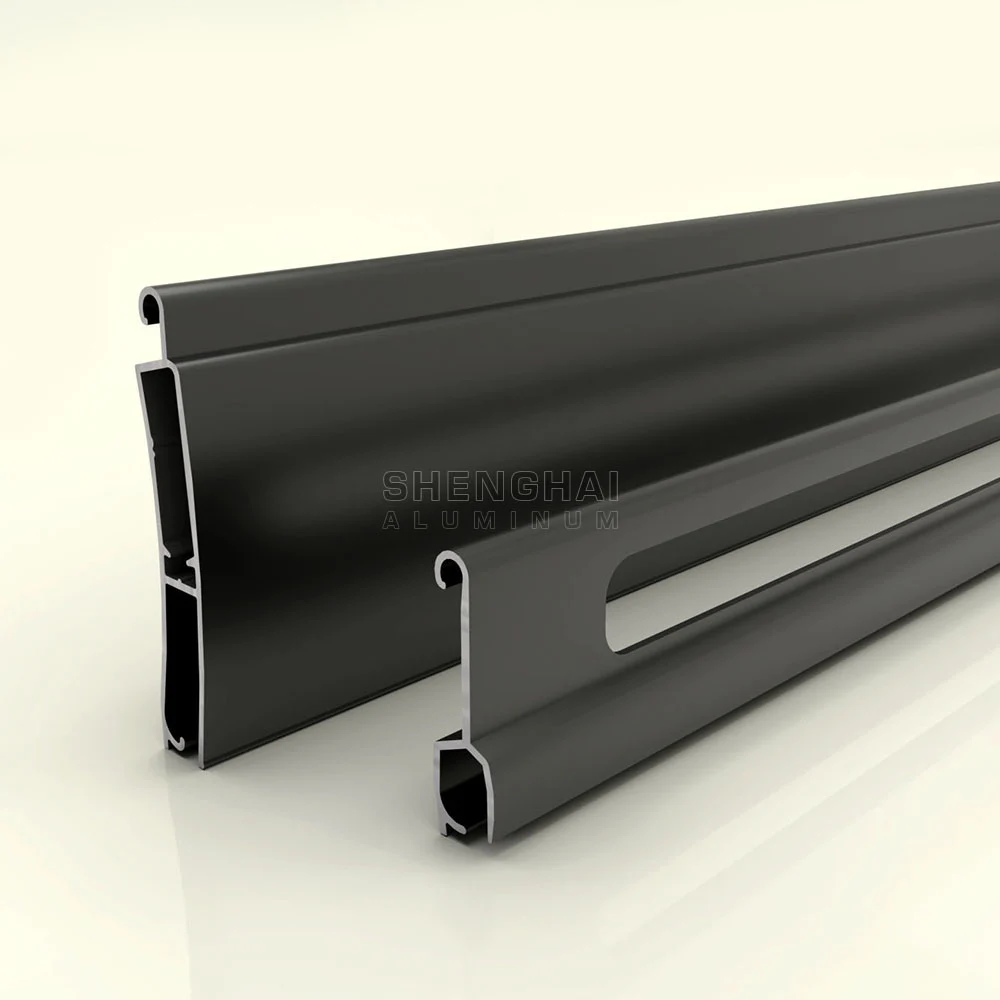
- Architectural Louvers & Sunshades: Widely used alongside custom aluminum doors and exterior facades, these aerodynamic or flat-angled blade profiles are extruded to provide building ventilation, privacy, and solar shading while withstanding high wind loads.
- Solar & Renewable Energy: Lightweight, structural C-channel and Z-profiles with specialized mounting grooves for solar panel frames.
- Transportation & Aerospace: Ultra-wide, multi-cavity hollow profiles used for high-speed rail walls and flooring, offering maximum rigidity with minimal weight.
- Automotive Crash Extrusions: High-strength, multi-cavity hollow profiles engineered specifically for vehicle bumpers and structural chassis components. These shapes are designed to deform predictably and absorb kinetic energy during an impact.
- Cleanroom & Medical Profiles: Smooth, rounded cove profiles engineered specifically for pharmaceutical labs, hospitals, and semiconductor cleanrooms. These extrusions eliminate 90-degree internal corners, completely preventing dust and bacteria accumulation.
-
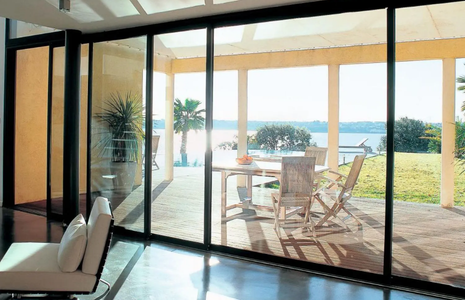
- Custom thermal break aluminum sliding door profiles applied in modern architecture.
-
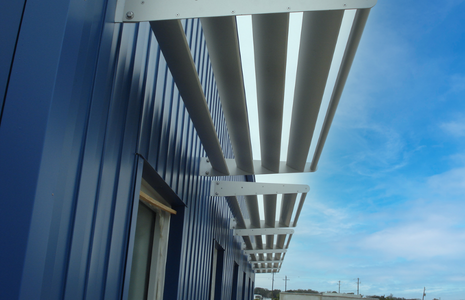
- High-performance aerodynamic aluminum louver profiles for building sunshading and ventilation.
-
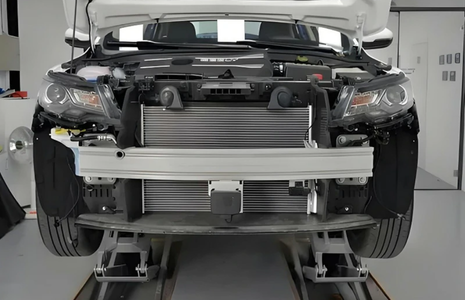
- Engineered multi-cavity hollow aluminum crash profiles for vehicle bumpers and chassis safety.
-
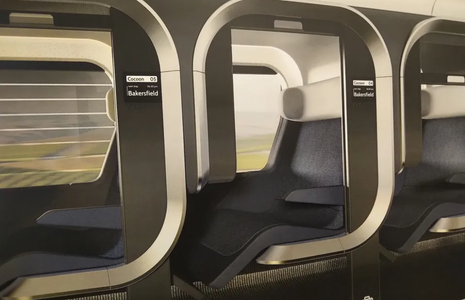
- Multi-cavity hollow aluminum profile applications in high-speed rail interior and structural framing.
-
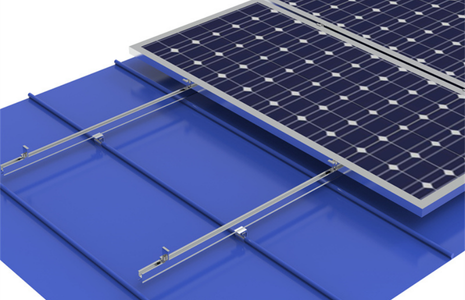
- Structural aluminum C-channel and mounting profiles for solar PV energy systems.