When global procurement managers and structural engineers source custom aluminum extrusions for high-end doors, thermal break windows, or industrial automation frames, tensile strength is often the first specification checked. However, raw strength only tells you if a component will break. What dictates whether a structural profile will bend, wobble, or lose its precision alignment under heavy wind loads or dynamic stress?
The answer lies in the Elastic Modulus (Young's Modulus).
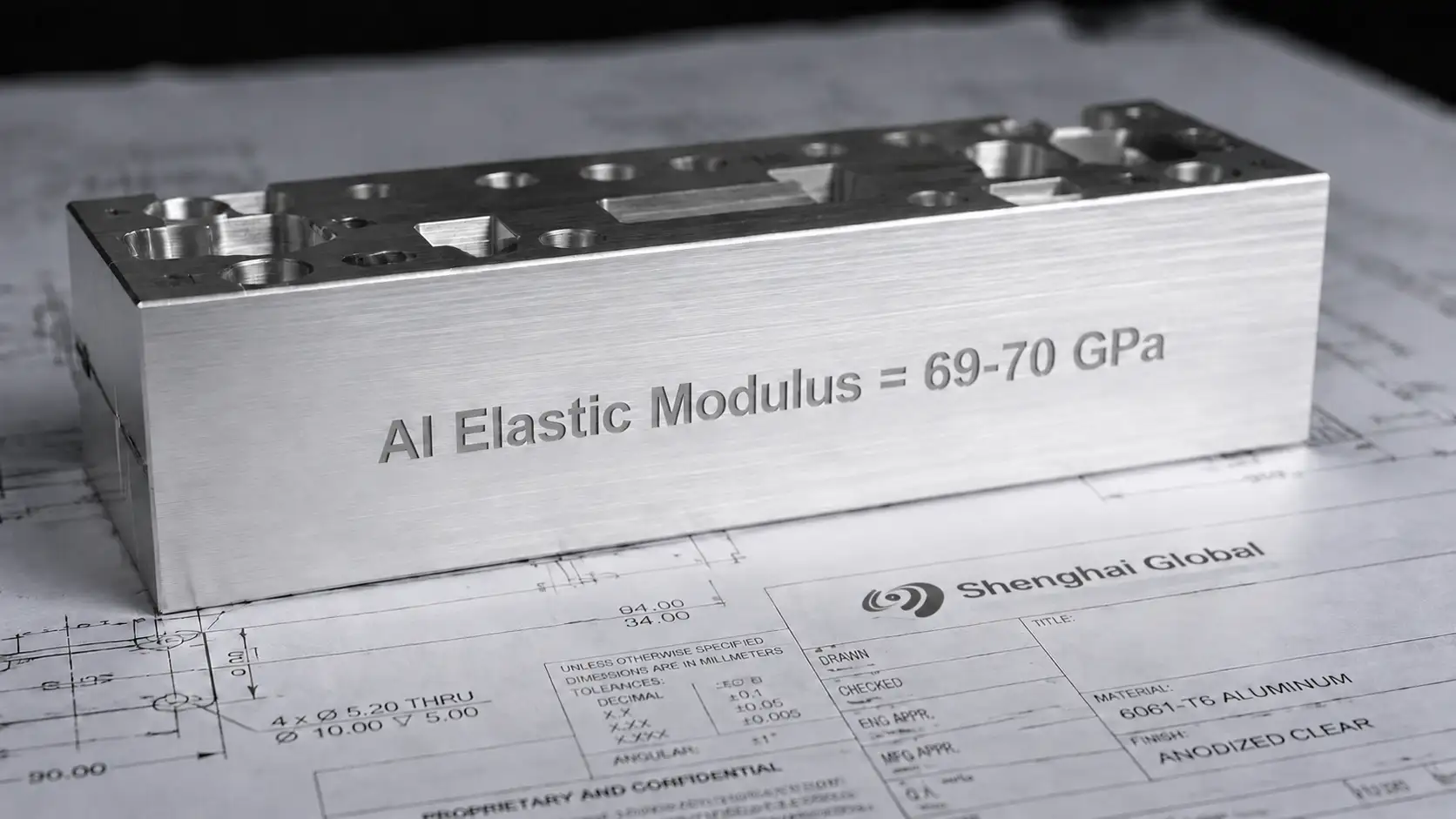
At Shenghai Global, we understand that mastering material stiffness is the difference between a flawless architectural facade and a costly structural failure in the field. While it is an engineering fact that almost all standard aluminum alloys share a virtually identical elastic modulus of 69–70 GPa, how you design, extrude, and apply these profiles changes everything.
Whether you are designing slim-line sliding doors or heavy-duty industrial framing, stiffness cannot be ignored. In this comprehensive technical guide, we will deep dive into the fundamentals of aluminum's elastic modulus, compare its rigidity against other industrial materials, and reveal the critical factors that truly determine the real-world stiffness of your custom extrusion projects.
1.The Elastic Modulus of Aluminum: Understanding the Linear Region of the Stress-Strain Curve
When analyzing the stress-strain curve of aluminum, one of the most important parameters in the initial deformation stage is the elastic modulus. It describes the material’s ability to resist elastic deformation when an external force is applied.
In engineering applications, elastic deformation means the material temporarily changes shape under load but returns to its original condition once the load is removed. For aluminum extrusion profiles, understanding elastic modulus helps engineers predict bending behaviour, structural stability, and long-term performance.
1. Fundamentals of the Elastic Modulus
The elastic modulus is defined as the slope of a material’s stress-strain curve within the linear elastic region. A material with a steeper stress-strain slope has a higher elastic modulus, meaning it is more resistant to deformation.
For aluminum alloys, the relationship between stress and strain in the elastic region follows Hooke’s Law:
σ = E × ε
Where:
- σ = Applied stress (Pa)
- E = Elastic modulus or Young’s modulus (Pa)
- ε = Elastic strain (dimensionless)
Since strain is a dimensionless ratio, the unit of elastic modulus is the same as stress. Most commercial aluminum alloys have an elastic modulus of approximately 69–70 GPa.
Although aluminum has a lower elastic modulus than steel, its excellent strength-to-weight ratio, corrosion resistance, and extrusion flexibility make it highly suitable for applications such as architectural profiles, industrial frames, automotive components, and lightweight structural systems.
2. Different Types of Elastic Moduli in Aluminum
Depending on how stress and strain are applied, elastic behaviour can be described using different types of elastic modulus. These parameters help engineers understand how aluminum responds under different loading conditions.
Young’s Modulus (E)
Young’s modulus is the most commonly used elastic modulus in engineering design. It describes aluminum’s resistance to tensile and compressive deformation along a specific direction.
For aluminum profiles, Young’s modulus is the key value used when calculating bending deformation, deflection, and structural stability.
Shear Modulus (G or μ)
The shear modulus, also known as the modulus of rigidity, describes aluminum’s resistance to shear deformation when opposite forces act parallel to each other.
It is important in applications involving torsion, mechanical joints, and structural connections.
Bulk Modulus (K)
The bulk modulus describes aluminum’s resistance to uniform compression from all directions. It represents the relationship between volumetric stress and volumetric strain.
This property is mainly used in advanced material analysis rather than everyday aluminum profile design.
Flexural Behaviour
In practical engineering, aluminum structures are often evaluated by their bending stiffness. Although flexural performance is not a basic elastic modulus, it depends on the material’s Young’s modulus combined with profile geometry, wall thickness, and moment of inertia.
Engineering Note:
For homogeneous and isotropic materials, elastic properties can be described using relationships between different elastic constants. However, for aluminum extrusion applications, Young’s modulus is usually the most important parameter because it directly affects deflection and structural rigidity.
3. Determining Aluminum Elastic Modulus Through Material Simulation
In advanced materials research, aluminum elastic properties can be predicted through computational methods such as Density Functional Theory (DFT). These simulations analyze atomic interactions and crystal behaviour to estimate theoretical elastic constants.
During DFT analysis, researchers simulate small changes in aluminum crystal structures and calculate how atomic bonds respond to different loading conditions.
Calculating Young’s Modulus
Small uniaxial strains are applied to the aluminum crystal lattice. The resulting stress response is calculated, and Young’s modulus is obtained from the slope of the initial linear stress-strain relationship:
E = σ / ε
Calculating Shear Modulus
Shear deformation is simulated by applying controlled changes to the crystal structure. The shear modulus is calculated from the relationship between shear stress and shear strain:
G = τ / γ
Calculating Bulk Modulus
The bulk modulus is determined by changing the volume of the aluminum crystal structure and measuring the pressure response:
K = -V(dP/dV)
While DFT calculations are mainly used in academic research and alloy development, practical aluminum extrusion engineering relies more on laboratory testing, alloy selection, heat treatment control, and structural design verification.
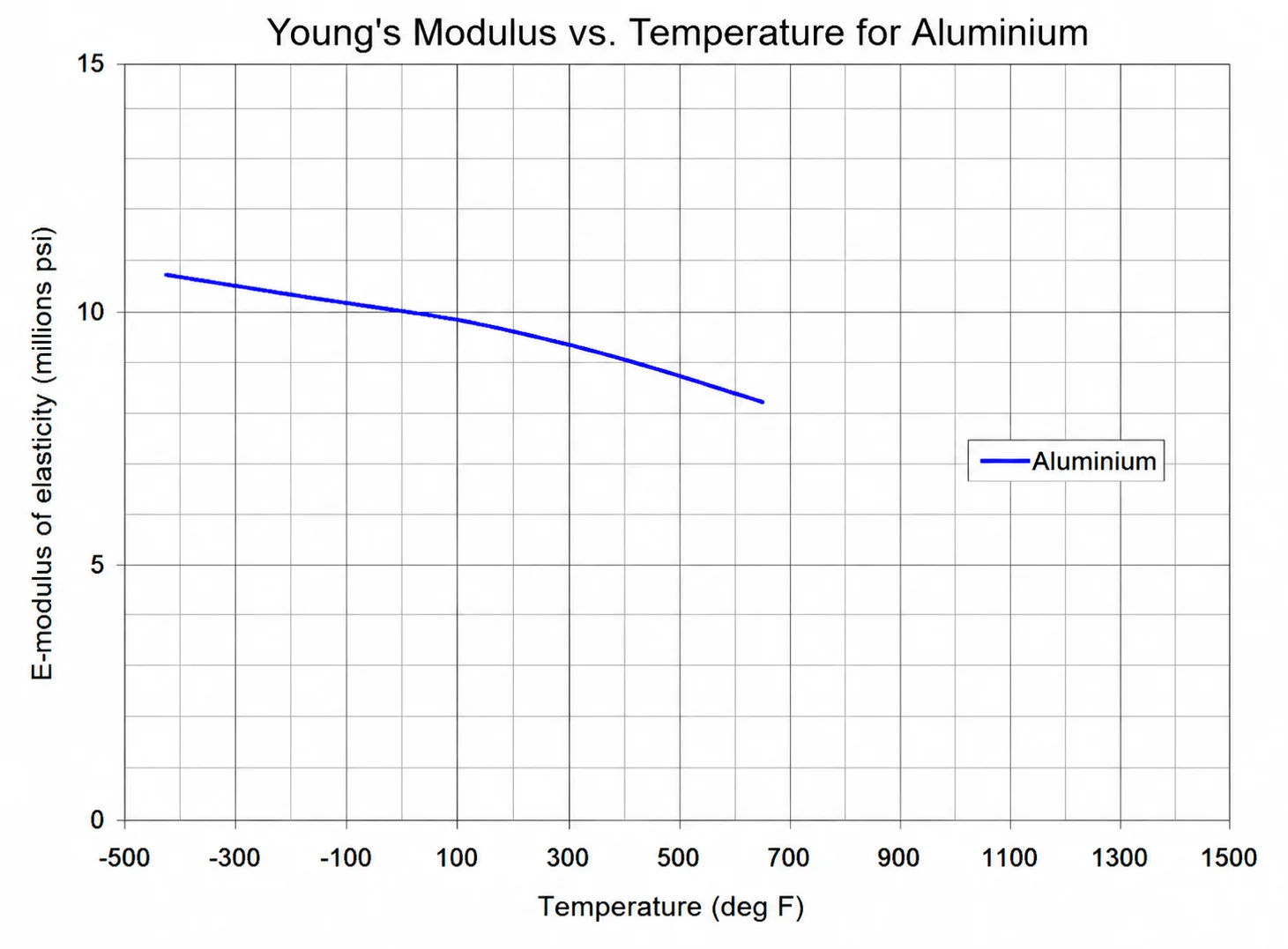
Figure 1: The effect of temperature on the elastic modulus of aluminum. The graph demonstrates that structural stiffness gradually decreases as operating temperatures rise. (Data Reference: The Engineering ToolBox)
2. Elastic Modulus vs Strength vs Hardness: What Is the Difference?
When selecting aluminum alloys for engineering applications, many buyers and designers confuse terms such as elastic modulus, strength, and hardness. Although these properties are related to material performance, they describe completely different behaviours.
For aluminum extrusion applications, understanding the difference is essential because an aluminum profile can have high strength but still experience excessive bending if its stiffness is insufficient.
Comparison of Key Mechanical Properties of Aluminum
| Property |
What It Determines |
Engineering Meaning |
| Elastic Modulus |
Resistance to elastic deformation |
Determines how much an aluminum profile bends or deflects under normal loading conditions before permanent deformation occurs. |
| Yield Strength |
Resistance to permanent deformation |
Defines the stress level where aluminum begins to deform permanently and cannot fully return to its original shape. |
| Tensile Strength |
Resistance to breaking |
Measures the maximum pulling force aluminum can withstand before fracture or failure occurs. |
| Hardness |
Surface resistance |
Indicates resistance to scratching, indentation, and surface wear caused by external contact. |
Why Elastic Modulus Is Different From Strength
A common misunderstanding is that a stronger aluminum alloy must also be stiffer. However, strength and stiffness describe different material behaviours.
Elastic modulus controls deformation before permanent damage occurs, while strength controls the maximum load a material can withstand.
For example, 6061-T6 aluminum alloy has much higher tensile strength than pure aluminum, but its elastic modulus remains close to other aluminum alloys at approximately 69 GPa.
This means improving alloy strength helps prevent permanent failure, but it does not significantly reduce elastic bending. When higher rigidity is required, engineers usually optimize:
- Profile cross-sectional design
- Wall thickness
- Internal reinforcement chambers
- Moment of inertia
Why This Difference Matters in Aluminum Profiles
In real engineering projects, aluminum profiles rarely fail because the material immediately breaks. More commonly, excessive deformation becomes the limiting factor.
For applications such as:
- Aluminum curtain wall systems
- Large sliding doors and folding doors
- Industrial automation frames
- Automotive structural components
engineers must evaluate both material properties and structural design to ensure long-term performance.
Example:
An aluminum window frame may have sufficient tensile strength to support the glass weight, but if its elastic modulus and profile geometry are insufficient, excessive deflection can cause glass stress concentration, seal failure, air leakage, and water penetration.
How Engineers Select Aluminum Materials
Choosing the right aluminum alloy is not simply about selecting the strongest material. Engineers consider a combination of mechanical properties:
- Elastic Modulus: Controls stiffness and resistance to bending
- Yield Strength: Determines resistance to permanent deformation
- Tensile Strength: Determines maximum load before fracture
- Hardness: Determines surface durability and wear resistance
For aluminum extrusion projects, the best solution is usually a balance between strength, stiffness, weight, manufacturability, and cost.
3. What is the Elastic Modulus of Pure Aluminum?
According to standard engineering material data sheets, the elastic modulus of "Pure Aluminum" is rated at 69 GPa.
This typically refers to the 1000 series (such as 1050, 1060, etc., with an aluminum purity of 99% or 99.5% and above) of commercial purity aluminum.
Summary: Pure Aluminum vs. Aluminum Alloys
- Pure Aluminum (99.5% Al): 69 GPa
(Extremely soft, excellent ductility, primarily used for electrical busbars or heat exchangers; not suitable for load-bearing structural profiles.)
- Aluminum Alloys (e.g., 6000 Series): 70 GPa
(Slight increase in stiffness, but through solid solution strengthening with magnesium and silicon elements, its resistance to deformation is drastically improved, perfectly meeting structural engineering requirements.)
4. Comparison of Elastic Modulus Across Various Aluminum Alloys
In the aluminum extrusion industry, although there are theoretically hundreds of aluminum alloy grades, the ones that are mass-produced on extrusion lines and hold extremely high commercial value are primarily the 1000 series, 3000 series, 6000 series (the absolute mainstream), and 7000 series.
The Ultimate Guide to Aluminum Extrusion Alloys
(Note: The elastic modulus across all standard aluminum extrusion alloys remains highly stable at approximately 69–72 GPa. The critical factors for material selection in extrusion are extrudability, tensile strength, and corrosion resistance.)
| Alloy Series |
Alloy Grade |
Elastic Modulus (GPa) |
Extrudability |
Key Features & B2B Applications |
1xxx Series
(Pure Aluminum) |
1050 / 1060 |
69 |
Excellent |
Features: Extremely high thermal and electrical conductivity, very soft, low tensile strength.
Applications: Industrial heat sinks, LED aluminum profile housings, conductive busbars. |
3xxx Series
(Al-Mn Alloys) |
3003 |
69 |
Very Good |
Features: Excellent corrosion resistance and formability, slightly higher strength than the 1000 series.
Applications: HVAC micro-channel heat exchanger tubes, chemical piping. |
6xxx Series
(Al-Mg-Si Alloys)
(The Extrusion Standard) |
6060 |
69 |
Excellent |
Features: The most extrudable 6000 series alloy, capable of forming ultra-thin walls and highly complex internal cavities.
Applications: High-end slim-line window and door frames, complex decorative profiles. |
| 6063 |
69 |
Excellent |
Features: The global "absolute standard" for architectural doors and windows, offers a flawless surface finish for anodizing.
Applications: Custom thermal break aluminum windows, curtain wall framing, general architectural profiles. |
| 6061 |
70 |
Good |
Features: The industry standard structural alloy, high strength, but extruding complex, thin-walled cross-sections is more difficult than 6063.
Applications: Automated assembly line frames, heavy machinery structural parts, automotive components. |
| 6005 / 6005A |
69.5 |
Good |
Features: Strength falls between 6063 and 6061, excellent weldability, and good toughness.
Applications: Rail transit (e.g., high-speed rail and subway car structures), large commercial vehicle frames. |
| 6082 |
70 |
Moderate |
Features: The highest strength alloy in the 6000 series (very common in Europe), highly corrosion-resistant, but extremely challenging to extrude.
Applications: Load-bearing bridge structures, crane trusses, heavy-duty frames requiring maximum stress resistance. |
7xxx Series
(Al-Zn-Mg Alloys) |
7020 |
71 |
Difficult |
Features: Extremely high mechanical strength, good weldability, but requires very slow extrusion speeds and causes high die wear.
Applications: Military structural components, motorcycle frames, armored vehicle parts. |
| 7075 |
71-72 |
Very Difficult |
Features: Aerospace-grade "super hard aluminum," strength comparable to some steels, but extremely costly.
Applications: Aerospace structural parts, high-end sporting goods (e.g., professional bicycle frames). |
| * Data Reference: The Engineering ToolBox |
Why Elastic Modulus Isn't the Only Metric That Matters in Extrusion
When sourcing custom aluminum profiles for architectural or industrial projects, many engineers focus heavily on the elastic modulus. However, a crucial engineering fact is that almost all aluminum extrusion alloys (from soft 1060 to aerospace-grade 7075) share a virtually identical elastic modulus of around 69 to 72 GPa.
If the stiffness (modulus) is the same, how do you choose the right alloy for your custom doors, windows, or industrial frames? The answer lies in Extrudability (the ability to form complex hollow shapes) and Yield Strength (the stress point at which the material permanently deforms).
- For Architectural Precision (Custom Doors & Windows): Alloys like 6063 and 6060 are the global undisputed champions. While their raw strength is lower than industrial grades, their exceptional extrudability allows manufacturers to create highly complex, multi-cavity thermal break profiles with ultra-thin walls. This geometric complexity provides the necessary bending stiffness for large glass panels while ensuring a flawless surface finish for anodizing or powder coating.
- For Industrial & Structural Loads: When the profile needs to withstand heavy dynamic loads—such as in automated assembly lines or transport vehicles—alloys like 6061 and 6082 step in. They sacrifice some extrudability (meaning profile designs must be slightly simpler and thicker) but offer massively increased yield strength to handle bolted assemblies and structural stress.
By understanding that geometric design (made possible by highly extrudable alloys) can compensate for material stiffness, B2B buyers can optimize both the cost and performance of their custom aluminum profiles.
5. Comparison of Elastic Modulus: Aluminum Alloys vs. Other Materials
Note on Material Properties: The elastic modulus values presented in the following tables represent general industry averages and are provided for comparative purposes. Actual values may vary slightly depending on the specific alloy grade, temper state (e.g., T5 or T6), and individual extrusion and manufacturing processes.
1. Aluminum vs. Architectural Materials
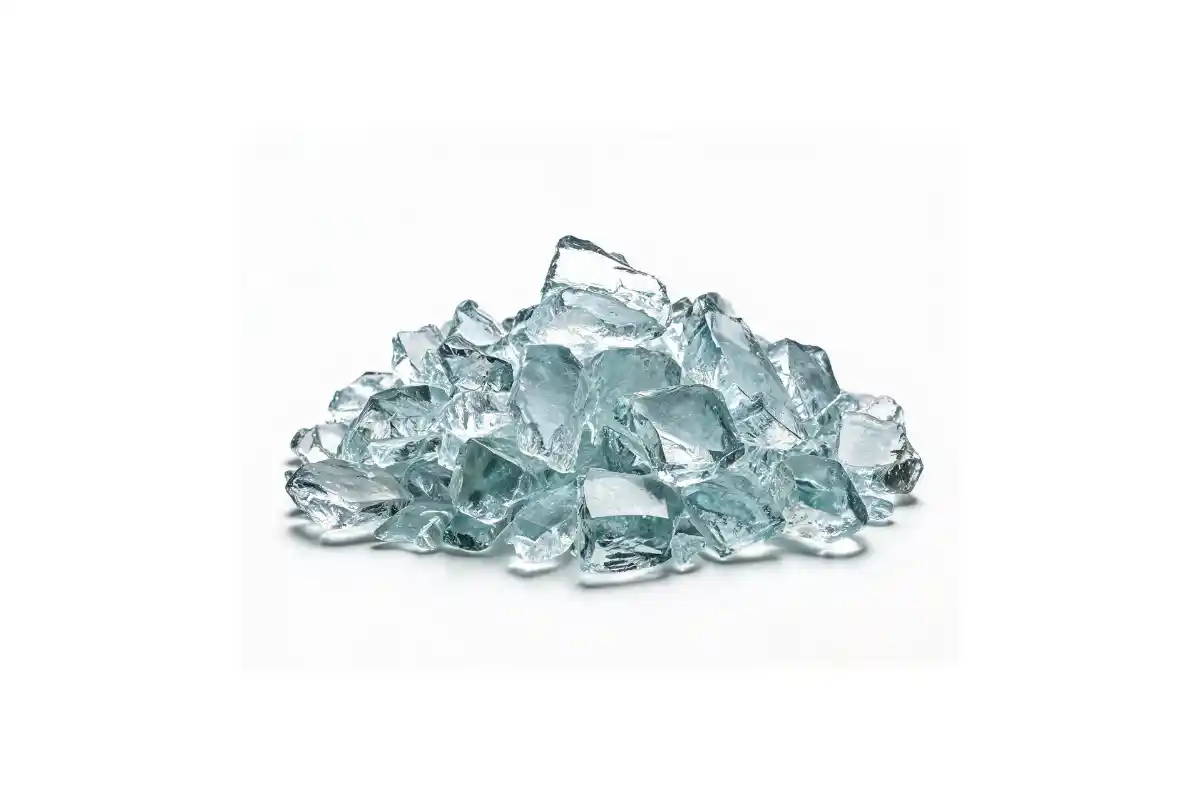
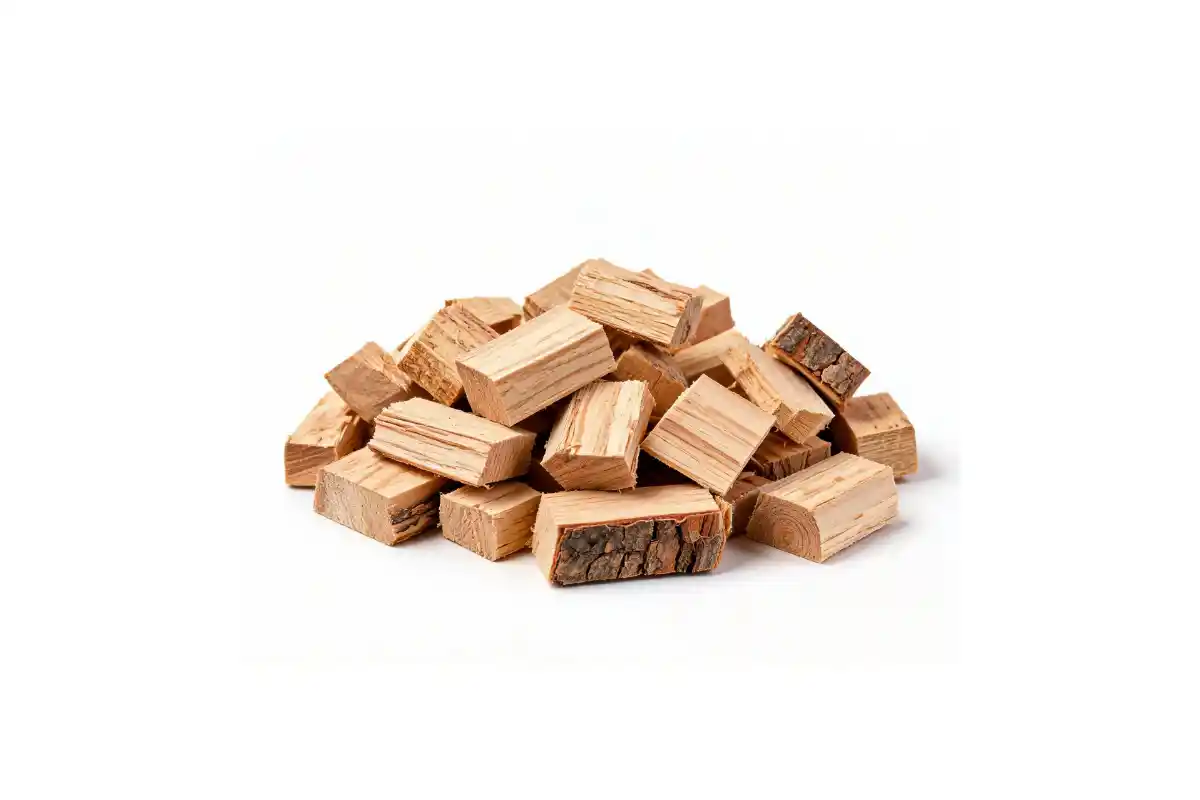
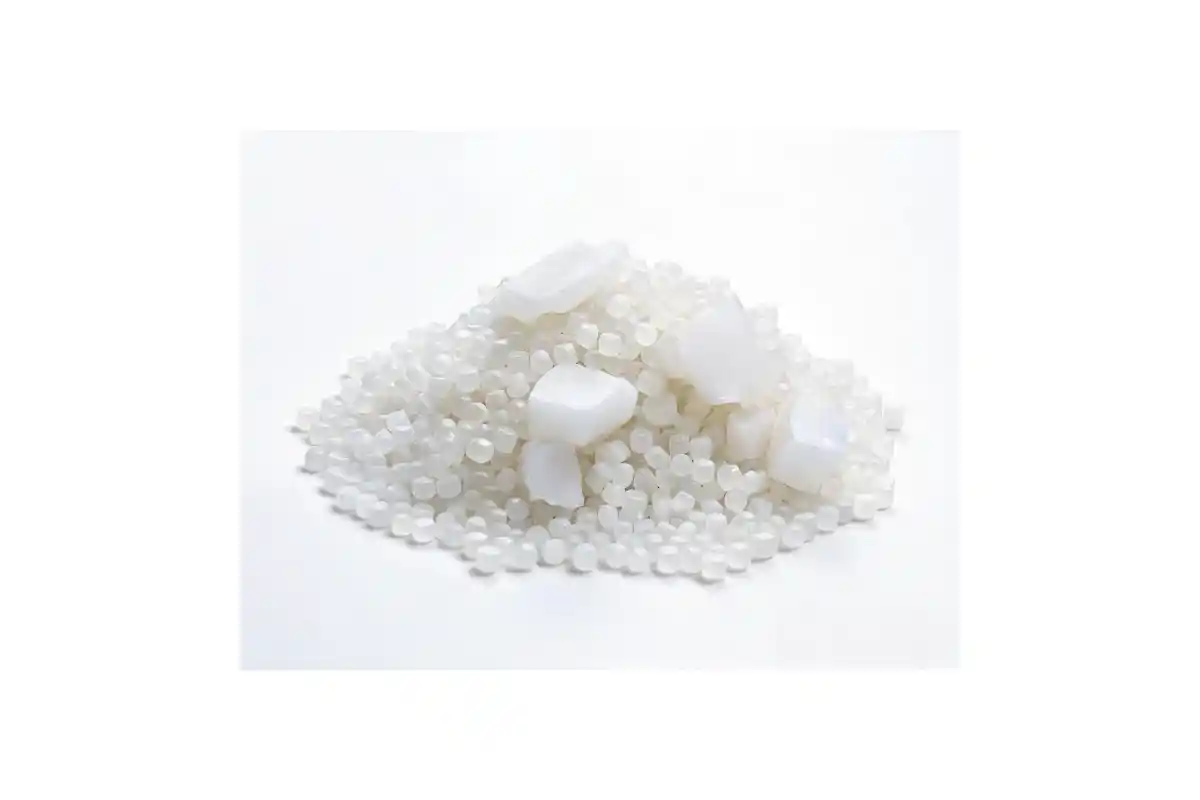
When designing modern architectural systems, such as custom doors, thermal break windows, or curtain walls, the rigidity of the framing material is critical. As shown in the table below, aluminum alloys provide structural stiffness that traditional materials simply cannot match. With an elastic modulus of 70 GPa, aluminum is nearly 20 times stiffer than PVC (2.4-4.1 GPa) and significantly out-performs wood.
This high modulus is the exact reason why aluminum extrusions allow for "slim-line" or narrow-frame window designs. It can support heavy, double-glazed glass panels (which have a similar modulus of 50-90 GPa) without warping, bending, or requiring bulky internal steel reinforcements. For architects and builders, aluminum offers the ultimate combination of sleek aesthetics and long-lasting structural integrity.
| Material | Elastic Modulus (GPa) | Best Architectural Applications |
|---|
| Aluminum Alloys | 70 | High rigidity, supports slim-frame designs and heavy glass |
| Glass | 50-90 | Similar modulus allows synergistic load-bearing without shattering |
| Pine Wood | 9 | Low rigidity, prone to moisture warping, requires thicker frames |
| Polyvinylchloride (PVC) | 2.4-4.1 | Extremely low stiffness, mandates internal steel reinforcement |
| * Data Reference: The Engineering ToolBox |
2. Aluminum vs. Heavy Structural Metals
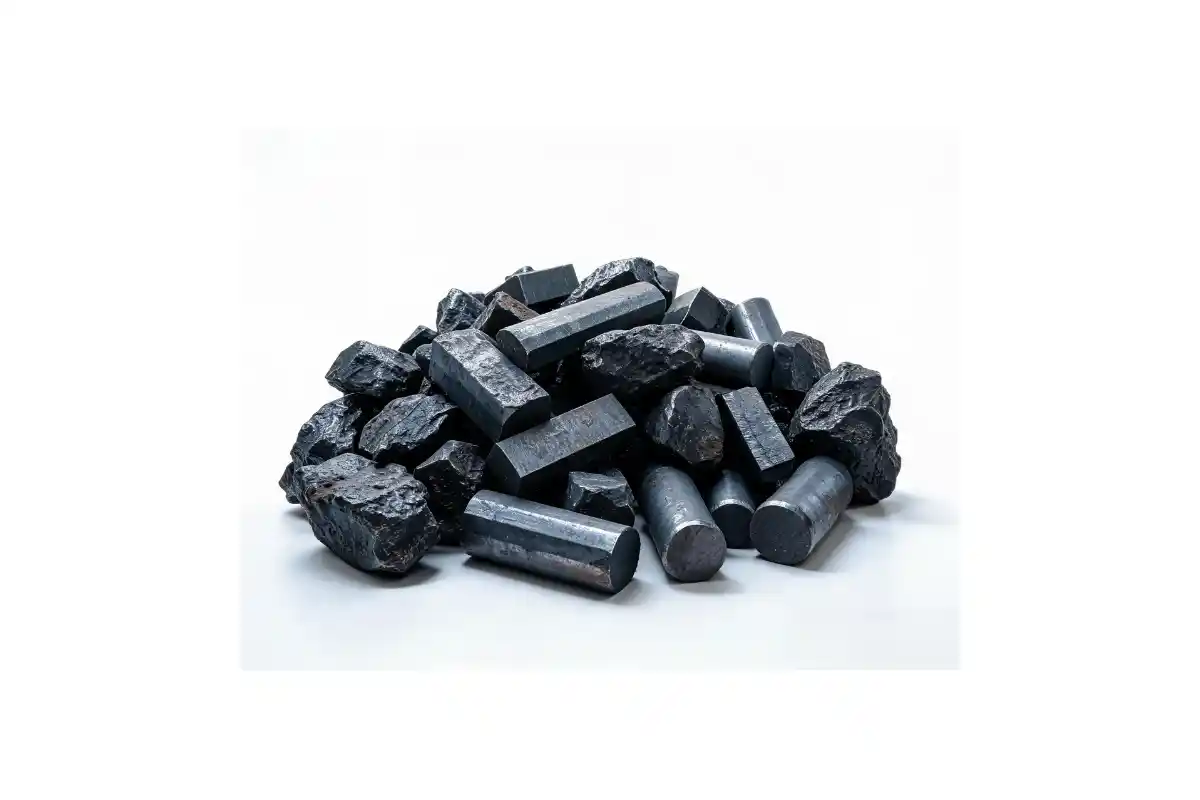
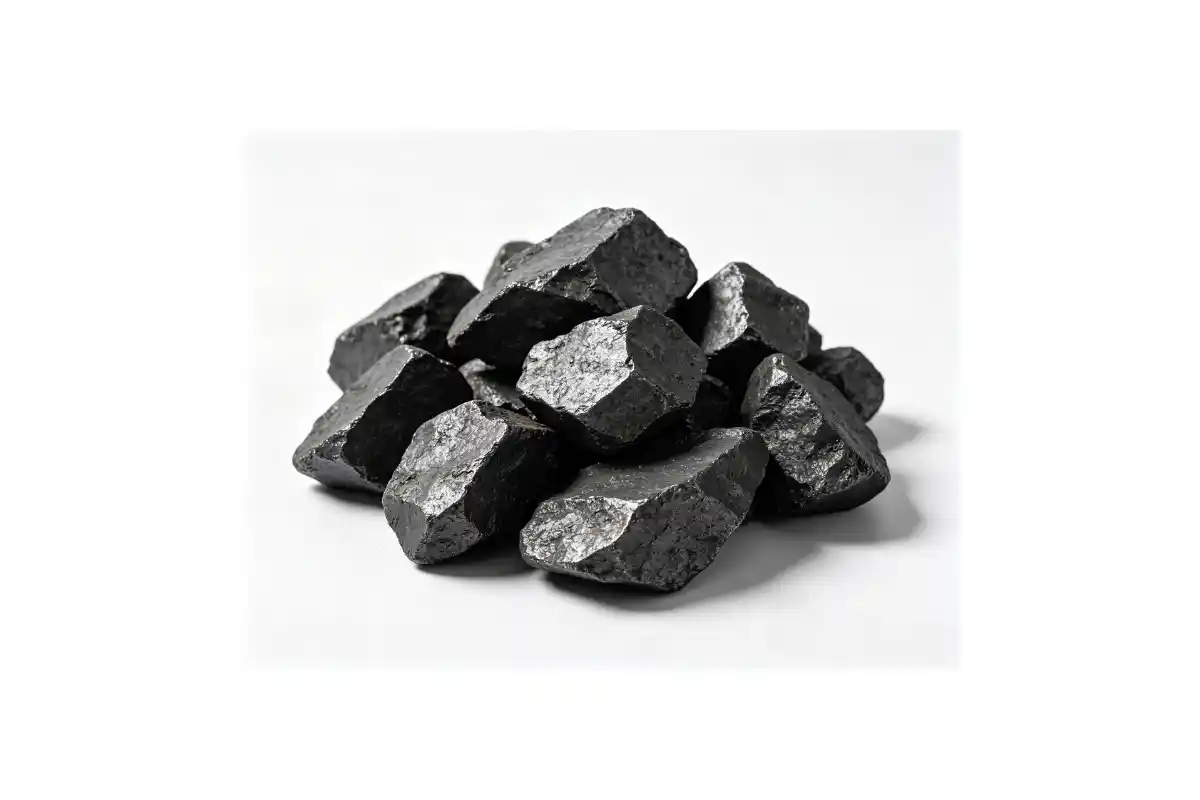
For industrial structural framing, automated assembly lines, and transport equipment, engineers constantly weigh the balance between strength and weight. While traditional structural steel (ASTM-A36) boasts a highly impressive Young's modulus of 200 GPa, it comes with a massive weight penalty.
Aluminum alloys offer a strategic advantage. Although its base elastic modulus is 70 GPa, aluminum's density is only about one-third that of steel or wrought iron (190-210 GPa). By utilizing custom aluminum extrusion processes, engineers can design complex, hollow cross-sectional profiles. This geometrical optimization compensates for the lower modulus, allowing manufacturers to achieve the required bending stiffness while drastically reducing the overall weight of the equipment, cutting down on shipping and operational energy costs.
| Material | Elastic Modulus (GPa) | Industrial Engineering Advantage |
|---|
| Aluminum Alloys | 70 | High strength-to-weight ratio, adaptable via complex extrusion profiles |
| Carbon Steel (ASTM-A36) | 200 | Extremely stiff but heavy, increasing logistics and operational costs |
| Wrought Iron | 190-210 | Traditional heavy material, prone to corrosion |
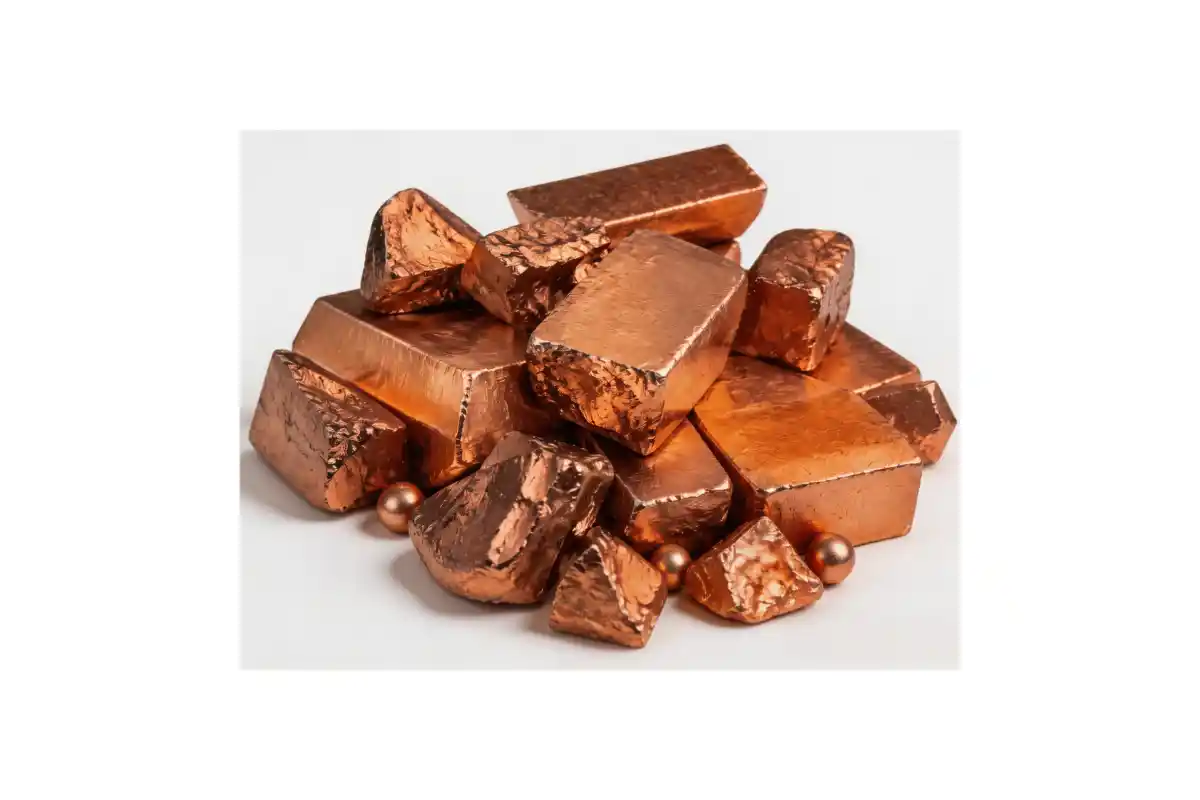
| Copper | 117 | Heavy and expensive, used primarily for conductivity, not structure |
| * Data Reference: The Engineering ToolBox |
3. Aluminum vs. Advanced Lightweight Materials
In the pursuit of extreme lightweight engineering, materials like Titanium, Magnesium, and Carbon Fiber are often discussed. However, commercial viability remains the deciding factor for most B2B procurement projects.
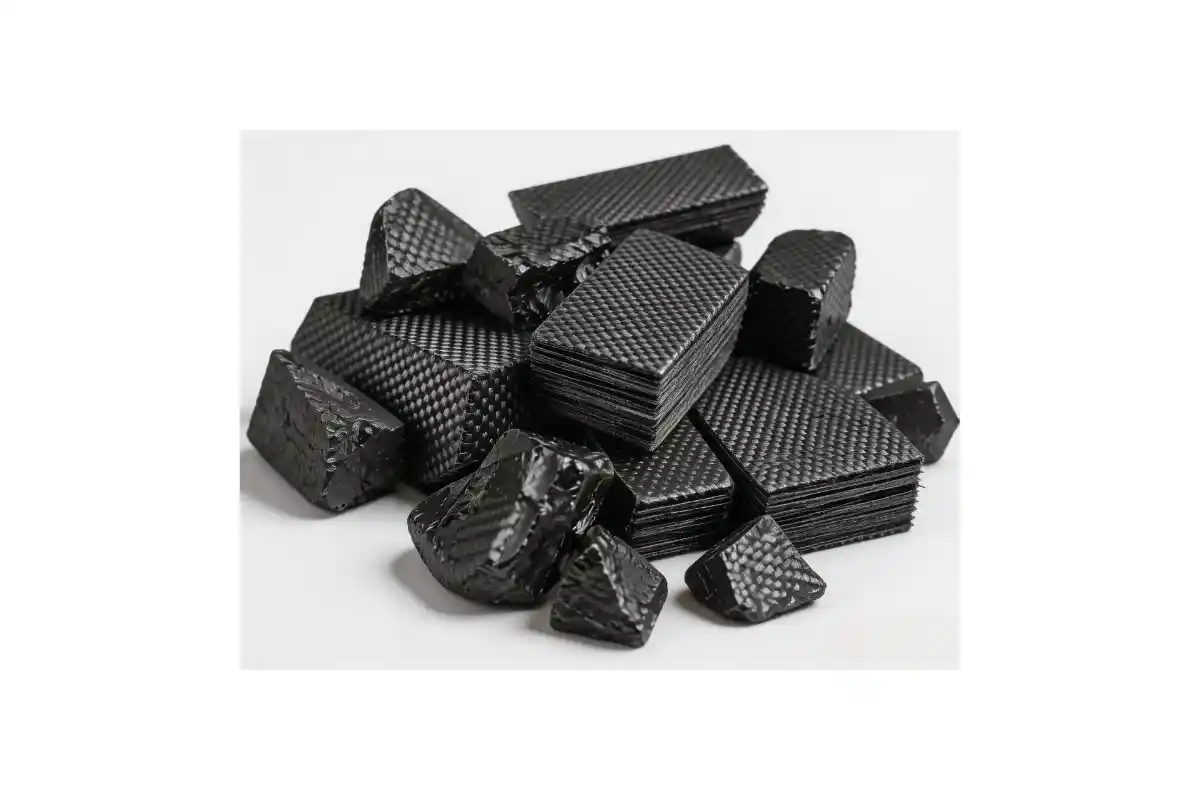
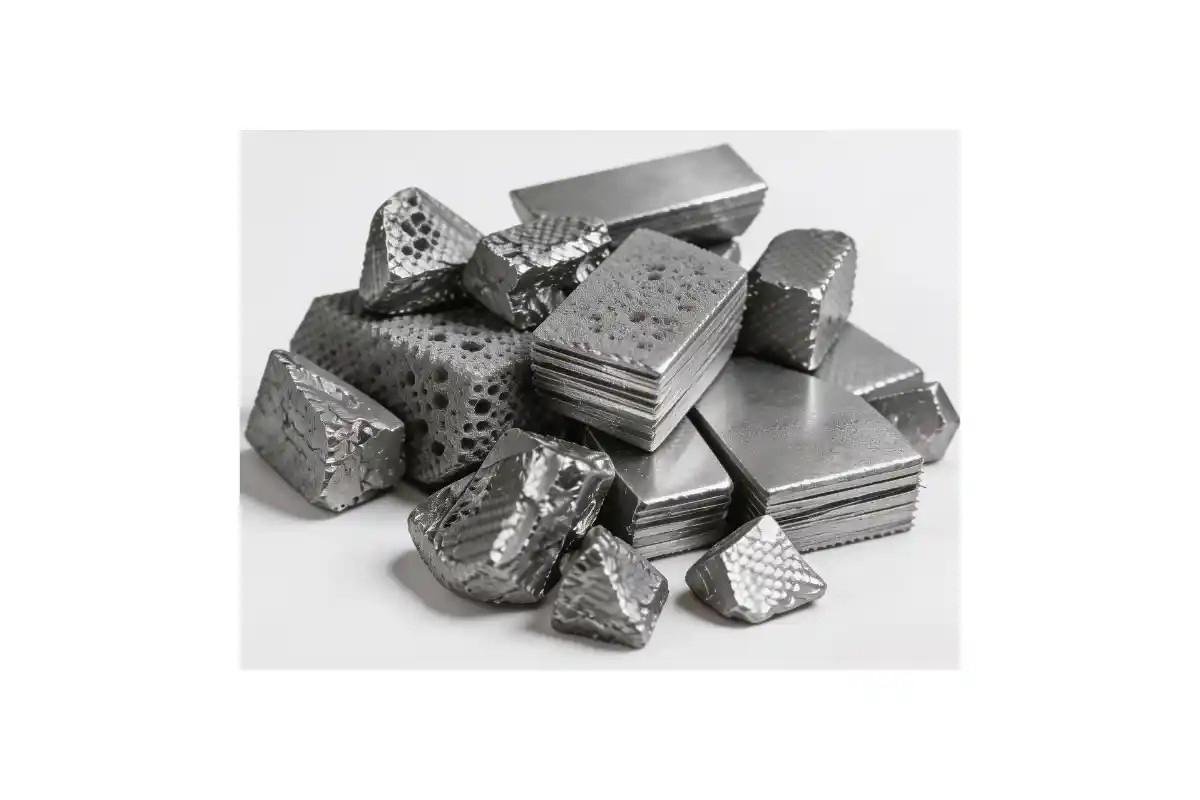
Magnesium is lighter than aluminum but falls short in structural rigidity, with a modulus of only 45 GPa. On the other end of the spectrum, Titanium alloys (105-120 GPa) and Carbon Fiber Reinforced Plastics (150 GPa) deliver exceptional stiffness. However, these exotic materials come with exorbitant raw material costs and extreme machining difficulties. Aluminum alloys remain the undisputed champion of scalable manufacturing. At 70 GPa, it provides the perfect intersection of excellent structural stiffness, lightweight properties, and most importantly, highly cost-effective extrusion capabilities for mass customization.
| Material | Elastic Modulus (GPa) | Commercial Viability |
|---|
| Aluminum Alloys | 70 | Best ROI, highly extrudable for mass customization and global supply |
| Carbon Fiber (CFRP) | 150 | Exceptional stiffness/weight ratio, but prohibitively expensive, non-extrudable |
| Titanium Alloy | 105-120 | Excellent performance, but extreme raw material cost and machining difficulty |
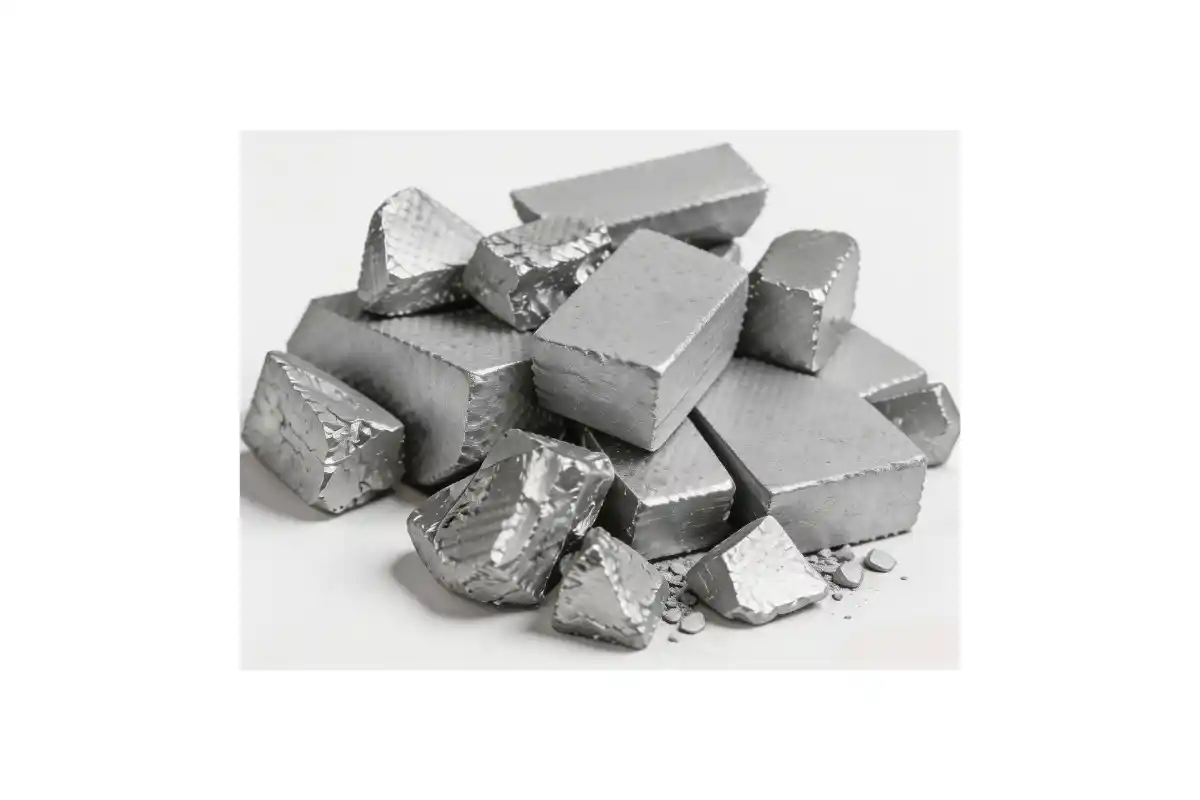
| Magnesium | 45 | Lighter than aluminum, but lacks sufficient stiffness for heavy structural loads |
| * Data Reference: The Engineering ToolBox |
6. Factors Affecting Aluminum’s Modulus of Elasticity
Although aluminum’s elastic modulus is generally around 69–70 GPa, its actual performance in engineering applications can vary depending on material condition, manufacturing quality, operating temperature, and structural design.
For engineers selecting aluminum profiles, understanding these factors is important because stiffness is not only determined by the material itself, but also by how the aluminum is processed and used.
1. Alloy Composition and Material Grade
The chemical composition of aluminum alloys has an influence on mechanical properties such as strength, hardness, and deformation behavior.
Pure aluminum is relatively soft and highly ductile. By adding alloying elements such as:
- Magnesium (Mg)
- Silicon (Si)
- Zinc (Zn)
- Copper (Cu)
manufacturers can significantly improve strength and load-bearing capability.
For example:
- 6063 aluminum alloy is widely used for architectural profiles because of its excellent extrusion performance, surface finish, and corrosion resistance.
- 6061-T6 or 7075 aluminum alloys provide higher mechanical strength for industrial and aerospace applications.
However, unlike tensile strength, the elastic modulus of different aluminum alloys remains relatively close, usually around 69–70 GPa. This means changing from one alloy grade to another will not dramatically increase stiffness. For applications requiring higher rigidity, engineers usually optimize profile geometry rather than relying only on alloy selection.
2. Heat Treatment and Temper Condition
Heat treatment improves the strength and hardness of aluminum alloys by changing their internal structure.
Common temper conditions include:
- T5: Artificially aged after extrusion, commonly used for architectural aluminum profiles.
- T6: Solution heat-treated and artificially aged, providing higher yield strength for demanding applications.
Although heat treatment has a major effect on yield strength and resistance to permanent deformation, it has only a limited effect on the elastic modulus itself.
In practical engineering, this means a T6 aluminum profile may withstand higher loads before permanent bending occurs, but its basic stiffness (resistance to elastic bending) remains close to standard aluminum alloys.
3. Manufacturing Quality and Internal Defects
While the elastic modulus of aluminum is an inherent material property, manufacturing defects can reduce the actual structural performance of aluminum profiles.
During extrusion, factors such as poor temperature control, improper cooling, or material contamination may cause:
- Internal porosity
- Weak bonding areas (e.g., extrusion weld lines)
- Uneven grain structure
- Reduced effective load-bearing area
For complex hollow profiles, such as thermal break window systems or industrial aluminum frames, extrusion quality directly affects how the profile performs under bending forces.
This is why professional aluminum extrusion manufacturers focus on:
- Billet quality control and melt purity
- Extrusion temperature and speed management
- Aging process accuracy
- Rigorous dimensional inspection
4. Temperature Effects
Aluminum’s elastic modulus decreases slightly as temperature increases.
In high-temperature environments, such as:
- Desert climates
- Industrial equipment near heat sources
- Automotive engine components
higher temperatures increase atomic vibration, thereby reducing the material’s resistance to deformation (thermal softening).
For example, aluminum window and curtain wall systems exposed to strong direct sunlight may experience greater thermal expansion and slightly reduced stiffness. Engineers must consider temperature effects when calculating allowable deflection and selecting profile dimensions.
5. Geometry and Profile Design
Although the elastic modulus is a material property and does not change with profile size, the actual stiffness of an aluminum component depends heavily on its geometry.
A thin flat bar and a multi-chamber aluminum extrusion may use the exact same alloy, but their resistance to bending can be completely different.
Engineers improve aluminum profile rigidity by optimizing:
- Wall thickness
- Cross-sectional shape
- Internal chambers and cavities
- Reinforcement ribs
- Moment of inertia
This is why modern aluminum extrusion design focuses on creating lightweight profiles with high structural efficiency rather than simply increasing raw material thickness.
Conclusion
The elastic modulus of aluminum is mainly determined by its atomic structure and remains relatively stable across common aluminum alloys. However, the real-world stiffness and reliability of an aluminum profile depend on several controllable factors:
- Alloy selection
- Heat treatment and temper
- Extrusion manufacturing quality
- Operating temperature
- Profile geometry and structural design
For global engineering projects, achieving the optimal balance between weight, strength, and rigidity requires not only choosing the correct aluminum grade but also designing the right extrusion profile geometry for the specific application.
7. Why Is Aluminium’s Elastic Modulus Important in Engineering?
When engineers evaluate a material, strength is only one part of the equation. A component may have enough strength to avoid breaking, but if it bends, vibrates, or loses dimensional accuracy during operation, it can still fail in real-world applications.
This is why elastic modulus (Young’s modulus) is a critical engineering property. It measures a material’s resistance to elastic deformation when external forces are applied. In simple terms, strength determines whether a component can survive a load, while elastic modulus determines whether it can maintain its original shape and stability under that load.
For aluminium alloys, the elastic modulus is approximately 69–70 GPa, which is lower than steel (around 200 GPa). This means aluminium is more flexible and will experience greater deflection under the same load. However, this lower stiffness is balanced by aluminium’s low density, excellent corrosion resistance, and high strength-to-weight ratio, making it one of the most efficient engineering materials available.
1. Architectural Systems: Aluminium Windows, Doors, and Curtain Walls
Application examples:
- Large glass curtain walls
- Slim-frame sliding doors
- Folding doors
- High-rise building façade systems
In modern architectural design, engineers increasingly demand larger glass areas and thinner aluminium frames. This creates higher requirements for structural stiffness because the frame must resist continuous loads from wind pressure, glass weight, and temperature changes.
If the aluminium profile has insufficient stiffness, excessive deflection may occur under strong wind conditions. Although the profile may not break, even small deformation can create serious problems:
- Glass panels may experience uneven stress distribution
- Insulating glass units (IGUs) may crack
- Rubber seals may lose compression
- Air and water leakage may occur
- Doors and windows may become difficult to operate
Therefore, aluminium profile designers must calculate the maximum allowable deflection before selecting wall thickness, profile geometry, and alloy grade.
For example, modern thermal break aluminium window systems often use optimized chamber designs and reinforced profiles to increase structural rigidity without significantly increasing weight. This allows architects to achieve slim visual designs while maintaining reliable performance in demanding climates such as the Middle East, coastal areas, and high-rise projects.
2. Industrial Automation and Precision Equipment
Application examples:
- Aluminium extrusion machine frames
- CNC equipment structures
- Robotic workstations
- Automated production lines
- Precision inspection platforms
In industrial automation, stiffness is directly connected with accuracy and productivity.
A machine frame may not experience enough force to cause permanent damage, but repeated movement, vibration, and acceleration can create small elastic deformations. Over time, these movements affect:
- Positioning accuracy
- Machine repeatability
- Product quality
- Equipment lifespan
For high-speed automation systems, engineers must analyze how much an aluminium structure will deflect under dynamic loads. A frame with insufficient elastic modulus may produce vibration or resonance, reducing machining accuracy and increasing maintenance requirements.
This is why industrial aluminium profiles are usually designed with:
- Larger cross-sectional geometry
- Internal reinforcement chambers
- Optimized wall thickness
- High-strength alloys such as 6061-T6
The goal is not simply to use the strongest material, but to achieve the best balance between rigidity, weight, and manufacturing efficiency.
3. Aerospace and Precision Optical Equipment
Application examples:
- Aircraft structures
- Satellite components
- Optical instruments
- Laser communication systems
- Aerospace mounting frames
In aerospace engineering, material stiffness must be carefully controlled because even microscopic deformation can affect system performance.
Aircraft structures experience constantly changing aerodynamic forces during flight. A material that is too rigid may transfer excessive stress, while a material with controlled elasticity can absorb vibration and distribute loads more effectively.
Aluminium alloys are widely used in aerospace because they provide:
- High strength-to-weight efficiency
- Excellent fatigue resistance
- Controlled elastic deformation
- Stable performance under repeated loading
For optical and satellite equipment, dimensional stability is even more critical. A small positional change between lenses, mirrors, or sensors can affect image quality and measurement accuracy.
Engineers must consider:
- Elastic deformation under launch loads
- Thermal expansion differences
- Long-term dimensional stability
By carefully selecting aluminium alloys and designing structural geometries, engineers can maintain precision performance under extreme operating conditions.
4. Automotive and Electric Vehicle Structures
Application examples:
- EV battery enclosures
- Vehicle body structures
- Crash management systems
- Lightweight chassis components
The automotive industry uses aluminium extensively because manufacturers need to reduce vehicle weight while maintaining safety and structural performance.
Elastic modulus plays an important role in vehicle body design. A structure that is too flexible may experience:
- Body twisting during cornering
- Increased vibration and noise
- Reduced driving comfort
- Poor handling performance
However, controlled deformation is also necessary during collisions. Aluminium alloys can absorb impact energy through carefully designed deformation zones, helping protect passengers while maintaining a lightweight structure.
For electric vehicles, aluminium is especially valuable because reducing vehicle weight improves:
- Battery range
- Energy efficiency
- Acceleration performance
Engineers therefore evaluate aluminium not only by hardness or tensile strength but also by its specific stiffness (stiffness-to-weight ratio), which determines how efficiently a material can provide structural support with minimum weight.
5. Why Engineers Choose Aluminium Despite Its Lower Stiffness
Although aluminium has a lower elastic modulus than steel, this does not make it an inferior engineering material.
The advantages of aluminium include:
- Approximately one-third the density of steel
- Excellent corrosion resistance
- Easy extrusion into complex profiles
- Good vibration absorption
- Strong strength-to-weight performance
By optimizing profile geometry, alloy selection, and manufacturing processes, engineers can overcome aluminium’s lower stiffness while achieving lighter and more efficient structures.
This is why aluminium remains a preferred material for modern construction, transportation, industrial equipment, and high-performance engineering applications.
8. Testing Methods for the Elastic Modulus of Aluminum Alloys
Comparison of Mainstream Testing Methods
- Static Methods
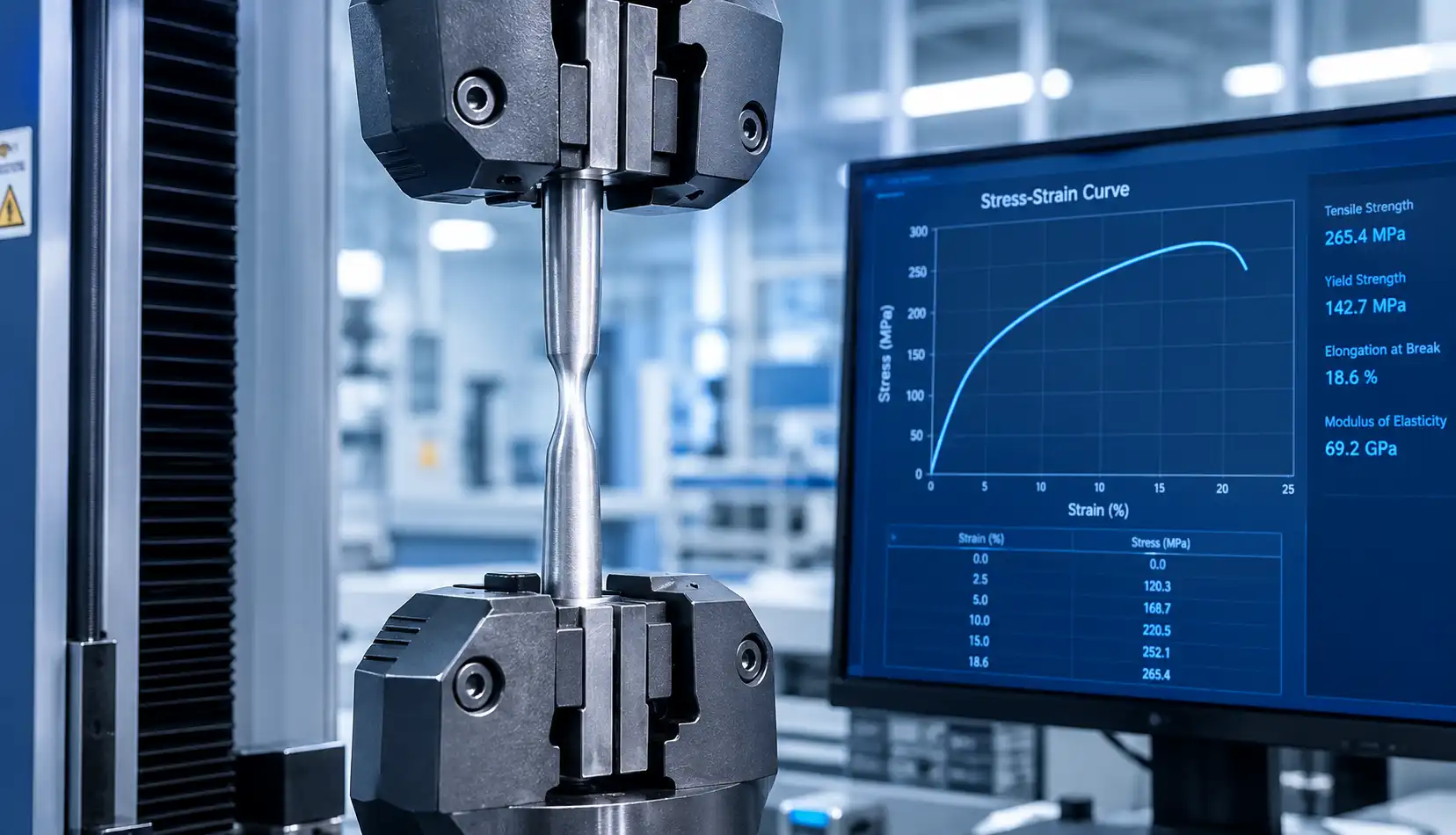
- Static Tensile Testing
- Principle: Records the stress-strain curve and calculates the slope of the elastic region.
- Advantages: The most universal and intuitive method; can simultaneously obtain strength and elongation properties.
- Disadvantages / Notes: Destructive testing; results are highly sensitive to extensometer precision and specimen alignment.
- Applicable Scenarios: General laboratory testing, material R&D, and quality control.
- Compression Testing
- Principle: Applies axial compressive force to a cylindrical specimen and calculates the slope of the elastic region on the stress-strain curve.
- Advantages: Ideal for testing brittle materials or components operating under compressive loads.
- Disadvantages / Notes: Requires careful setup to prevent the specimen from buckling or bending during compression.
- Applicable Scenarios: Brittle materials, simulating compressive service conditions.
- 3-Point / 4-Point Bending Method
- Principle: Measures the deflection of a beam specimen under bending force to calculate the modulus via the load-deflection relationship.
- Advantages: Suitable for thin plates, brittle materials, or components that are difficult to grip for tensile testing.
- Disadvantages / Notes: Results can be affected by shear effects; requires strict testing condition setups.
- Applicable Scenarios: Thin plates, brittle materials, bending stiffness evaluation of components.
- Dynamic Methods
- Dynamic Resonance Method
- Principle: Excites the specimen to vibrate, measures its natural frequency, and calculates the modulus based on this frequency.
- Advantages: Non-destructive testing with high accuracy (within ±1%); capable of high/low-temperature testing.
- Disadvantages / Notes: Requires specifically shaped rectangular or cylindrical specimens; relies on specialized equipment.
- Applicable Scenarios: High-precision non-destructive testing, batch verification, high-temperature modulus testing.
- Ultrasonic Method
- Principle: Measures the propagation speed of ultrasonic waves in the material and calculates the modulus using velocity and density data.
- Advantages: Fast, localized, single-point testing (takes <1 minute); suitable for on-site inspection of large structural components.
- Disadvantages / Notes: Requires a couplant; thin-plate testing is affected by boundary effects; demands high surface flatness.
- Applicable Scenarios: Rapid on-site inspection, large structural components, localized performance evaluation.
- Micro-Zone Methods
- Nanoindentation
- Principle: Presses a diamond indenter into the material surface and calculates the modulus by analyzing the load-displacement curve.
- Advantages: Capable of testing microscopic regions (e.g., weld seams, precipitates); nearly non-destructive.
- Disadvantages / Notes: Results reflect localized micro-properties, which may differ from macroscopic tensile values; equipment is highly expensive.
- Applicable Scenarios: Micromechanics research, welded joint analysis, testing for thin films and coatings.
Faqs


 Aluminum
 Glass
Glass
 Pine Wood
 PVC
PVC
 Carbon Steel
 Wrought Iron
 Copper
 Carbon Fiber
 Titanium
 Magnesium