
Are Aluminum Profiles Heat Resistant?
Date: 2026-06-15Views: 857
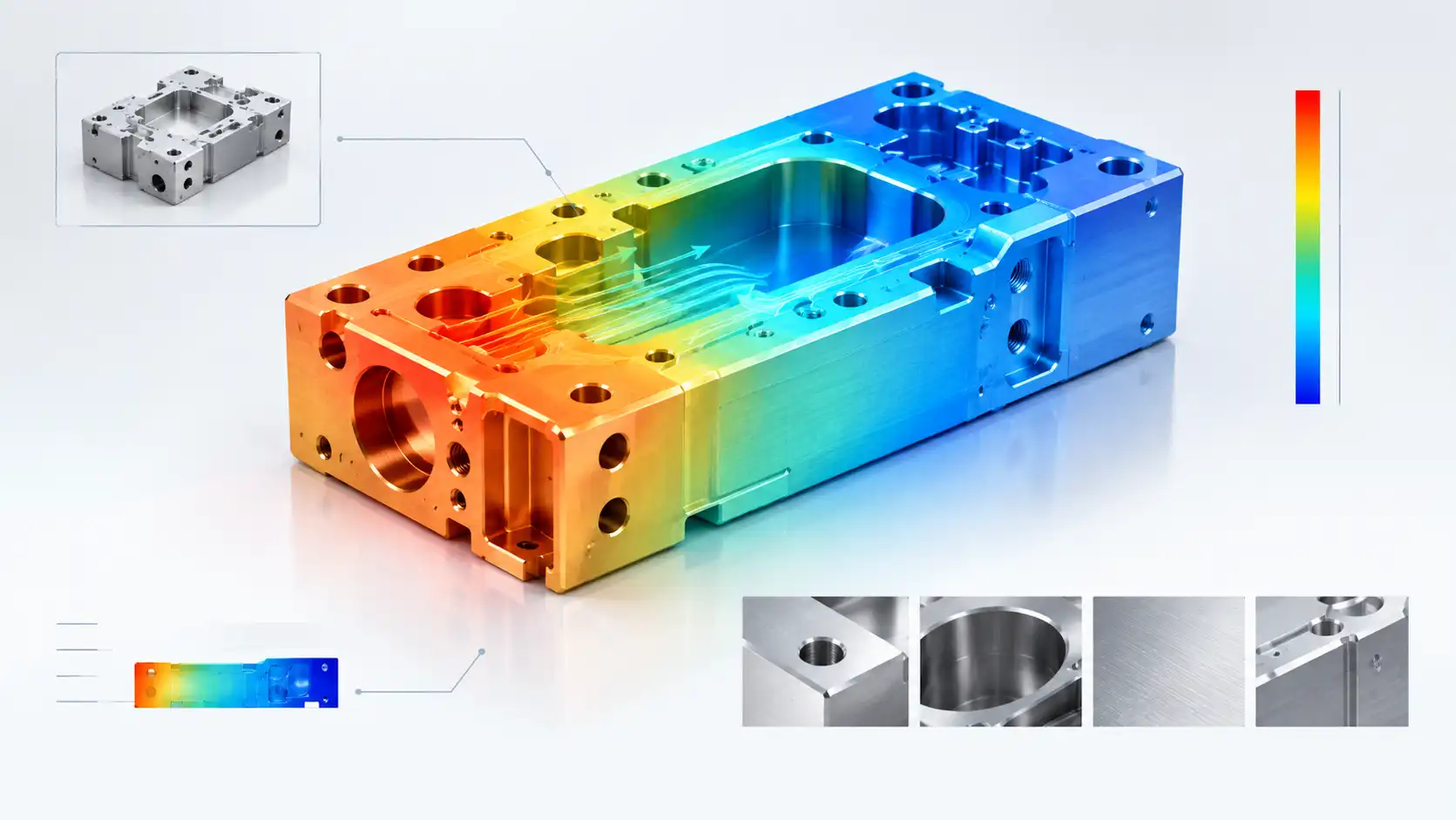
When architects, contractors, and industrial buyers select materials for high-performance projects, they often ask one question: are aluminum profiles heat resistant? The short answer is: absolutely. However, in the fields of metallurgy and architectural engineering, "heat resistance" is a multidimensional concept. How heat affects aluminum structural integrity is not just about the temperature at which the metal melts, but also about its performance under the scorching sun and its dimensional stability in extreme temperature variations.
1. Melting Point vs. Safe Operating Temperature
To understand the heat resistance of aluminum, one must distinguish between the "melting point" and the "safe operating temperature." Many engineers often ask: At what temperature does extruded aluminum lose its strength?
Pure aluminum melting point: The melting point of pure aluminum is approximately 660°C, and aluminum alloys typically begin to melt at 580-650°C. However, what truly matters in engineering is the safe operating temperature, which is the highest temperature at which the material can operate long-term without suffering permanent damage.
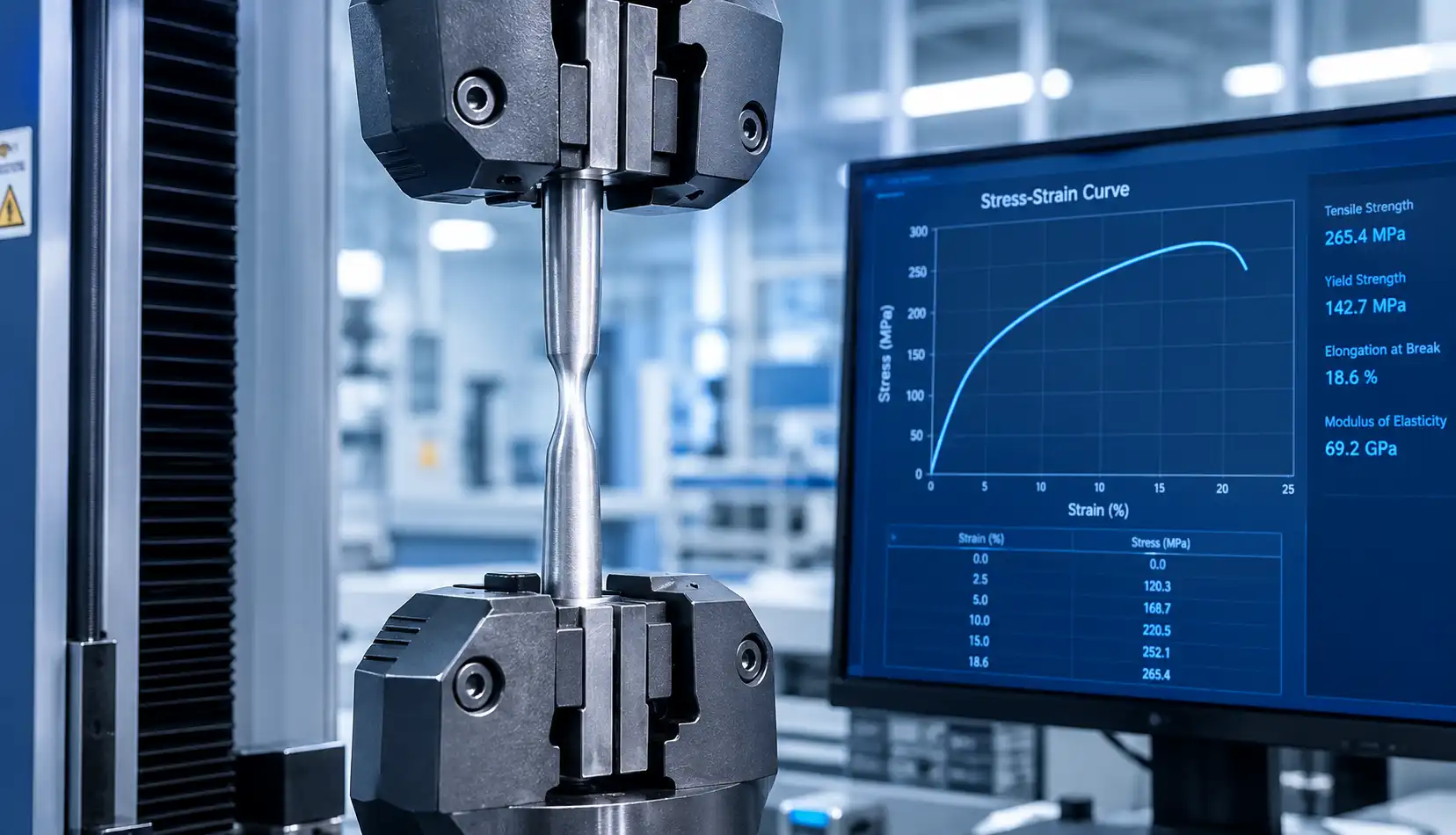
Safe operating temperature of 6063-T5 aluminum: The safe operating temperature of common 6063-T5 aluminum profiles is around 150°C. Above this temperature, the internal strengthening particles grow larger, and the material permanently softens; even after cooling, its strength cannot be recovered. In contrast, 6061-T6 can reach 180-200°C. Under outdoor sun exposure, the maximum surface temperature of aluminum is about 85°C, which is far below the safety threshold, ensuring that doors and windows will absolutely not "soften in the sun."
2. Thermal Expansion
For global contractors, the real test materials face is intense sun exposure. This is especially true regarding the thermal expansion of aluminum profile window frames.
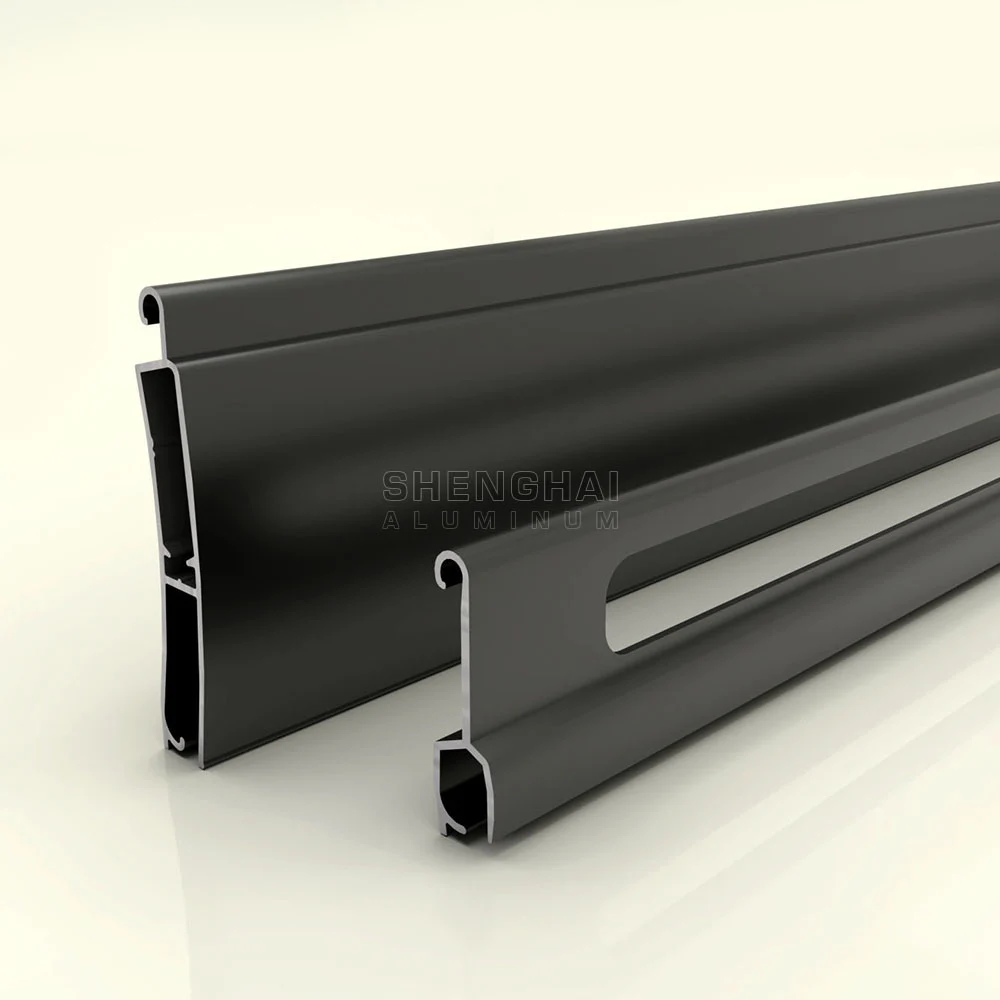
The thermal expansion coefficient of aluminum is approximately 23.1×10⁻⁶/°C. A 3-meter-long window frame will expand by about 3.5 millimeters when the temperature rises by 50°C. As long as expansion joints are reserved or sliding connections are used during installation, the aluminum frame can expand and contract freely without ever damaging the building structure. In comparison, plastics soften and deform at 70°C, while the hardness of aluminum remains virtually unchanged at the same temperature. Industrial sliding doors and rolling shutter tracks use aluminum, and even after years of exposure to the scorching sun, they still slide smoothly, relying precisely on this excellent high-temperature dimensional stability.
3. 6063-T5 vs 6061-T6 Heat Resistance Comparison
Not all aluminum is created equal. The heat resistance and structural load-bearing capacity of a profile depend on its alloy grade:
6063-T5 (Architectural standard): Primarily used for doors, windows, and curtain walls. The magnesium and silicon inside it form tiny strengthening particles that are extremely stable below 150°C. It is suitable for normal outdoor sun exposure but is not recommended for high-temperature, heavy-load areas.
6061-T6 (The powerful choice for structural grades): If a project requires finding the maximum working temperature for 6061-T6 aluminum frames, its performance far exceeds that of 6063. The additional copper and chromium can slow down the rate at which the particles enlarge. Combined with rigorous heat treatment (heating above 500°C, rapid quenching, and then artificial aging), it can still maintain high strength at 200°C, making it highly suitable for high-temperature equipment frames and heavy-load structures.
4. Surface Treatment
Surface treatment technologies act as engineering-grade "thermal shields":
Does anodized aluminum melt in a fire?: The thick aluminum oxide film generated by anodizing is as hard as ceramics, and its melting point exceeds 2000°C! It can not only block sparks and reflect some heat, but it is also completely fire-resistant, making it extremely suitable for sun exposure and coastal salt spray environments.
PVDF coating heat resistance on aluminum extrusions: Powder coating and PVDF fluorocarbon coating are baked and cured at temperatures of around 200°C. As long as the daily operating environment does not exceed this temperature, the color and gloss will remain stable long-term. The chemical bonds of PVDF are extremely stable, ensuring no fading or blistering for decades when used in regions with intense UV rays (such as the Middle East and Africa).
5. Engineering Application Examples in High-Temperature Environments
The safe operating temperature governs daily reliability; the melting point is merely the last line of defense:
Automobile engines and wheels: The cylinder head is subjected to high pressure and temperatures above 200°C for long periods, and wheel temperatures can reach 150-160°C. Special high-temperature aluminum alloys must be used to prevent softening and cracking.
Computer heatsinks: Chip temperatures stay at 80-90°C year-round, and the aluminum heatsink must maintain a tight clamping force over the long term without loosening.
Radiators: The heating water temperature is about 80°C. Aluminum alloys remain stable and do not soften over the long term, perfectly replacing old-fashioned cast iron thanks to their lightweight and aesthetic appeal.
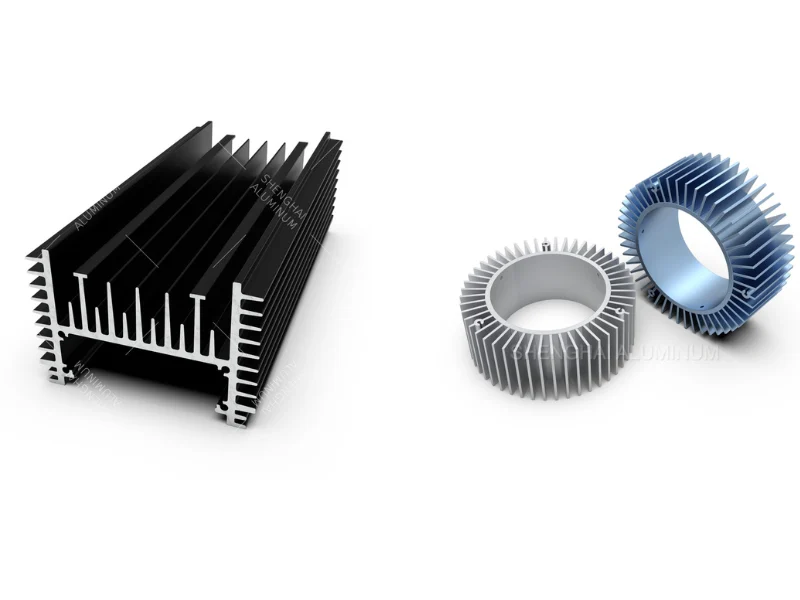
High-performance extruded aluminum heatsinks designed for optimal thermal dissipation in electronics and industrial equipment.
6. Partner with Shenghai Global to Procure Heat-Resistant Aluminum Profiles
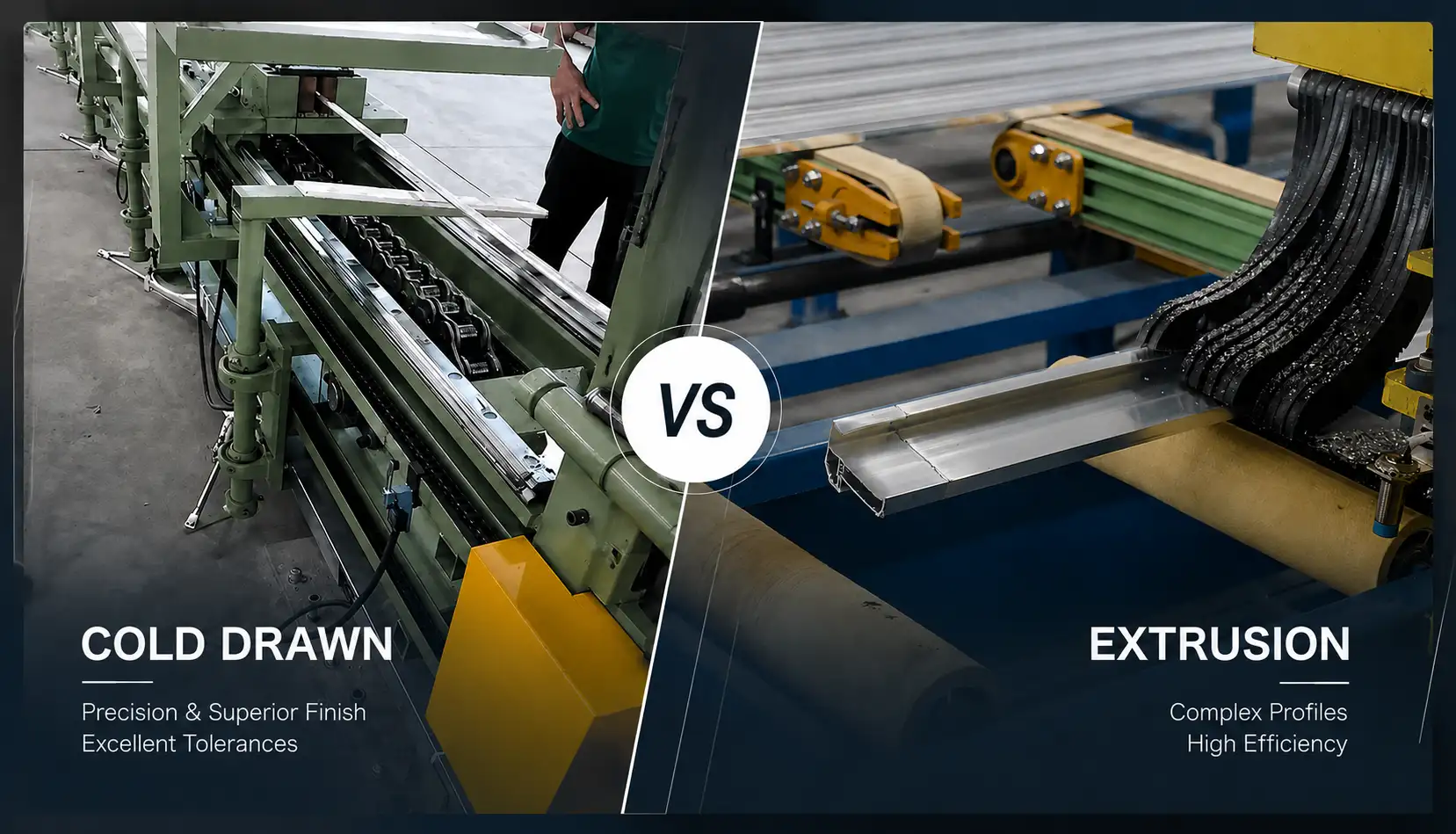
When building for the future, the quality of the raw materials determines the lifespan of the project. At Shenghai Global, we precisely control the extrusion and heat treatment processes to ensure that the strength degradation of the profiles at high temperatures is minimized.
Based on the climate and temperature requirements of your project, we can accurately match you with 6061-T6 or 6063-T5 and select the most suitable coating solution. We provide comprehensive material data sheets and samples for third-party laboratory verification, ensuring stable quality and on-time delivery to help your overseas engineering projects proceed smoothly.