
Selecting the Superior Finish for High-End Aluminum Hollow Sections
Date: 2026-05-08Views: 782
I. Surface Treatment Is Not Just About “Appearance”
In various applications—such as building components like doors, windows, and curtain walls; furniture including cabinets and wardrobes; and solar mounting brackets—aluminum hollow sections have long been a commonly used material. They offer numerous advantages, including durability, scratch resistance, and strength, and can be finished in attractive colors. These characteristics directly determine the product’s durability when exposed to salt spray, UV radiation, and acid rain, as well as the first impression it makes when touched by end users.
Global climates vary widely: from the scorching 50°C sun of the UAE to Singapore’s year-round 85% humidity, and the salt corrosion from de-icing in Northern Europe. Choosing the wrong surface treatment can lead to fading, chalking, and peeling within two to three years—which is not only a quality issue but also a brand disaster. The following comparison of the three leading high-end surface treatment technologies will help you select the right one.
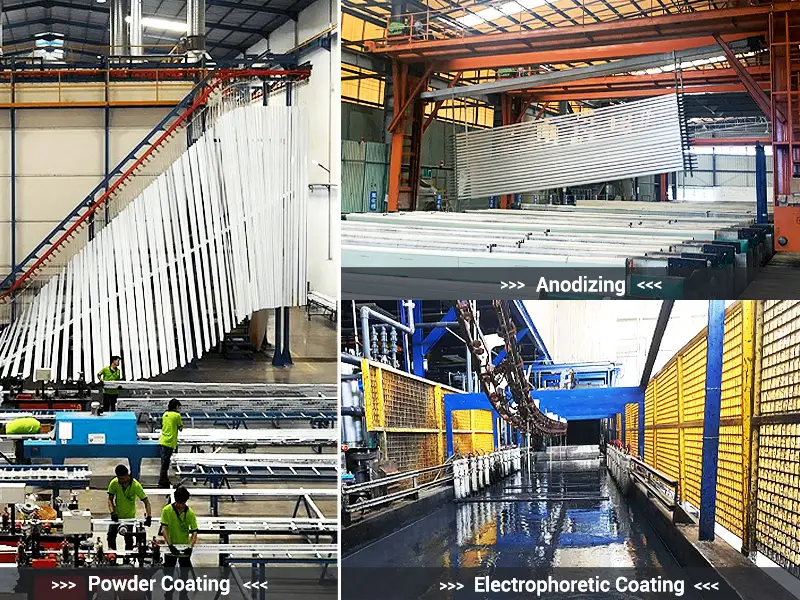
Our advanced facility offers full-scale surface treatments: high-capacity powder coating, AA25 standard anodizing, and precision electrophoretic coating.
II. Anodizing
Why Choose Anodizing for Aluminum Hollow Sections?
Anodizing is synonymous with a metallic finish and does not suffer from peeling or flaking. It offers extremely high hardness and exceptional weather resistance, including protection against UV rays and salt spray environments.
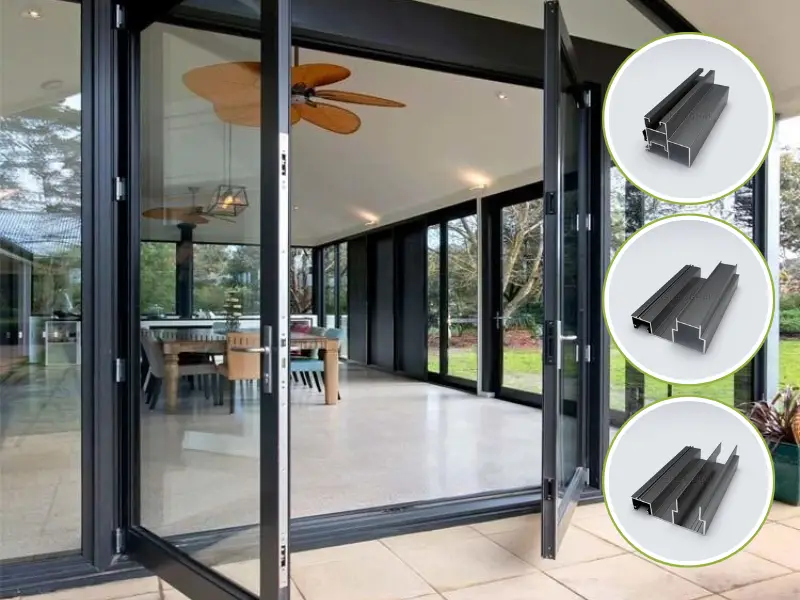
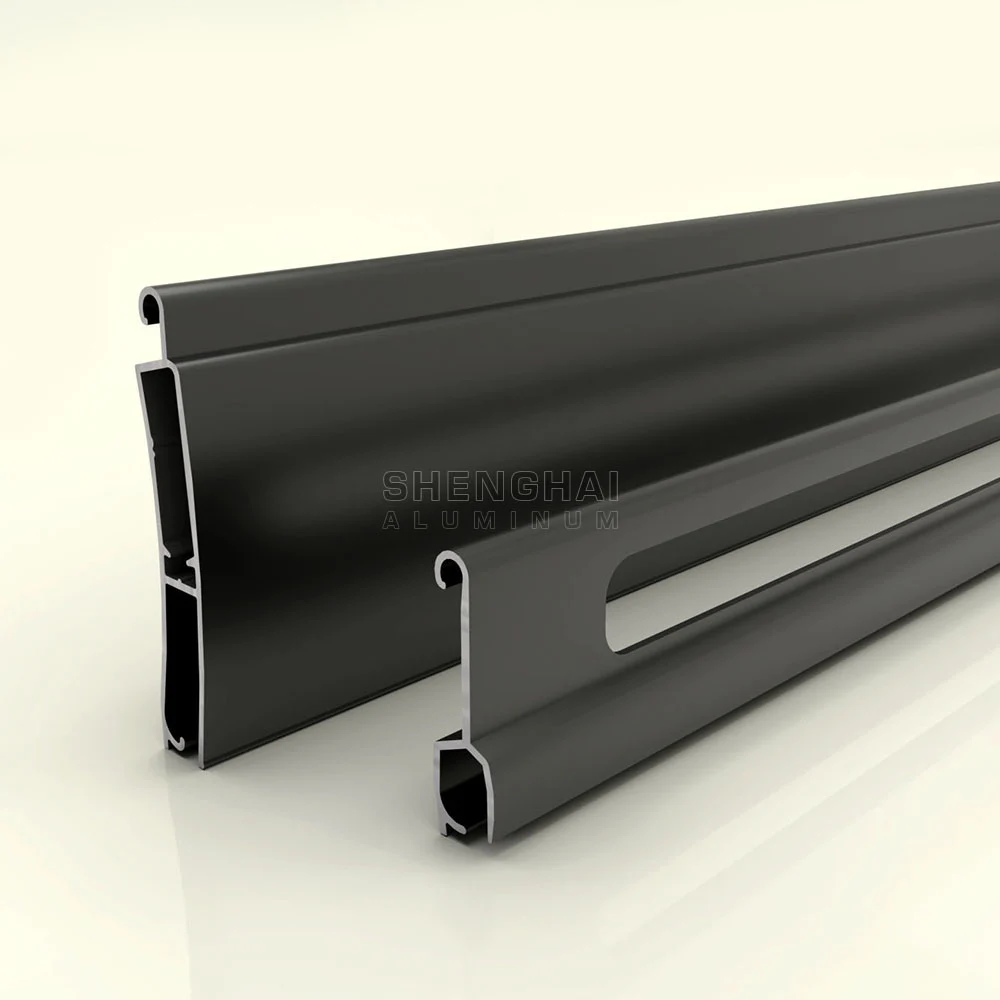
Luxury black anodized aluminum folding door systems with heavy-duty extrusion profiles for residential projects.
Which everyday products are suitable for anodized aluminum hollow sections?
Any product that is sensitive to scratches, requires long-term exposure, or emphasizes a metallic finish should prioritize anodizing.
- Aluminum doors, windows, and curtain walls, such as the Malaysia Door and Window Project
- Furniture, such as cabinets, wardrobes, and tables
- Various railings, including residential and commercial railings, and aluminum handrails
- Solar panel mounts
- Decorative trim, such as baseboards, ceiling trim, and edge strips for the UAE Project
Core Advantages of Anodizing:
No peeling or flaking: Anodizing is one of the most unique surface treatments. While other treatments are applied to the surface of the aluminum, anodizing is essentially “grown” directly onto the aluminum substrate. This prevents the peeling and flaking common in other coatings, such as powder coating, thereby preserving the surface integrity and aesthetic appeal of the aluminum hollow profiles.
Metallic texture: Whether in appearance or tactile feel, anodizing is widely appreciated because it retains the texture and feel of the raw aluminum substrate after surface treatment—a quality difficult to achieve with other finishes.
High Surface Hardness: As is well known, anodized surfaces can achieve a hardness approaching that of diamond. This makes anodizing an ideal choice for applications subject to frequent friction, such as balcony railing, public handrails, doors and windows, and everyday furniture. We utilized this anodizing method in our window, door, and balcony railing project in Malaysia last year. Although the windows, doors, and railings were installed in a shopping mall, as of 2026, the finish still retains its original color without any paint chipping caused by impact or friction.
III. Powder Coating
Why choose powder coating?
Powder coating offers the widest range of color options—up to 2,000+ varieties—and can even produce textures such as matte, sandblasted, and wrinkled finishes. Secondly, it effectively conceals imperfections. When Shenghai Global processes aluminum hollow profiles provided by clients that have defects, our vertical powder coating system can mask scratches and extrusion marks up to 100 microns deep. Furthermore, we operate a dedicated factory for powder coating, ensuring highly mature and reliable technology.
What are the suitable applications for powder-coated aluminum hollow profiles?
- Sunroom frames: Colors need to match the roof and walls, and powder coating is a versatile method for achieving this.
- Aluminum profiles for recreational facilities: Vibrant colors are required, which can be achieved through powder coating.
- Baseboards and trim: Aluminum hollow profiles often need to complement the color schemes of walls, floors, and furniture.
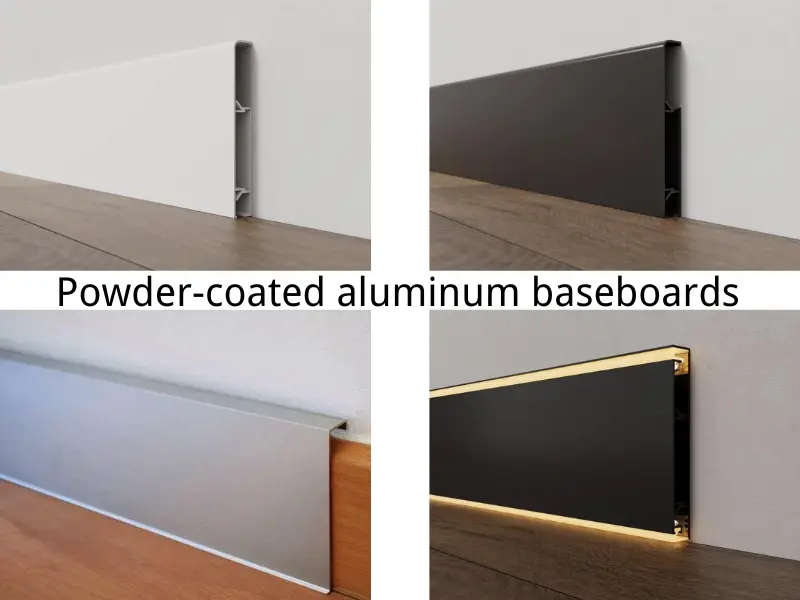
Versatile powder-coated aluminum baseboards with integrated LED channels for luxury interior design.
What are the advantages of powder coating?
- Wide Color Range: A diverse color palette is one of its greatest advantages.
- Excellent Cost-Effectiveness: Powder coating offers exceptional value for money, covering both low-end and high-end products. Many choose it specifically for its cost-effectiveness.
- Flaw Concealment: Its ability to conceal imperfections is unmatched by other surface treatments. For hollow aluminum profiles with defects such as extrusion marks or scratches caused during production, powder coating is an indispensable solution.
IV. Electrocoating
Why choose electrocoating for aluminum hollow tube profiles?
It offers mirror-like smoothness and an exceptionally silky-smooth feel, and it can cover hard-to-reach areas that other surface treatment methods cannot. It is an advanced alternative to anodizing.
What are the applications of electrocoated aluminum hollow tube profiles?
- Indoor aluminum doors and windows, such as folding doors in Bahrain
- Aluminum profiles for indoor furniture