



Aluminum Alloy Baseboards vs. PVC Baseboards
Date: 2026-05-25Views: 682
The Dilemma of Choosing Baseboards
Skirting boards, an often-overlooked architectural detail, actually serve a dual purpose: protecting the base of walls, concealing floor expansion joints, and providing a visual transition between spaces. In today’s decorative materials market, aluminum alloy and PVC skirting boards have become the two most popular choices, yet their positioning is starkly different—aluminum alloy represents durability, modernity, and high-tech sophistication, while PVC is known for its cost-effectiveness and ease of installation.
For homeowners, contractors, commercial property managers, and even wholesale buyers, deciding between these two materials often involves a difficult trade-off between budget, design style, and service life. This guide provides a comprehensive comparison covering physical properties, aesthetic appeal, installation, life-cycle costs, and environmental attributes. It also highlights the irreplaceable value of aluminum alloy baseboards in the field of smart home integration, helping you make precise procurement decisions for your projects.
I. Understanding Aluminum Alloy and PVC Baseboards
1.1 What Are Aluminum Alloy Baseboards?
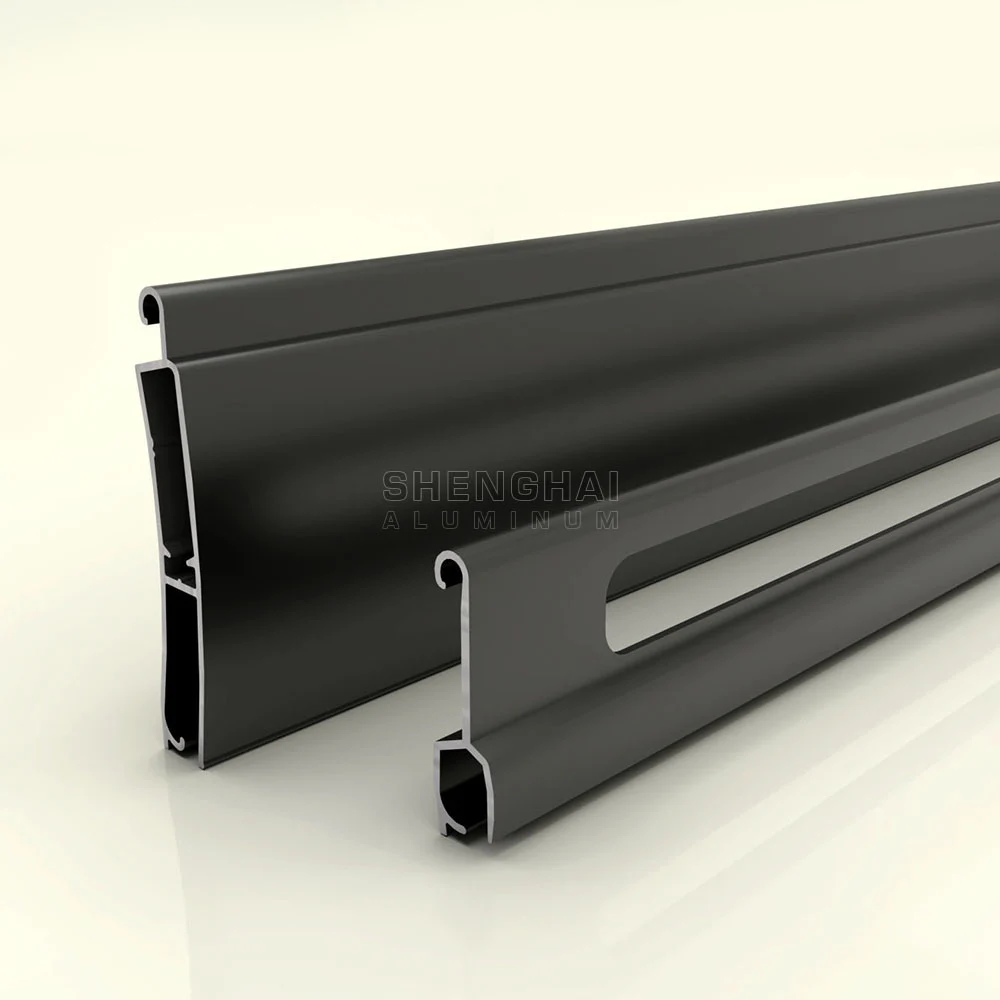
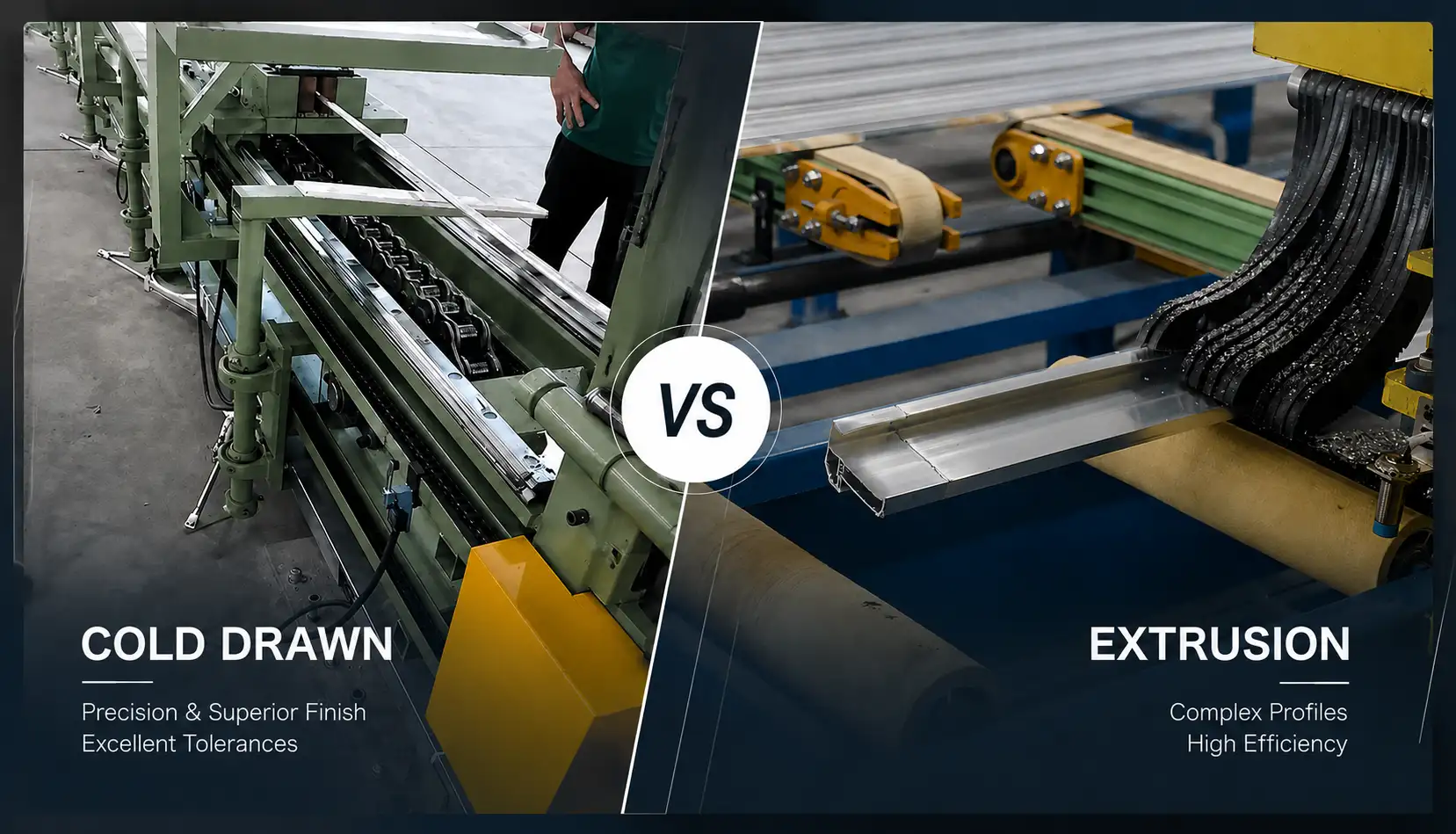
Aluminum alloy baseboards are manufactured by extruding aluminum profiles through molds, offering a variety of shapes and finishes. They typically require surface treatment to achieve both aesthetic appeal and durability. With an exceptionally long lifespan—often exceeding 30 years—they match the longevity of the building structure itself and are well-suited for mid-to-high-end architectural styles.
Common users in the mid-to-high-end market include:
- Australia: High-end residential developers and hotel groups in Sydney and Melbourne, who prioritize fire resistance ratings and modern coastal styles, making extensive use of metal accents.
- Germany: Commercial office projects and minimalist architectural firms in Berlin and Munich, which pursue industrial precision and environmental certifications (such as DGNB), favoring concealed, recessed designs.
- United Arab Emirates: Luxury hotels, high-end retail spaces, and private villas in Dubai and Abu Dhabi, which demand extremely high standards for moisture resistance and dimensional stability, and prefer custom finishes such as champagne gold and brushed copper.
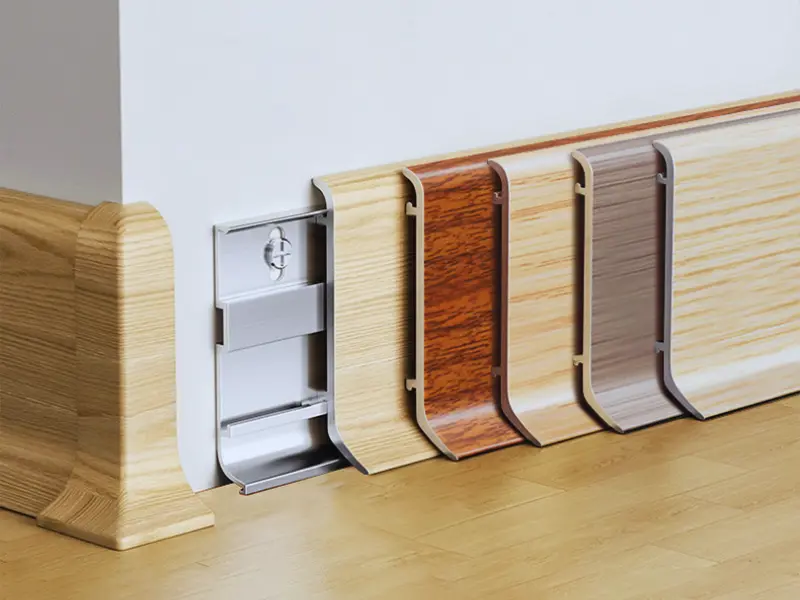
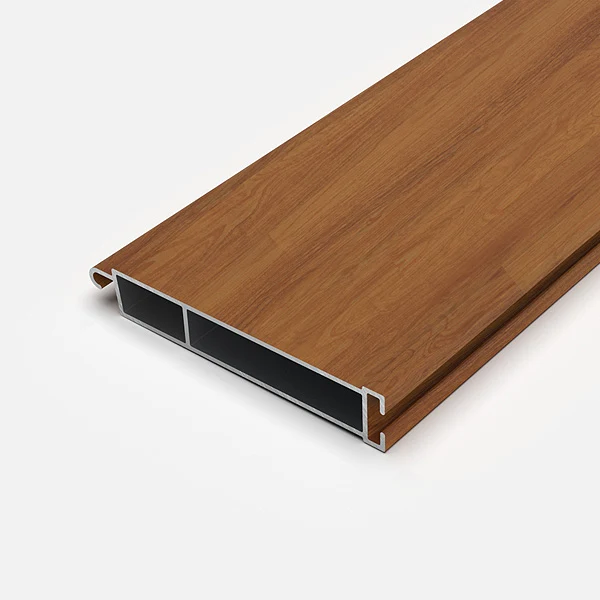
Premium clip-on aluminum skirting board with realistic wood grain finish, available in multiple colors to match any interior design. Features a hidden snap-in installation system, built-in cable management channel, and durable waterproof aluminum construction. Ideal for residential homes, commercial spaces, and high-humidity environments like bathrooms or coastal areas.
1.2 What is PVC baseboard?
PVC baseboards are primarily made from polyvinyl chloride (PVC) resin, which is extruded after adding plasticizers, stabilizers, and other additives. The surface is typically covered with a printed film imitating wood or marble grain. They are soft to the touch, flexible, and extremely affordable, making them widely used in budget housing, rental property renovations, and temporary installations. PVC baseboards are a classic choice for cost-sensitive projects, but they have inherent limitations in terms of physical properties and long-term durability.
Features of Aluminum Alloy Baseboards:
- Rugged and Durable: The base material is extruded from 6063-T5/T6 grade aluminum profiles, which inherently possess strong impact resistance. Enhanced by surface treatments such as anodizing, the overall product becomes extremely sturdy and durable, capable of withstanding daily impacts without deformation or cracking.
- Premium Metallic Finish: The surface is formed directly from extruded metal, offering an authentic metallic feel and a matte finish—completely free of the cheap look associated with plastic. Anodization allows for a variety of colors, including champagne, matte black, titanium gray, and pure white. With clean lines and a refined aesthetic, this is precisely why it is ideal for mid-to-high-end settings.
- Moisture-Resistant and Stain-Resistant: Aluminum alloy is naturally water-resistant, and its surface naturally forms a dense aluminum oxide film, providing a certain level of rust and corrosion resistance even without additional treatment. In special environments such as coastal areas with high salt fog or chemical corrosion, higher-grade anodization or fluorocarbon coating can be applied to enhance protection. Daily cleaning requires only a damp cloth, and it will never develop mold. In contrast, PVC requires adhesive installation and is prone to delamination and warping in areas with high humidity or significant temperature fluctuations.
- Fire Safety: Aluminum alloy has a melting point of approximately 650°C and is classified as a Class A non-combustible material, meaning it will not contribute to the spread of fire. In contrast, while PVC has some flame-retardant properties, it releases large amounts of toxic smoke when burning, posing serious safety hazards in densely populated areas.
- Versatile Functionality: Aluminum alloy profiles can be precisely integrated with LED light channels. When light strips are embedded, they create a floating light-and-shadow effect, producing an exceptionally sophisticated visual experience at night. This is particularly suitable for high-end villas, luxury hotels, and upscale restaurants, effectively combining lighting with ambiance creation.
- Eco-Friendly and Recyclable: Aluminum alloy is 100% recyclable, with minimal loss of performance during the recycling process. This not only aligns with environmental policies but also ensures high value retention.
Features of PVC Baseboards:
- Flexible Material: PVC possesses a certain degree of elasticity, allowing it to accommodate minor thermal expansion and contraction. It naturally conforms to slight irregularities in wall surfaces, requiring minimal substrate flatness and offering a high margin for error during installation.
- Easy to Cut: The material is soft and easy to cut; a utility knife or standard hand saw is sufficient, eliminating the need for specialized metal-cutting equipment like that required for aluminum alloy. This significantly lowers the installation barrier.
- Low Material Cost: Compared to aluminum alloy, PVC is extremely affordable, making it suitable for price-sensitive mid-to-low-end consumers. It is a practical choice for projects with limited budgets that prioritize quick completion.
How to Choose Between Aluminum and PVC Baseboards? A Buying Guide
The core difference between aluminum and PVC baseboards lies in their key features: Aluminum emphasizes durability, fire resistance, moisture resistance, and the ability to incorporate LED strip lighting, making it suitable for long-term use or public spaces; PVC emphasizes affordability, flexibility, and ease of installation, making it suitable for short-term transitional use or projects with tight budgets.
Quick Buying Guide
- Consider the intended lifespan: If you plan to use them for over 20 years and want to avoid repeated repairs, choose aluminum (lower total cost, and recyclable when discarded). For short-term transitional use (3–5 years) or rental properties, choose PVC to save money.
- Consider Environmental Requirements: For public spaces like shopping malls and hospitals, or projects requiring fire safety/environmental certifications, aluminum alloy is mandatory (non-combustible, non-toxic, 100% recyclable). PVC is suitable for standard home bedrooms and home offices.
- Consider Usage Intensity: For high-traffic areas prone to impacts, such as hallways and lobbies, choose aluminum alloy (high hardness, impact-resistant). For quiet, private spaces, PVC is sufficient.
- Consider functional design: If you need LED strip lighting or recessed, invisible baseboards, you must choose aluminum alloy (can be slotted, excellent heat dissipation); PVC cannot accommodate these features.
- Consider budget and style: If your budget is extremely limited, you prefer a natural wood vintage style, or you plan to install it yourself, prioritize PVC. If you prefer a metallic finish but have a tight budget, opt for basic aluminum alloy (avoid complex surface treatments).
Compromise Solution
Use aluminum alloy in damp or high-traffic areas and PVC in dry or private areas for a mixed-material approach; if you like the look of aluminum but are on a budget, choose a basic spray-painted model—it’s less hassle than dealing with PVC aging and needing to redo the work later.