
Extrusión de aluminio frente a trefilado en frío: ¿Qué proceso necesita?
Hora de lanzamiento:2026-09-04Vistas de página:281
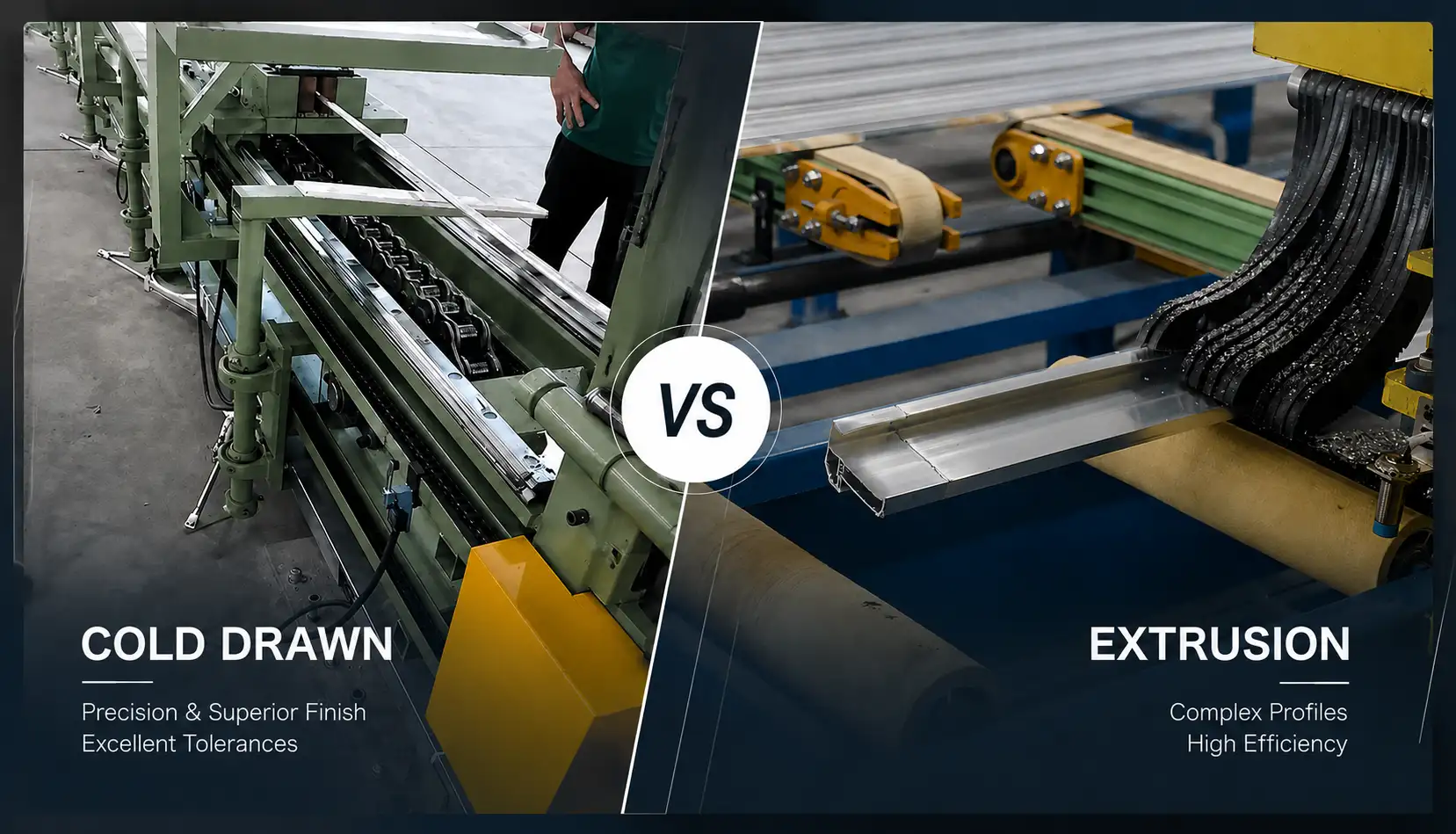
When sourcing custom aluminum profiles and tubing or designing aluminum structural components, Aluminum Extrusion y Aluminum Drawing are two fundamental manufacturing processes that determine the material's physical geometry, dimensional accuracy, and mechanical properties.
Although both processes can produce aluminum tubes and profiles in standardized dimensions, their underlying forming mechanisms, thermal and mechanical conditions, tooling structures, and resulting microstructure and grain structure are significantly different.
These differences not only affect the final mechanical performance of the material but also define the practical limits of profile complexity, dimensional tolerances, secondary fabrication, tooling costs, and production efficiency.
This article provides an engineering-focused comparison of Aluminio extruido y Cold Drawn Aluminum, helping structural designers, manufacturing engineers, and procurement professionals select the most suitable process for their applications.
1. Understanding the Metal Forming Mechanisms
To accurately evaluate the performance of an aluminum product, it is important to understand the temperature, stress conditions, and plastic deformation experienced by the material during manufacturing.
1.1 Aluminum Extrusion: Forming Under Elevated-Temperature Compression
Aluminum Extrusion is one of the most widely used manufacturing processes for producing aluminum profiles and tubing. Depending on the alloy and extrusion process, it is commonly performed at elevated temperatures, where the aluminum billet has sufficient plasticity for efficient forming.
- Thermal condition: Before extrusion, a solid aluminum billet is heated to an elevated temperature to increase its ductility and reduce the force required for deformation.
- Forming process: The heated billet is pushed through a specially designed extrusion die by a heavy-duty extrusion press. The aluminum flows through the die opening and takes the shape of the required cross-section.
- Profile sizing and cooling: After exiting the die, the newly formed aluminum profile is rapidly cooled, often using an inline quenching system. For heat-treatable alloys, this helps retain alloying elements in solid solution and prepares the material for subsequent artificial aging.
- Heat treatment: Depending on the required mechanical properties, extruded aluminum may subsequently undergo processes such as solution heat treatment, quenching, natural aging, or artificial aging to achieve tempers such as T4 or T6.
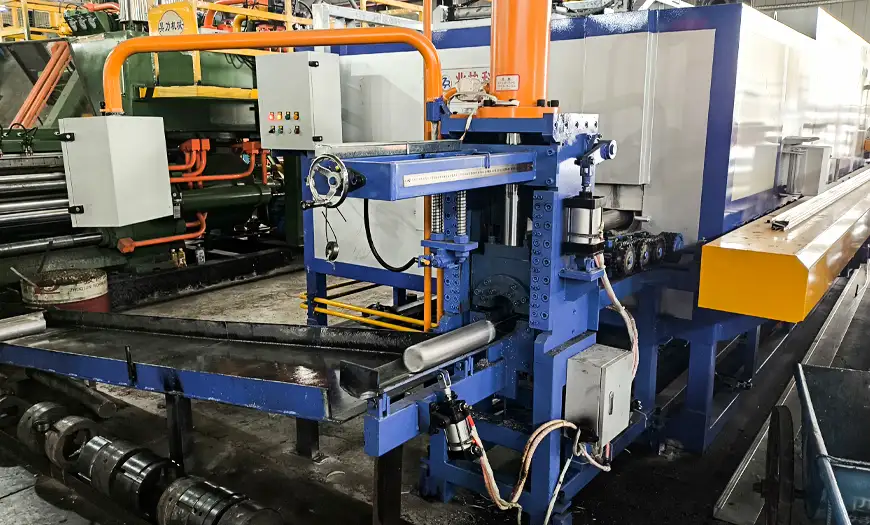
Figure: Heavy-duty industrial aluminum extrusion press machine installed in our manufacturing facility for producing custom aluminum profiles.
1.2 Aluminum Drawing: Controlled Plastic Deformation in the Cold State
Aluminum Drawing, particularly Cold Drawing, is generally performed at or near room temperature. In many applications, the drawing process is used as a secondary operation on previously extruded or otherwise formed aluminum stock.
- Mechanical pulling: The aluminum material is mechanically pulled through a drawing die at room temperature. The die reduces or reshapes the material while controlling its final dimensions.
- Controlled plastic deformation: During the drawing operation, the material undergoes controlled plastic deformation. The amount of reduction per pass must be carefully controlled because excessive deformation can increase residual stress and work hardening while reducing ductility.
- Dual dimensional control: When producing precision drawn tubing, the outer diameter is controlled by the drawing die while an internal mandrel or plug may be used to control the inner diameter and wall thickness. The material is plastically deformed within the controlled clearance between the die and mandrel.
This process provides excellent control over dimensional accuracy, concentricity, wall thickness, and surface finish, making drawn aluminum tubing particularly suitable for precision applications.
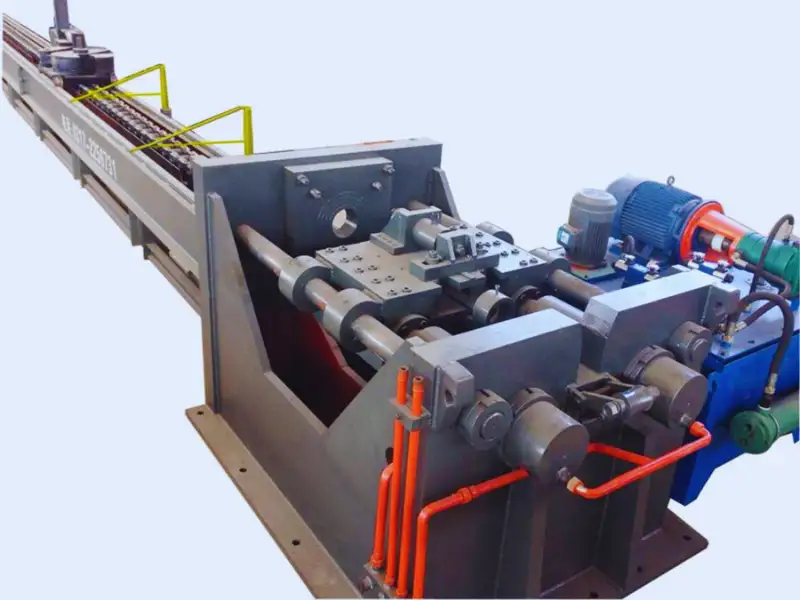
Overview of a heavy-duty cold draw bench machine utilized for high-precision metal and aluminum tube drawing processes.
2. Cross-Section Design and Secondary Fabrication
For customized aluminum products, the ability to accommodate complex structural geometries and subsequent CNC machining is an important consideration when selecting a manufacturing process.
2.1 Cross-Section Design Flexibility: A Major Advantage of Aluminum Extrusion
One of the primary engineering advantages of Aluminum Extrusion is its ability to produce complex cross-sections in a single forming operation.
Because aluminum has high plasticity at extrusion temperatures and flows under compressive forces, engineers can design highly customized aluminum profiles with sophisticated cross-sectional geometries.
For example, a single extrusion die can produce profiles featuring:
- Multiple internal cavities
- Integrated mounting channels
- T-slots and fastening grooves
- Snap-fit features
- Reinforcing ribs
- Heat-dissipation fins
- Complex architectural profiles
- Custom industrial structural sections
This makes custom aluminum extrusion particularly suitable for curtain wall systems, window and door frames, industrial automation equipment, machine frames, heat sinks, transportation components, and other applications requiring complex profiles.
By comparison, the Aluminum Drawing process relies primarily on tensile forces and requires the material to pass through a carefully controlled die opening. Its practical applications are therefore more commonly associated with round tubes, square tubes, simple symmetrical profiles, and precision tubing.
Highly complex or heavily asymmetric cross-sections are generally much more difficult and costly to manufacture through conventional drawing processes.
2.2 CNC Machining, Bending, and Surface Treatment
The manufacturing process also influences how aluminum responds to subsequent fabrication and finishing operations.
Cold Drawn Aluminum has undergone plastic deformation during the drawing process, which can increase hardness and strength through work hardening. Its controlled dimensions and consistent material properties can be advantageous for precision machining applications.
For extruded aluminum, extensive material removal during CNC machining should be carefully planned. Internal stresses within the extrusion may be released during machining, potentially causing dimensional changes or distortion, particularly in long and thin components.
Bending and Forming
Cold drawn aluminum with a high degree of work hardening generally has lower ductility than softer material conditions. As a result, aggressive bending may increase the risk of cracking, especially around tight bend radii.
By comparison, aluminum extrusion supplied in a suitable temper, such as T4, generally provides better ductility and can be more suitable for subsequent bending, forming, and fabrication operations.
The appropriate temper should always be selected according to the alloy, required mechanical properties, bend radius, and forming method.
Anodizing and Surface Finishing
The surface characteristics of drawn and extruded aluminum can also differ.
The drawing process can produce a relatively smooth and consistent surface finish due to the controlled contact between the material and drawing die. However, lubrication, die condition, and drawing parameters can significantly influence the final surface quality.
Extruded aluminum may exhibit characteristic longitudinal extrusion lines or surface marks. Depending on the required appearance, these may be reduced through surface preparation processes such as chemical cleaning, etching, polishing, or other surface treatment before anodizing.
3. Microstructure and Structural Reliability
The different forming mechanisms of extrusion and drawing leave distinct effects on the material's microstructure and grain structure, which can influence its mechanical performance and dimensional stability.
3.1 How Mechanical Strength Is Developed
The mechanical strength of extruded aluminum is primarily determined by:
- Alloy composition
- Extrusion parameters
- Cooling/quenching conditions
- Heat treatment
- Final temper
For heat-treatable aluminum alloys, processes such as solution heat treatment and artificial aging can be used to achieve high-strength tempers such as T6.
In Cold Drawn Aluminum, room-temperature plastic deformation introduces work hardening, which increases dislocation density and can increase yield strength and hardness.
At the same time, work hardening generally reduces elongation and ductility. Therefore, there is a trade-off between increased strength and reduced formability.
The exact balance depends on alloy composition, drawing reduction, intermediate annealing, final temper, and other production parameters.
3.2 Tube Wall Integrity: Porthole Extrusion vs. Seamless Tubing
One important consideration when comparing extruded and drawn tubing is the internal structure of the tube.
Extruded Aluminum Tubing
For hollow aluminum profiles, particularly complex hollow sections, manufacturers may use a porthole die.
During the extrusion process, the aluminum billet is divided into multiple metal streams by the die bridges before the streams are recombined under high pressure inside the die.
This process can create longitudinal weld seams, also commonly referred to as extrusion welds or die welds, within the hollow profile.
For many standard structural and architectural applications, properly manufactured extrusion welds provide adequate performance.
However, applications involving extremely high internal pressure, severe expansion, or other critical loading conditions require careful evaluation of the alloy, extrusion process, weld quality, heat treatment, and applicable industry standards.
Seamless Drawn Tubing
High-quality seamless drawn tubing is commonly manufactured by first producing a seamless hollow billet or tube, often through a suitable extrusion or piercing process, and then reducing its dimensions through one or more drawing operations.
Because the starting tube is seamless, the final drawn tube does not contain the longitudinal extrusion weld seam associated with a porthole-extruded hollow profile.
This makes seamless drawn tubing particularly attractive for applications where wall thickness consistency, dimensional accuracy, concentricity, and pressure resistance are critical.
For high-pressure applications, however, material selection, manufacturing standards, nondestructive testing, heat treatment, and qualification requirements must also be considered rather than relying on the manufacturing process alone.
4. Tooling Investment and Production Cost
Once the technical requirements have been established, tooling investment and overall manufacturing cost become important factors in process selection.
In general, Aluminum Extrusion is more economical for complex custom profiles and high-volume production because one extrusion die can create the required cross-section directly.
Aluminum Drawing, particularly precision multi-pass drawing, may involve a longer processing chain and additional tooling.
4.1 Tooling Cost and Development Time
Extrusion Dies
For many standard and custom aluminum profiles, an extrusion die provides a relatively direct manufacturing solution.
Once the cross-section has been finalized, the die can be designed and manufactured for the required profile. After die trials and adjustments, production can proceed efficiently.
This makes custom aluminum extrusion particularly suitable for:
- New product development
- Custom industrial profiles
- Architectural aluminum profiles
- Medium- and high-volume production
- Applications requiring complex cross-sections
Drawing Dies and Mandrels
Precision Aluminum Drawing may require a combination of drawing dies, plugs, mandrels, and other tooling.
When substantial dimensional reduction is required, multiple drawing passes may be necessary. Each pass may use a different tooling configuration to gradually achieve the target dimensions.
Consequently, precision drawn tubing can involve higher tooling requirements and longer process development compared with a straightforward extrusion process.
For small-volume custom projects, the additional tooling and processing requirements may significantly affect the overall manufacturing cost.
4.2 Production Efficiency and Total Manufacturing Cost
Aluminum extrusion lines are designed for continuous production and can achieve high throughput, particularly for large-volume orders.
Once the extrusion die has been developed and production parameters have been established, the cost of the tooling can be distributed across a large production volume.
The drawing process may involve a longer manufacturing chain, including:
- Surface preparation
- Pointing or end preparation
- Drawing
- Intermediate annealing when required
- Additional drawing passes
- Straightening
- Final sizing
- Surface finishing
These additional operations can increase production time, equipment utilization, labor requirements, and overall manufacturing costs.
As a result, precision drawn aluminum tubing is generally selected when its dimensional and mechanical advantages justify the additional processing cost.
5. Aluminum Extrusion vs. Aluminum Drawing: Process Selection Guide
The most appropriate manufacturing process depends on the required geometry, dimensional tolerances, mechanical properties, surface finish, production volume, and application environment.
Choose Aluminum Extrusion When:
Aluminum Extrusion is generally the preferred solution when profile complexity and production efficiency are the primary considerations.
Typical applications include:
- Custom aluminum profiles with integrated T-slots, channels, clips, grooves, or multiple cavities.
- Industrial automation frames, machine structures, workstations, equipment supports, and architectural structures.
- Aluminum window and door frames, curtain wall profiles, railings, and structural components.
- Heat sinks and profiles requiring complex heat-dissipation fins.
- Standard tubing and hollow profiles where extreme pressure resistance is not the primary requirement.
- High-volume production where tooling costs need to be distributed across a large quantity.
The key advantages of extrusion include:
Complex Cross-Sections + Flexible Design + High Production Efficiency + Competitive Tooling Cost
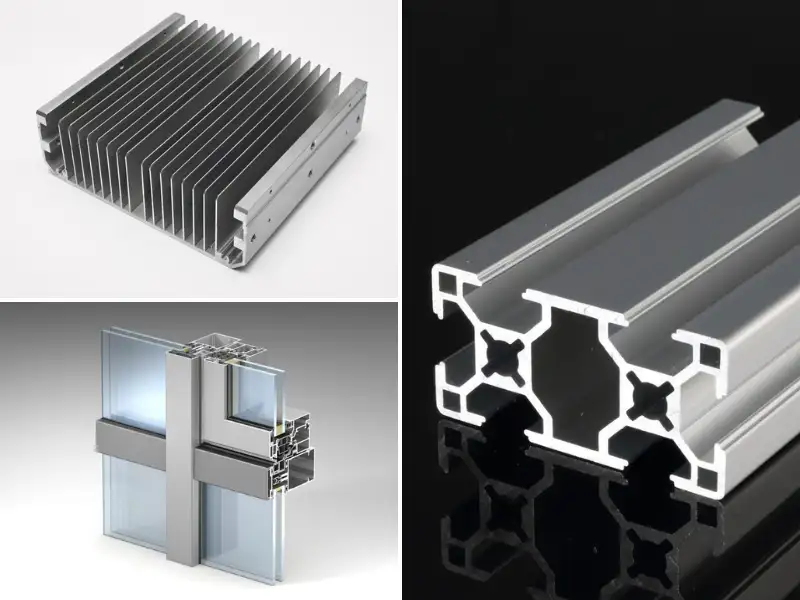
Examples of custom aluminum extrusion applications, featuring high-efficiency heat sinks (top left), architectural curtain wall framing (bottom left), and structural T-slot profiles (right).
Choose Cold Drawn Aluminum When:
Cold Drawn Aluminum or Seamless Drawn Tubing should be considered when dimensional precision, surface quality, concentricity, and controlled wall thickness are critical.
Typical applications include:
- Aerospace and high-performance hydraulic tubing.
- Precision instrumentation tubes and components.
- Applications requiring tight control of inner diameter and outer diameter.
- Components requiring excellent concentricity and wall-thickness consistency.
- Telescopic components requiring accurate clearance or interference fits.
- Precision mechanical components where dimensional tolerances are more demanding than those achievable through standard extrusion alone.
The key advantages of drawing include:
High Dimensional Accuracy + Tight Tolerances + Excellent Concentricity + Controlled Wall Thickness + Work-Hardened Mechanical Properties
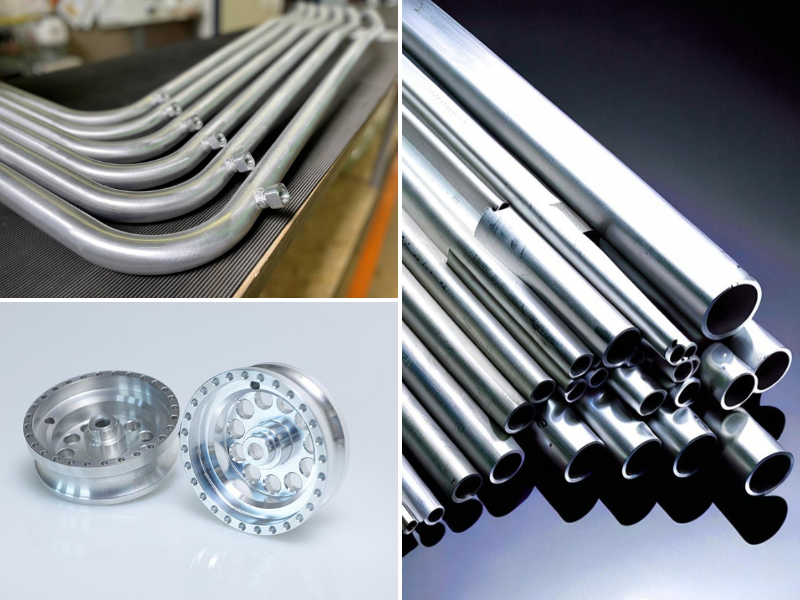
Examples of cold drawn aluminum applications, showcasing precision bent hydraulic tubing (top left), seamless drawn tubes (right), and concentric machined mechanical parts (bottom left).
6. Final Comparison: Extruded Aluminum vs. Cold Drawn Aluminum
| Factor | Aluminum Extrusion | Cold Drawn Aluminum |
|---|---|---|
| Primary forming force | Compression | Tension |
| Typical forming condition | Elevated temperature | Room temperature / cold working |
| Main tooling | Extrusion Die | Drawing Die + Mandrel/Plug |
| Cross-section capability | Excellent for complex profiles | Better suited to simple and symmetrical sections |
| Dimensional accuracy | Bien | Excelente |
| Surface finish | Good, may require finishing | Generally smooth and consistent |
| Work hardening | Limited during hot forming | Significant |
| Strength development | Alloy + heat treatment | Work hardening + heat treatment |
| Ductility | Generally higher in suitable tempers | Generally reduced after cold work |
| Complex hollow profiles | Excelente | More limited |
| Seamless tubing | Possible depending on process | Excellent when starting from seamless tube |
| Concentricity | Bien | Excelente |
| Production efficiency | Alto | Lower due to additional processing |
| Tooling requirements | Generally simpler | Often requires multiple dies/mandrels |
| Typical cost | More economical for complex/high-volume profiles | Higher for precision tubing |
| Typical applications | Architectural and industrial profiles, frames, heat sinks, structural components | Precision tubing, hydraulic systems, aerospace, instrumentation |
Conclusión
The choice between Aluminum Extrusion and Aluminum Drawing should not simply be based on whether a component is made from a tube or profile.
The correct process depends on the interaction between cross-section geometry, dimensional tolerances, alloy, temper, mechanical requirements, surface finish, pressure conditions, production volume, tooling investment, and secondary fabrication requirements.
For complex custom profiles, integrated channels, structural frames, architectural systems, and high-volume production, Aluminum Extrusion is usually the more efficient and cost-effective solution.
For precision tubing, tight dimensional tolerances, excellent concentricity, controlled wall thickness, and seamless construction, Cold Drawn Aluminum and Seamless Drawn Tubing can provide significant advantages.
Understanding these differences at the design stage allows engineers and procurement teams to select the appropriate manufacturing process before tooling begins, helping reduce development costs, improve product performance, and achieve a more competitive total cost of ownership.