
How to Choose the Best Aluminum Pergola: 2026 Engineering & Buying Guide
Date: 2026-03-30Views: 19
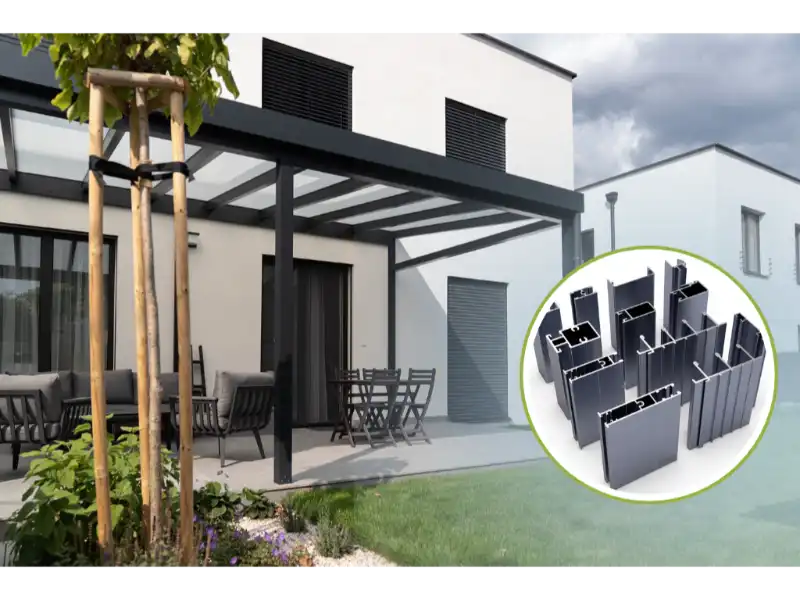
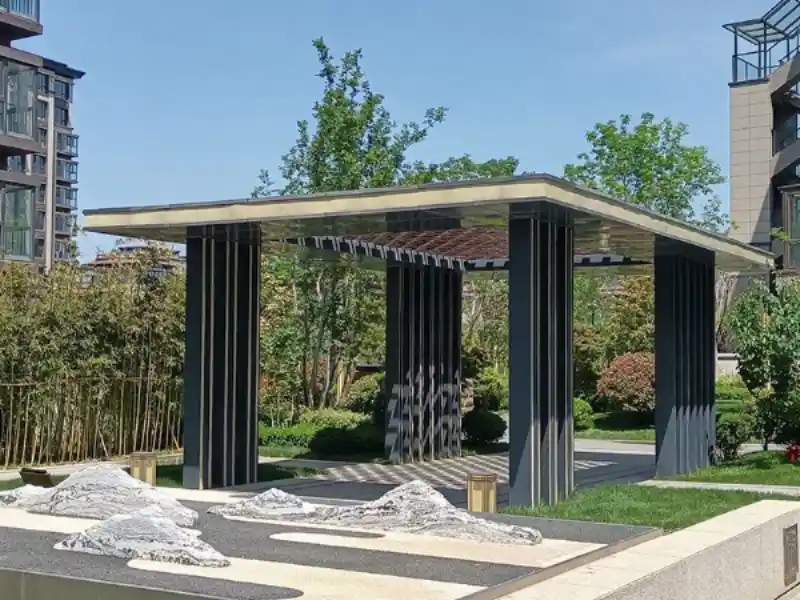
In the sector of high-end outdoor architecture, an aluminum pergola is not just a sunshade; it is a structural system defined by material density. At Shenghai Global, our bioclimatic pergola systems are forged using 3600T heavy-duty extrusion technology. This ensures that every 6063-T6 hardened alloy profile possesses the structural mass and grain density required to eliminate "material fatigue," providing a zero-distortion foundation for motorized louver systems in extreme global climates.
| Engineering Dimension | Standard Residential Grade | SH-ALUMINUM (3600T Matrix) |
|---|---|---|
| Extrusion Power | 1500T - 2000T (Light Profile) | 3600T Heavy-Duty Press |
| Alloy Temper | 6063-T5 (Basic Yield) | 6063-T6 (High-Density Reinforced) |
| Snow Load Capacity | 50-80kg/m² (Standard) | Certified 150kg/m² (Extreme) |
| Max Clear Span | 3 - 4 Meters | 6+ Meters (Column-Free Span) |
| Surface Protection | 10-15μm (Standard) | 25μm (Class 2 Coastal Grade) |
| Technical Dimension | Standard Market Grade | Shenghai Matrix Support (3600T) |
|---|---|---|
| Extrusion Press Force | 1500T - 2000T (Loose Grain) | 3600T Heavy-Duty (High Density) |
| Alloy Temper | 6063-T5 (Standard Yield) | 6063-T6 (Reinforced Solution Heat) |
| Dimensional Tolerance | ±0.15mm (Visual Gaps) | ±0.01mm to ±0.03mm (Seamless) |
| Max Clear Span | 3 - 4 Meters | 6+ Meters (Superior Rigidity) |
| Surface Coating | Class 1 (40μm thickness) | Qualicoat Class 2/3 (60-80μm) |
Aluminum Pergola Engineering FAQ
1. What defines an Industrial-Grade Aluminum Pergola?
It is an advanced bioclimatic structure engineered from architectural-grade aluminum profiles. Unlike light-duty versions, industrial systems utilize motorized louver systems to manage micro-climates, providing year-round protection. It integrates automated ventilation, thermal regulation, and structural safety into a single modular footprint, designed for 25+ years of durability.
2. Why is alloy grade critical for structural integrity?
Structural safety is a direct function of material density. Using 6063-T6 alloy pergola profiles provides a 30% higher yield strength than standard T5. The T6 temper involves artificial aging that refines the internal grain structure, ensuring that the beams can sustain high wind pressures and heavy vertical loads without microscopic fractures.
3. How does 3600T extrusion handle extreme snow loads?
A 3600T heavy-duty press allows for the creation of profiles with thicker walls (up to 4.0mm) and internal reinforcement ribs. This high-density extrusion is certified to handle 150kg/m² snow loads. For cold regions like Slovakia or Canada, this ensures that the primary roof rafters will not buckle under the weight of wet snow or ice accumulation.
4. What ensures 20-year color stability?
Longevity is determined by the micron thickness of the surface treatment. A professional powder coating process (60-80μm) using Qualicoat Class 2 powders ensures extreme UV resistance. This thickness creates a barrier that prevents oxygen from reaching the aluminum substrate, stopping peeling or fading for over two decades.
5. Is the aluminum pergola 100% waterproof?
Yes. When the louvers are closed, specialized interlocking seals create a watertight barrier. Rainwater is channeled into internal gutters hidden within the support beams and then directed down the pillars via integrated downspouts. This system is engineered to handle high-intensity rainfall without leaking into the seating area.
6. What is the ROI for commercial outdoor expansions?
Commercial projects typically achieve a full ROI in 12-18 months. By converting an exposed terrace into a year-round functional space, hospitality venues can increase guest capacity by 30-50%. Since the aluminum structure requires zero maintenance, the increased revenue is pure profit after the initial payback period.
7. Can the system withstand Grade 12 winds?
Our heavy-duty pergolas are tested for wind speeds exceeding 160 km/h. This stability is achieved through reinforced SS316 stainless steel anchoring and the high structural mass of our 3600T-pressed profiles, which provide the necessary inertia to resist high-velocity gusts.
8. What is the maximum column-free span possible?
Leveraging the rigidity of 3600T extrusion, we can achieve clear spans of 6 meters or more without intermediate support columns. This maximizes the usable floor area and provides an unobstructed architectural view, which is a major advantage for modern residential and commercial designs.
9. Is 25μm anodizing better for coastal areas?
Yes. For sites within 5km of the ocean, 25μm (Class 2) anodizing is mandatory. Standard coatings will pit and corrode due to salt-spray within years. The thicker anodic layer provides the highest level of protection against chloride ions in high-salinity maritime environments.
10. Do adjustable louvers keep the area cool?
Adjustable louvers create a "chimney effect." By tilting the louvers 15-45 degrees, hot air escapes upward while drawing cooler air from the sides. This natural convection can reduce the temperature in the protected space by up to 8°C compared to a fixed roof.
11. Can sensors automate the roof?
Rain and wind sensors automatically adjust the louvers. If rain is detected, they close to protect furniture; during high winds, they tilt to a neutral position to reduce uplift pressure.
12. Is rain noise a problem?
Our dual-wall louver design incorporates an internal air chamber that acts as an acoustic buffer, significantly dampening the sound of heavy rainfall for a quieter environment.
13. Can LED lights and heaters be integrated?
Yes, our profiles feature internal raceways to conceal all wiring. This allows for a clean aesthetic with dimmable LED strips and infrared heaters without any visible cables.
14. What maintenance is required?
Almost zero. Periodic rinsing of the drainage gutters with water to clear debris is sufficient. The aluminum and motorized parts are designed for a 25-year service life.
15. Is a building permit required?
Often treated as non-permanent structures, they may bypass strict permits. However, we provide full structural engineering certificates to assist with any local council approval processes.
16. Aluminum vs Wood?
Aluminum offers a 25-year lifespan with no rot, warping, or termite issues. It maintains its structural dimensions and aesthetic finish without the annual staining required for wood.
17. How is it anchored to concrete?
We use heavy-duty SS316 stainless steel expansion bolts or chemical anchors for maximum seismic and uplift resistance, ensuring the pillars remain locked to the foundation.
18. Can I install it myself?
Professional installation is recommended for motorized systems to ensure the louvers rotate in perfect synchronization and the drainage seals are perfectly aligned.
19. What is the typical lead time?
Custom manufacturing usually requires 25-35 days from engineering approval to final surface treatment, including our precision extrusion and T6 aging cycles.
20. Does it increase property value?
Yes. Real estate audits show that a high-quality bioclimatic pergola can increase property value by 5-10% by adding high-value, functional "outdoor room" living space.