

Aluminio con Rotura de Puente Térmico vs. Aluminio sin Rotura de Puente Térmico: Análisis de precios y estudios de casos de ROI
发布时间:2026-04-27浏览量:26
I. Why This Issue Is More Important in 2026 Than Ever Before
The global aluminum extrusion market is growing rapidly. Thermal break technology is facing unprecedented market opportunities in 2026. According to market research, the aluminum extrusion market is projected to grow at a compound annual growth rate (CAGR) of 9.5% from 2025 to 2030, reaching a value of $44.8 billion. The building and construction sector is one of the biggest drivers of this growth—perfiles de aluminio con rotura de puente térmico are becoming the standard rather than an option for meeting global green building codes.
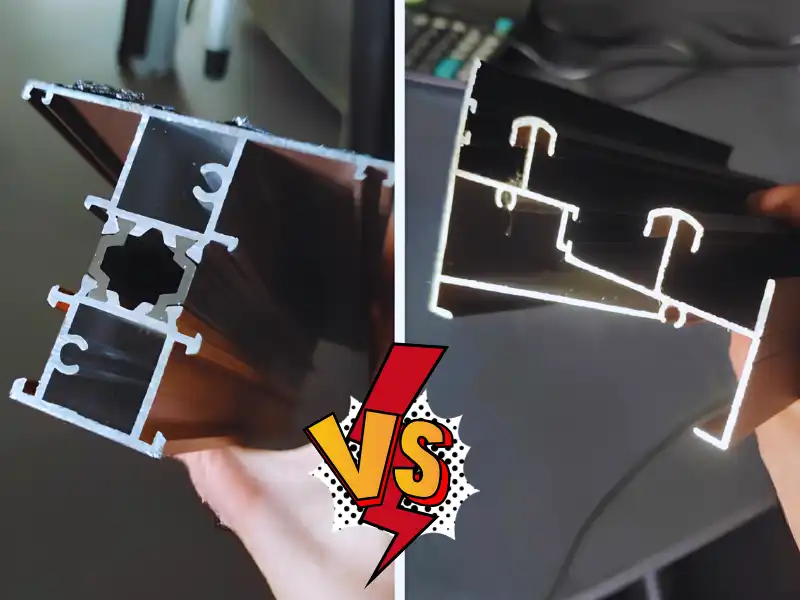
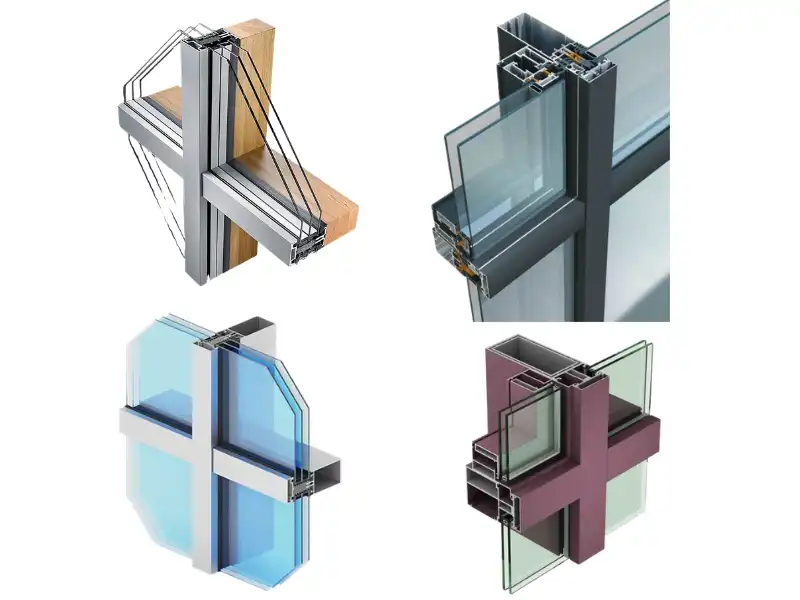
Figure 1: Side-by-side comparison of genuine thermal break aluminum profile (left) with a continuous polyamide thermal break strip, and a fake non-thermal break aluminum profile (right) with no continuous thermal barrier, showing the critical structural difference that impacts insulation performance.
II. What is the difference between Thermal Break and Non‑Thermal Break?
2.1 What is a Thermal Break?
A Thermal Break refers to the insertion of a low-thermal-conductivity insulating material (such as polyamide strips or polyurethane) between the inner and outer chambers of an aluminum profile. This physically interrupts the heat transfer path, effectively reducing heat loss through the metal. Thermal Break technology is the most widely used in aluminum doors, windows, and curtain walls, and is commonly found in everyday life.
2.2 What is a Non‑Thermal Break?
A Non‑Thermal Break (non-insulated profile) refers to traditional monolithic aluminum profiles, where the inner and outer aluminum frames are directly connected via metal. Aluminum itself has a very high thermal conductivity, ranging from approximately 160 to 237 W/(m·K). The most commonly used material for door and window profiles is 6063-grade aluminum alloy, with 160 W/(m·K) serving as the standard. This extremely high thermal conductivity makes it seem as though the material is designed to heat the interior when used for doors and windows.
Case Study 1: Thermal Break vs. Non‑Thermal Break Field Test
In October 2025, a side‑by‑side summer test was conducted in a south‑facing top‑floor unit within the same residential complex, comparing non‑thermal‑break aluminum (500 RMB/㎡) with national standard thermal‑break aluminum (900 RMB/㎡):
- After 2 hours of direct midday sunlight: The non‑thermal‑break aluminum window frame reached 58°C (too hot to touch for long), while the thermal‑break aluminum remained at only 32°C;
- With both units set to 26°C: Monthly electricity costs for non‑thermal break aluminum were 197 yuan higher, a 42% increase;
- Temperature difference near the window: The area near the non‑thermal break aluminum window was 4.2°C hotter than the center of the living room, while the thermal break aluminum window was only 0.8°C hotter.
Homeowner’s quote: “I saved 4,000 yuan on window installation, but the extra electricity costs over two years more than offset that savings.”
2.3 Sound Insulation and Structural Strength
GlobalSpec industry analysis indicates that thermal break profiles also offer superior acoustic attenuation. Their discontinuous material structure provides noise reduction of approximately 3–5 decibels more than non‑thermal break profiles. Gutmann’s testing confirms that the system’s airtightness and watertightness have undergone rigorous testing, effectively protecting the building envelope, reducing energy loss, and enhancing daily comfort.
Case Study 2: Actual Sound Insulation Test for Street‑Facing Units
2025, Hangzhou Binjiang, unit facing a major thoroughfare. Original non‑thermal break aluminum windows vs. thermal break aluminum windows of the same specifications:
- During the evening rush hour, outdoor noise reached 72 dB; with non‑thermal break aluminum windows, the indoor level remained at 55 dB (normal conversation volume) even with the windows closed, and the windows vibrated as large trucks passed by;
- With thermal break aluminum windows, indoor noise dropped to 38 dB (library‑level quiet) after closing the windows;
- Homeowner feedback: “The very night after replacing the master bedroom windows, I finally didn’t have to sleep with earplugs.”
2.4 Northern Homeowners
Case 3: Condensation and Mold in Northern China During Winter
December 2025, Shenyang homeowner with non‑thermal break aluminum windows; winter temperature -20°C (measured):
- Condensation: A full basin of water collected every morning; moldy curtains and peeling wall paint;
- Window frame temperature: So cold it sticks to your hand;
- Temperature difference near the window: 5°C lower than the center of the living room, resulting in nearly double the heating costs.
Homeowner’s own words: “After living there for just six months, I had to tear down the walls and redo the interior—I ended up spending every penny I’d saved.”
⚠️ Note: Some “fake thermal break” spacers on the market are actually low‑cost PVC strips rather than high‑strength PA66 nylon strips. They are prone to aging and failure after repeated thermal expansion and contraction—be sure to verify the spacer material when purchasing.
III. Differences in Cross‑Section Structures Between Thermal Break and Non‑Thermal Break
| Structural Elements | Non‑Thermal Break | Thermal Break |
|---|---|---|
| Basic Composition | Single‑metal monolithic, “B”‑shaped integrated cross‑section | Inner and outer metal + intermediate thermal break strip, two‑in‑one composite material |
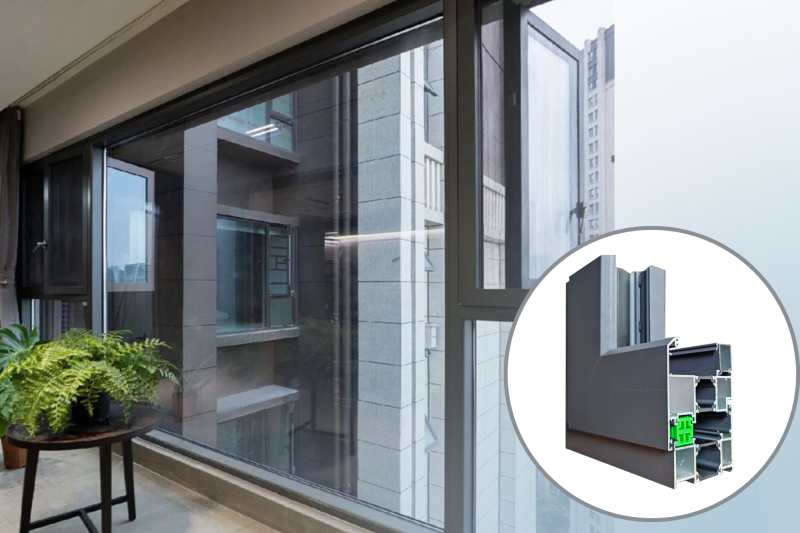
| Visual Identification | Continuous, monolithic aluminum cross‑section | Black thermal break strip visible on the cross‑section, separating the inner and outer sides |
| Thermal Insulation Material | None | PA66 nylon strip or polyurethane injection |
The traditional aluminum window and door profiles are split into two sections, with grooves cut at both ends. A thermal break strip with low thermal conductivity (typically PA66 nylon reinforced with glass fiber, or polyurethane injection molding) is then inserted into these grooves and mechanically bonded (by threading and rolling) to connect the sections. This black thermal break strip, only a few millimeters wide, represents the most significant structural difference between the two.
IV. What Are the Advantages of Thermal Break Aluminum?
Thermal Insulation
The greatest advantage of thermal break technology is its ability to provide thermal insulation. Thanks to the thermal break strip in the middle, the high thermal conductivity of the aluminum frame itself is significantly mitigated. The U‑value of the entire window drops from 5.0–6.0 W/m²K for non‑thermal break designs to 1.0–2.5 W/m²K, ensuring a warm interior in winter and a cool one in summer.
Solving Condensation and Mildew Problems
Principle of indoor condensation: When the surface temperature of the indoor aluminum frame is ≤ the dew point temperature, moisture in the air condenses into water droplets.
Non‑thermal break: In winter, cold outdoor air is directly conducted through the aluminum, causing the inner surface of the window frame to drop to as low as 0–5°C, inevitably leading to condensation → resulting in moldy curtains, peeling walls, and water accumulation on the windowsill.
Thermal Break: The thermal break strip interrupts the cold bridge, keeping the temperature of the aluminum frame’s interior surface close to room temperature (difference ≤ 3°C), which is far above the dew point → virtually no condensation.
Real‑life case from a Shenyang homeowner: With non‑thermal break windows, a basinful of water would collect on the window in the morning; after switching to thermal break windows, the area remained dry as ever.
Sound Insulation and Noise Reduction
Thermal break aluminum glass doors provide sound insulation and noise reduction. The core reason lies in the design of the glass and the thermal break aluminum frame—a feature lacking in non‑thermal break aluminum doors and windows.
V.Which cities in different countries have a high demand for thermal break aluminum doors and windows?
- 1. North America (U.S./Canada): Condensation Prevention
Why is demand high? The bitter cold in Chicago and freezing temperatures in Toronto cause non‑thermal break windows to easily develop condensation and mold.
Impact: In Canada, thermal break aluminum is almost standard for exterior windows. U.S. buyers place greater emphasis on improving the U‑value (thermal transmittance) to qualify for government green energy subsidies. - 2. Australia and the Middle East: Thermal Stability
Environmental Factors: Sydney’s fluctuating temperature differences and Riyadh’s 50°C heatwaves.
Reasons for Suitability: Australia’s strict building energy efficiency regulations (such as NatHERS) make it difficult for non‑thermal break products to pass inspection. Thermal break technology effectively controls profile warping caused by thermal stress, reducing long‑term maintenance costs. - 3. Southeast Europe (Albania)
Background: As Albania’s construction industry aligns with EU standards, there has been a surge in high‑end hotel and resort projects.
Value of Thermal Break: Adopting thermal break aluminum is viewed as the fastest way to increase property “premium” and meet EU energy efficiency targets. - 4. East Asia (South Korea): Noise Reduction
Environment: Seoul features dense high‑rise apartment complexes and significant urban noise.
Benefits of Thermal Break: Due to the material discontinuity in the thermal break structure, it offers natural acoustic attenuation advantages, reducing noise by 3–5 decibels more than standard aluminum. This is highly attractive to East Asian buyers seeking a high quality of life.
VI. What Factors Affect the Price of Thermal Break Technology?
It’s not just the cost of the thermal break material in the middle, but also production processes, glass types, sealing systems, and more.
Many people assume that “thermal break aluminum is expensive solely because of that thermal break strip”—but that’s not actually the case. The thermal break strip is just the starting point; the real cost difference stems from the cumulative impact of the entire system.
1️⃣ Material Type of the Thermal Break Strip
This is the most critical factor affecting price, and it’s also the area most prone to cost‑cutting.
- PA66 GF25 (National Standard): High‑temperature resistance, anti‑aging properties, thermal expansion coefficient similar to aluminum, remains secure over long‑term use, priced at over 25,000 RMB per ton.
- PVC (Substandard Imitation): Softens at high temperatures and becomes brittle at low temperatures, failing within 1–2 years. Costs only around 6,000 RMB per ton.
2️⃣ Composite Process: Insertion vs. Injection
The injection process costs about 15% more than the insertion method, but it increases overall strength by 30% and offers superior waterproofing and adaptability to complex cross‑sections. Different processes require different equipment investments and yield rates, which ultimately affect the processing cost per ton of profile.
3️⃣ Glass Types
Thermal break aluminum frames are merely the structure; the glass is what truly provides thermal insulation and soundproofing, accounting for the majority of the thermal performance.
- Single‑pane glass → Lowest cost, but U‑value > 5.0; essentially obsolete.
- Double‑pane insulated glass (5+12A+5) → Standard configuration, U‑value ≈ 2.7.
- Triple‑pane / Low‑E glass / Argon‑filled
- Laminated glass → Better sound insulation, but higher cost.
4️⃣ Sealing System
- Number of Sealing Channels: Upgrading from 2 to 3 channels increases costs by approximately 20%, but significantly improves airtightness and watertightness.
- Sealant Material: EPDM > Silicone Rubber > PVC. High‑quality EPDM offers aging resistance lasting over a decade.
5️⃣ Certifications
Materials certified under standards such as SASO and ISO 9001 require payment for audit and system maintenance costs.
IV. Why Choose Shenghai Global?
- Annual Production Capacity: 45,000+ tons, 7 extrusion lines, 1 vertical coating line
- Export Experience: 45+ countries, including high‑temperature markets such as Saudi Arabia, the UAE, and Qatar
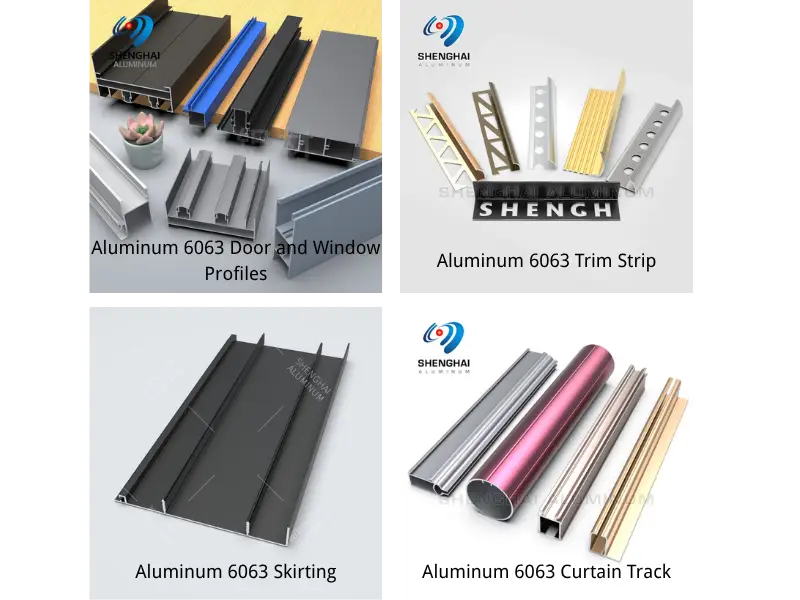
- End‑to‑End Quality Control: Fully in‑house operations from raw aluminum billet (6063‑T5) through extrusion, surface treatment, and value‑added processing
- Certificaciones: ISO 9001:2015; products comply with EN, ASTM, and SASO standards