
Aluminio frente a acero: ¿cómo elegir en 2026?
发布时间:2026-05-18浏览量:22
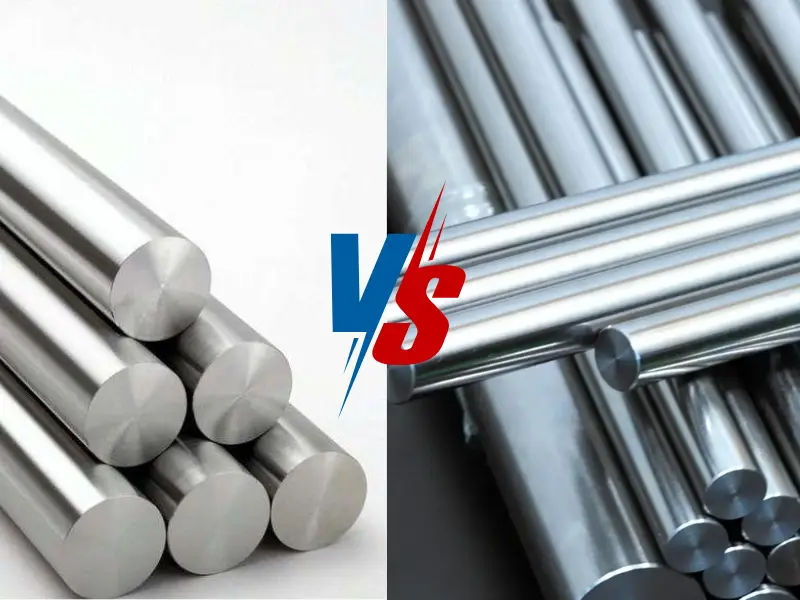
Figure 1: Solid aluminum bars (left) vs solid steel bars (right). Aluminum has a brighter metallic finish and is approximately 1/3 the density of steel, making it significantly lighter for the same volume.
I. Aluminum vs. Steel: Key Performance Indicator Comparison and Material Selection Recommendations
| Comparison Criteria | Aluminum | Steel | Shenghai Global’s 16-Year Experience Recommendation |
|---|---|---|---|
| Density (g/cm³) | 2.70 | 7.85 | Need to reduce transportation and installation weight? Aluminum is about two-thirds lighter than steel, making it particularly suitable for high-altitude work and export shipping, which can save significant freight costs. |
| Tensile Strength (MPa) | 6061-T6: 310 7075-T6: 572 | Mild Carbon Steel: 400–500 Alloy Steel: 700–2000+ | Choose steel for heavy-duty load-bearing structures; choose aluminum for light-load, decorative, and heat-dissipation applications. For the vast majority of doors, windows, and solar panel mounts, 6063-T5 (strength approx. 200 MPa) is perfectly sufficient. |
| Yield Strength (MPa) | 6061-T6: 276 | Q235: 235 | Here, let’s correct a common misconception: the yield strength of 6061-T6 is actually higher than that of the most commonly used carbon steel, Q235. Do not assume that aluminum is necessarily softer than steel. |
| Impact Toughness | Low (prone to low-temperature brittleness) | High (some special steels exhibit excellent low-temperature toughness) | In extremely cold regions, steel is the preferred choice for components subjected to impact loads (such as railroad tracks); for general construction and industrial applications, this difference has virtually no impact. |
| Thermal Conductivity (W/m·K) | Approx. 235 | Approx. 45 | Aluminum is essential for heat sinks, LED lamp housings, and electrical equipment enclosures; steel’s thermal conductivity is too poor to meet heat dissipation requirements. |
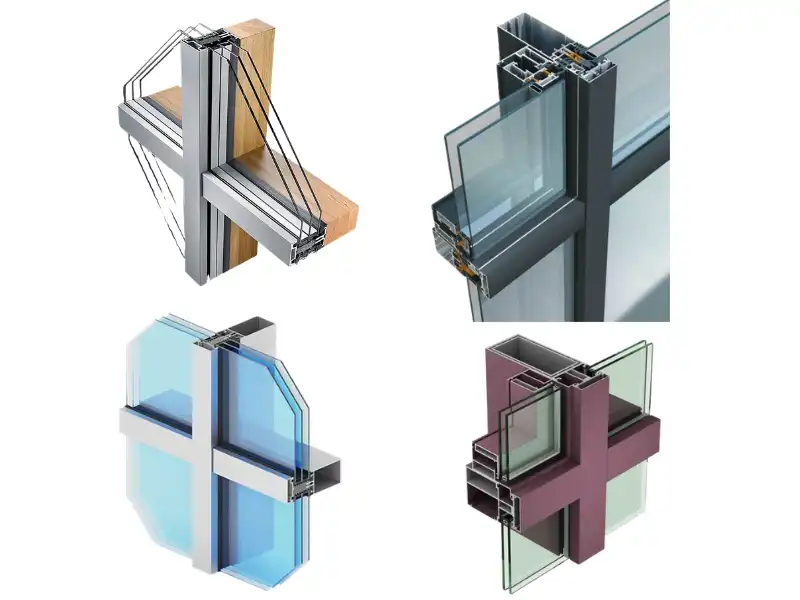
| Coefficient of Thermal Expansion (10⁻⁶/K) | 23 | 12 | For continuous applications involving long spans (e.g., large-area curtain walls), sufficient expansion joints must be provided, as aluminum expands and contracts significantly more than steel. |
| Melting Point (°C) | 660 | 1370–1500 | Steel is a safer choice for locations with extremely high fire safety requirements (e.g., escape routes); for ordinary buildings, the fire resistance of aluminum profiles can be improved by applying fire-retardant coatings. |
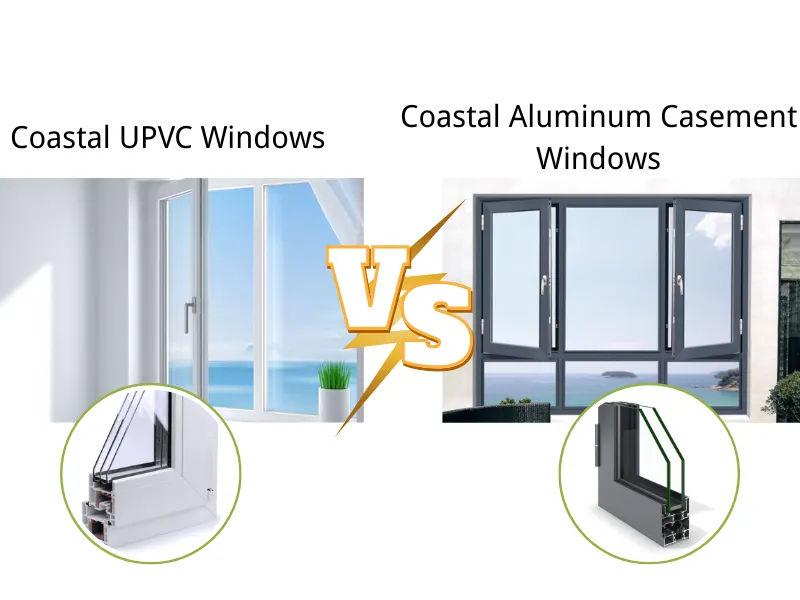
| Resistencia a la corrosión | Excellent (forms a dense, self-generated oxide layer; resistant to salt spray and acid rain) | Poor (must be galvanized or coated for protection; otherwise, rusts quickly) | For coastal projects, chemical plants, or applications requiring 30 years of maintenance-free outdoor service → Choose aluminum without hesitation. |
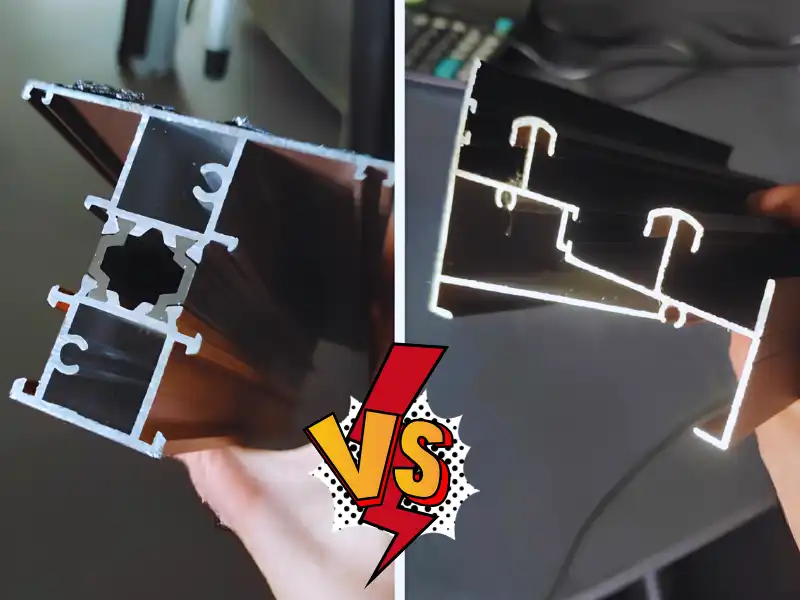
| Extrusion Formability | Excellent, minimum wall thickness ≈1 mm, capable of complex hollow sections | Difficult, minimum wall thickness ≈3 mm, extremely high cost | Thermal break structures for doors and windows, multi-chamber radiators, custom decorative strips → Only aluminum enables low-cost, high-volume extrusion production. |
| Machining Costs | Low (low cutting force, long tool life) | Relatively high (Requires carbide tools + coolant) | Aluminum offers much higher CNC machining efficiency than steel, making it economical even for small-batch custom orders. |
| 30-Year Total Cost of Ownership | Low (virtually maintenance-free) | High (requires regular rust removal and repainting) | While the initial purchase price of aluminum may be 20–50% higher than steel, factoring in 30 years of maintenance and replacement costs, aluminum actually saves money. |
II. Shenghai Global Case Study, March 2026: How Much Did Aluminum Replace Steel Save the Customer?
Case 1: 2025 Solar Mounting System Project in Australia
Customer’s Original Plan: Hot-dip galvanized steel mounting system, weighing 24 tons per megawatt; a single shipping container could only hold 12 tons, with freight costs of $12,000 per container.
Shenghai Solution: 6063-T5 aluminum brackets, integrally extruded with a silver-white anodized finish.
Actual Results: Weight reduced by 62% per megawatt; a single container can now hold 20 tons, directly reducing shipping costs by 35%; during installation, aluminum can be drilled directly with a hand drill, whereas steel requires pre-drilling at the factory, saving 40% on installation labor.
Case 2: Mexican Door and Window Factory Transitions to Thermal Break Aluminum
Client’s Original Problem: Previously manufacturing steel windows, the company faced widespread rusting in coastal villa projects just one year after delivery, leading to constant customer complaints and a severely damaged reputation.
Shenghai Solution: Provided RAL 9016 white powder-coated thermal break aluminum profiles paired with PA66 nylon thermal breaks.
Actual Results: No further rust complaints were received. The client’s retail price increased by 20% immediately, and they obtained local green building certification. They now specialize in the high-end seaside property market.
III. 3 Steps to Determine Whether Your Project Should Use Aluminum or Steel
Step 1: Will the structure be exposed long-term to harsh environments such as humidity, salt spray, or acid rain? (Coastal areas, chemical plants, unprotected outdoor locations)
→ Yes: Choose aluminum (one-time investment, 30 years of maintenance-free service)
→ No: Proceed to Step 2.
Step 2: Does the design require complex cross-sections? (Multi-chamber, heat-dissipating fins, irregular grooves, wall thickness less than 2mm)
→ Yes: Choose aluminum (only aluminum can economically achieve these designs)
→ No: Proceed to Step 3.
Step 3: Do you prioritize the “initial purchase price” or the “30-year total lifecycle cost”?
→ If your initial budget is extremely tight and you do not consider long-term maintenance costs: Steel is an option
→ If you want long-term use and the lowest total cost: Choose aluminum (maintenance costs are virtually zero, and it has a high residual value for recycling)
IV. What Can Shenghai Global Aluminum Do for You? (We Do More Than Just Sell Aluminum Bars)
We provide one-stop custom aluminum profile services from design to finished product delivery:
- Extrusion Production: Lines from 800 to 3,600 tons, max cross-section 300 mm, min wall thickness 1.0 mm (hollow/solid/special shapes).
- Alloy Grades: 6063, 6061, 6005, 6082, and custom 7075.
- Heat Treatment: In-line quenching + automated aging furnaces (T5/T6).
- CNC Precision Machining: Cutting (±0.3mm), drilling, tapping, milling, punching.
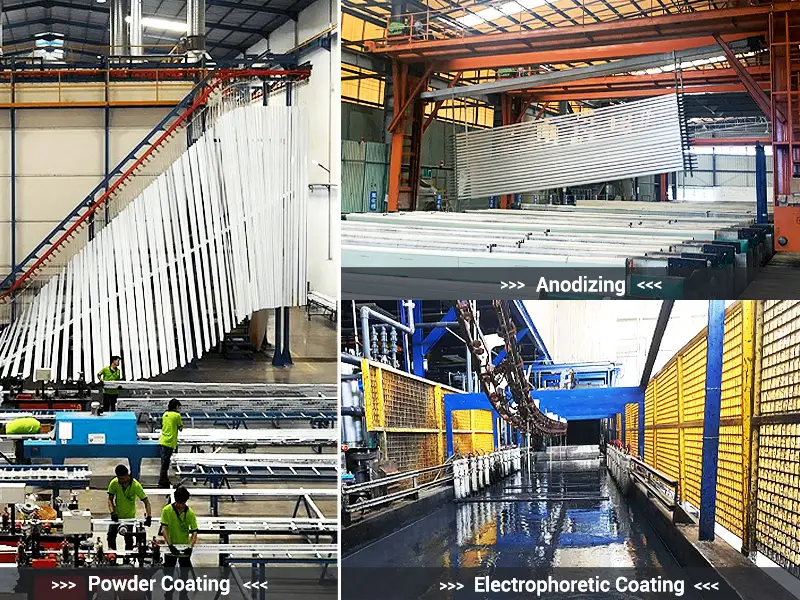
- In-house Surface Treatment: Anodizing, powder coating (RAL full range), wood grain transfer, electrophoretic coating.
- Export Services: Film + paper + fumigated wooden crates; FOB/CIF; customs clearance support.
- Minimum Order: 500 kg (approx. 200 meters of standard profiles), mixed models allowed.
- Plazo de entrega: 7–10 days for new mold prototyping; 15–25 days for mass production.
V. Top 5 Frequently Asked Questions (FAQ)
Q1: Aluminum is less strong than steel. Is it safe for structural applications?A: For the vast majority of non-heavy-load structures—such as doors, windows, curtain walls, solar mounting systems, and industrial frames—the strength of 6063/6061 aluminum alloy is entirely sufficient. We have conducted rigorous mechanical testing and verified performance through actual projects; as long as the design is sound, safety is not an issue.
Q2: How much more expensive is aluminum compared to steel?A: On a per-kilogram basis, aluminum is typically 2–3 times the price of steel. However, when calculated per meter, per functional unit, or over the full lifecycle, aluminum often results in lower total costs for many projects. Please feel free to send us your BOM, and we can provide a detailed cost comparison.
Q3: Do you accept small-batch trial orders?A: Absolutely. We have dedicated small-batch production lines specifically for startup brands and small-to-medium-sized contractors. The minimum order is 500 kg, and we support mixed loading of different models in the same batch, significantly reducing trial-and-error costs for our customers.
Q4: Aluminum softens at high temperatures—can it be used for chimneys or high-temperature piping?A: We do not recommend it. When used in environments exceeding 120°C for extended periods, aluminum’s strength decreases significantly. For such high-temperature applications, please use steel or stainless steel.
Q5: Which countries do you primarily export to?A: Our products are exported to over 50 countries and regions, including Germany, the United States, Australia, Japan, Canada, Mexico, South Korea, and the Middle East. With extensive export experience, we can assist you with any export-related issues.