
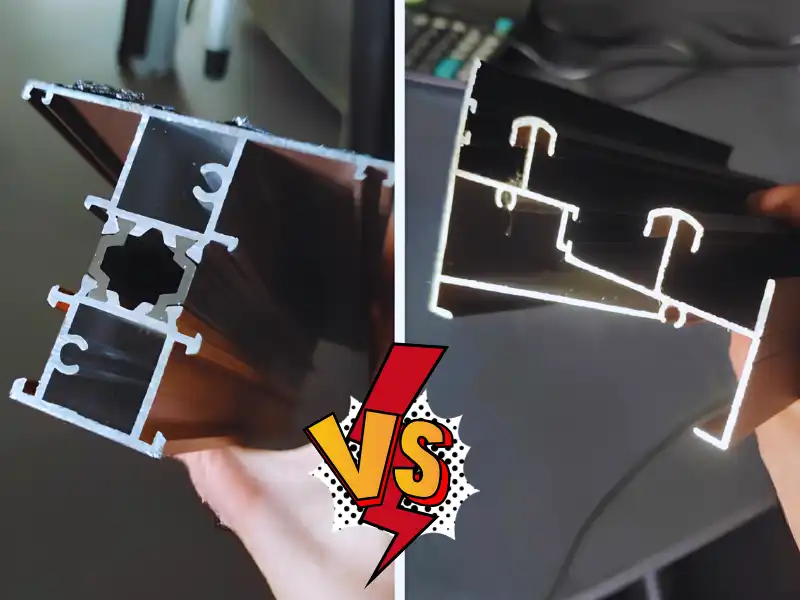
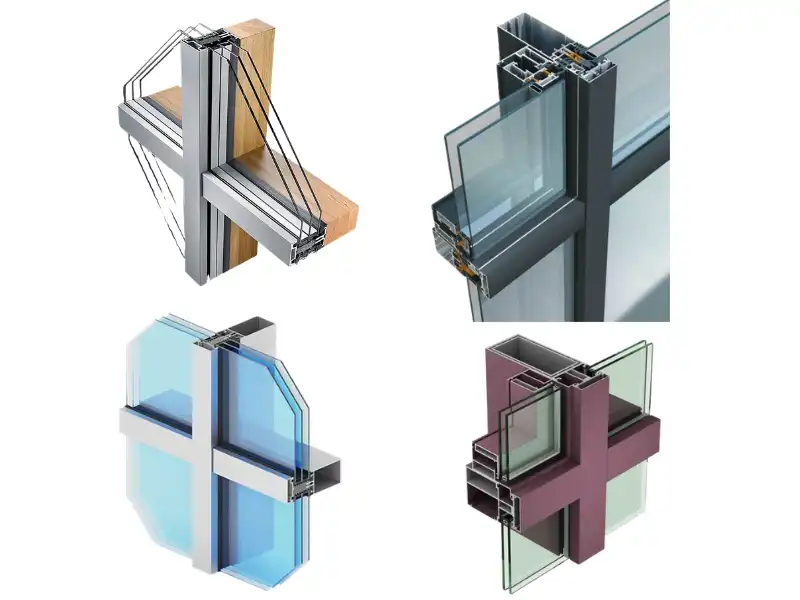
Persianas Enrollables de Aleación de Aluminio vs. Persianas Enrollables de Acero Galvanizado: ¿Cuál es mejor?
发布时间:2026-06-01浏览量:14
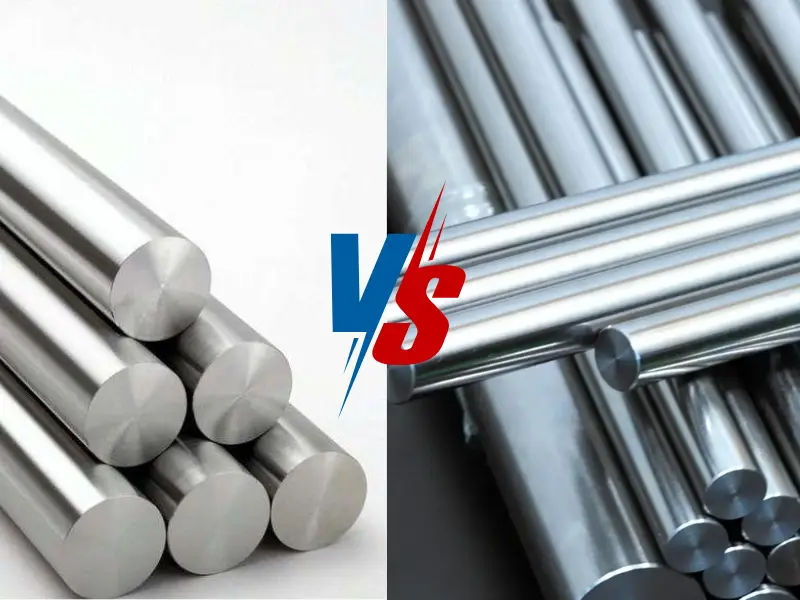
When comparing aluminum alloy rolling shutters with galvanized steel counterparts, aluminum alloy stands out due to its comprehensive advantages: lightweight construction, complete resistance to rust, high-temperature deformation resistance, excellent thermal and acoustic insulation, quiet operation, and an exceptionally long service life (15–20 years). These attributes make it particularly suitable for coastal regions with high salt-mist levels, hot and dusty environments such as the Middle East, and high-end commercial projects. Although the initial cost is higher than that of galvanized steel, the total lifecycle cost is lower, offering greater peace of mind and cost-effectiveness over the long term. The sole advantage of galvanized steel is its low initial purchase price; however, it is prone to rusting, susceptible to deformation under high temperatures, noisy during operation, and requires frequent maintenance, making it suitable only for short-term use or dry inland environments. Consequently, for projects prioritizing long-term value, resilience in harsh environments, or a premium user experience, aluminum alloy represents the more prudent choice.
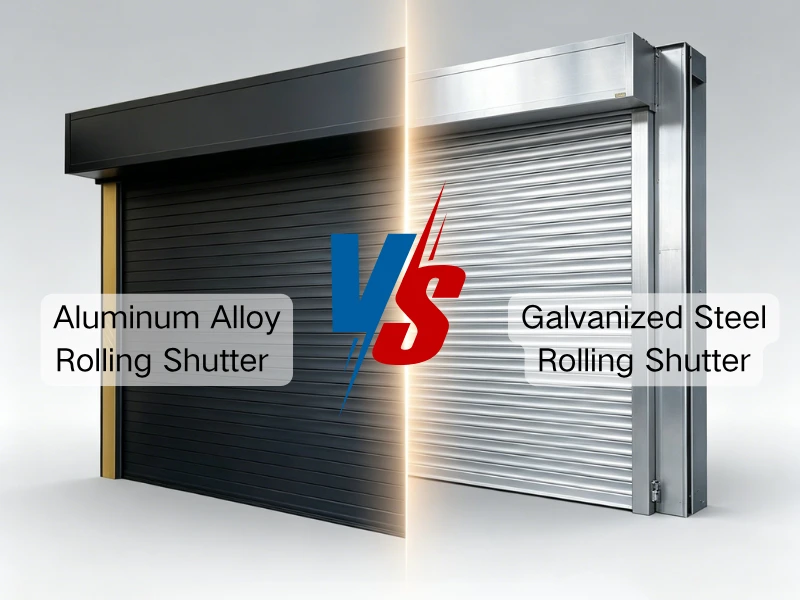
Aluminum alloy rolling shutters offer superior corrosion resistance and aesthetic appeal compared to traditional galvanized steel shutters for long-term projects.
I. Summary of Core Performance Comparisons
| Specification Metrics | 6063-T5 Aluminum Alloy Profiles (Shenghai Global) | Galvanized Steel |
|---|---|---|
| Manufacturing Process | High-pressure extrusion (enables complex reinforcing ribs and internal cavities) | Cold roll forming (limited to thin-walled, flat structures) |
| Profile Structure | Double-layer hollow cavity or injected polyurethane foam filling | Single-layer flat profile; simple, monolithic structure |
| Material Density | Approx. 2.7 g/cm³ (Lightweight; minimizes wear on motors) | Approx. 7.8 g/cm³ (High self-weight; requires high-torque motors) |
| Rust Resistance | Excellent (Immune to "red rust"; optional AA25 anodizing available) | Poor (Rapid oxidation occurs once the zinc coating is scratched) |
| Thermal Insulation Efficiency | High (Supports thermal-break designs and insulating foam filling options) | Low (High thermal conductivity) |
II. Fundamental Differences in Manufacturing Processes
Aluminum Alloy Rolling Shutters (Extrusion Molding): The core process involves heating aluminum billets to approximately 500°C to soften them, and then—using Shenghai Global's high-tonnage extrusion presses—forcing the material through specially designed dies. This manufacturing process enables the creation of complex, integrally formed slat profiles (such as multi-chamber structures and interlocking hooks). While the tooling costs are high, this method endows the product with inherent corrosion resistance and provides internal cavities capable of accommodating thermal insulation materials.
Galvanized Steel Roller Shutters (Roll-Formed): Flat steel sheets are passed through a series of continuous rollers and cold-formed at ambient temperature. This highly efficient cold-working process produces slats with high structural rigidity; however, due to physical limitations, it can only generate simple bent cross-sections and cannot form enclosed cavities. Furthermore, dimensional accuracy is limited to ±0.5 mm, and variations in steel sheet thickness can compromise the quality of the final installation.
III. Why Are More and More Global Projects Choosing Aluminum Profile Roller Shutters?
Lightweight yet Strong: The density of aluminum is approximately 30% that of steel. The 6063-T5 alloy supplied by Shenghai Global possesses exceptional tensile strength; even after the addition of reinforcing ribs, the slats remain remarkably lightweight. This significantly reduces the load on the motor during operation, thereby extending the overall service life of the system. We have successfully implemented these systems in regions such as the UAE (Dubai), Saudi Arabia (Riyadh), and Qatar (Doha), where they continue to operate smoothly even when exposed to extreme temperatures exceeding 50°C and harsh, dust-laden environments.
Chemical Stability and Corrosion Resistance: An aluminum oxide film naturally forms on the surface of aluminum, acting as a barrier that prevents atmospheric moisture and oxygen from reacting with the metal. This provides corrosion resistance far superior to that of steel. Furthermore, surface treatments—such as AA25 anodizing—deliver a quantum leap in corrosion resistance performance.
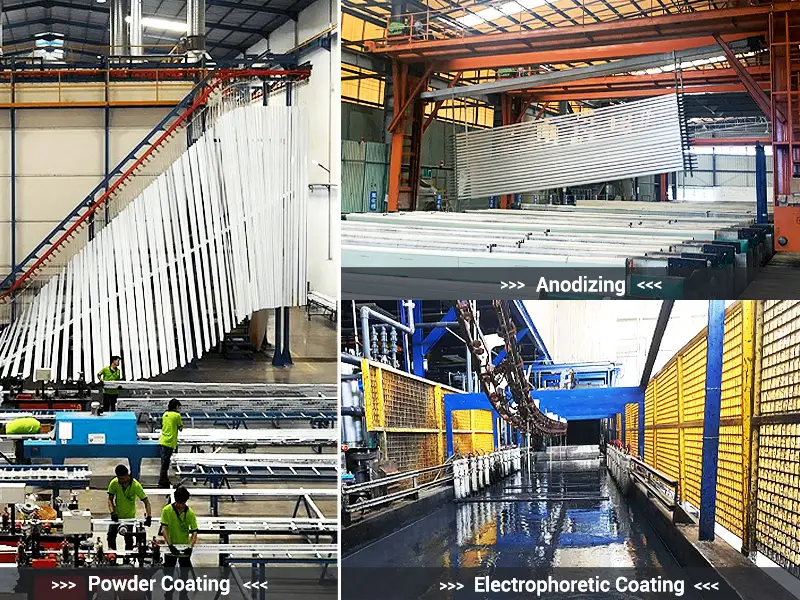
Exquisite Custom Finishes: Our production lines for recubrimiento en polvo, anodizado, and wood-grain transfer printing allow us to cater to a diverse range of architectural styles. Available finishes include metallic textures, natural wood grains, minimalist matte black, champagne, and bright gold.
Exceptional High-Temperature Resistance: The 6063-T5 alloy features a low coefficient of thermal expansion—only 23.1 × 10⁻⁶/°C. In regions where summer surface temperatures frequently exceed 60°C, the shutters continue to open and close smoothly, effectively preventing the jamming and mechanical noise often associated with the thermal expansion of steel.
Exceptional Lifespan: Under normal conditions, aluminum alloy doors boast a service life exceeding 20 years—a durability unmatched by galvanized steel doors.
Superior Acoustic Performance: Aluminum doors operate with minimal sound; when paired with silent guide rails and polyurethane-filled slats, they generate virtually no noise.
IV. The Shortcomings of Galvanized Steel Roller Shutters
- Limited Aesthetics: Color options are restricted, and the paint finish is prone to peeling.
- Cumbersome and Heavy: Their substantial weight complicates installation; furthermore, the high inertia places heavy demands on the motor's power output, thereby shortening the motor's service life.
- Corrosion Risk (A Critical Flaw): Rust prevention relies entirely on the galvanized coating. Once scratched or compromised, corrosion spreads rapidly.
- Noisy Operation: The metal slats produce a distinct "clanking" sound as they roll up. If the product features a hollow, thin-gauge steel design, opening and closing the door results in a harsh, hollow resonance.
- Susceptibility to High-Temperature Deformation: At temperatures exceeding 40°C, steel slats undergo significant thermal expansion, frequently leading to operational jamming, abnormal noises, or even complete mechanical seizure.
- Fire Hazards: Galvanized steel is prone to deformation when exposed to fire and emits toxic fumes during combustion, resulting in poor fire safety performance.
V. How to Choose?
Opt for Steel Roller Shutters: Suitable for industrial storage projects with stringent requirements for physical anti-theft security, tight budgets, or those requiring only a temporary enclosure.
Opt for Aluminum Alloy Roller Shutters (Shenghai Global Solution): If you seek a "one-and-done" solution—prioritizing long-term value characterized by low maintenance costs, quiet operation, corrosion resistance, and aesthetic appeal—aluminum alloy roller shutters undoubtedly represent a superior investment.