


Disipadores de cobre frente a disipadores de aluminio: Una mirada directa desde la línea de extrusión
发布时间:2026-03-02浏览量:27
Search online for heat sink materials, and you will hit a wall of debates. Is copper always better? Can we just die-cast the parts to save a few dollars? What alloy actually works?
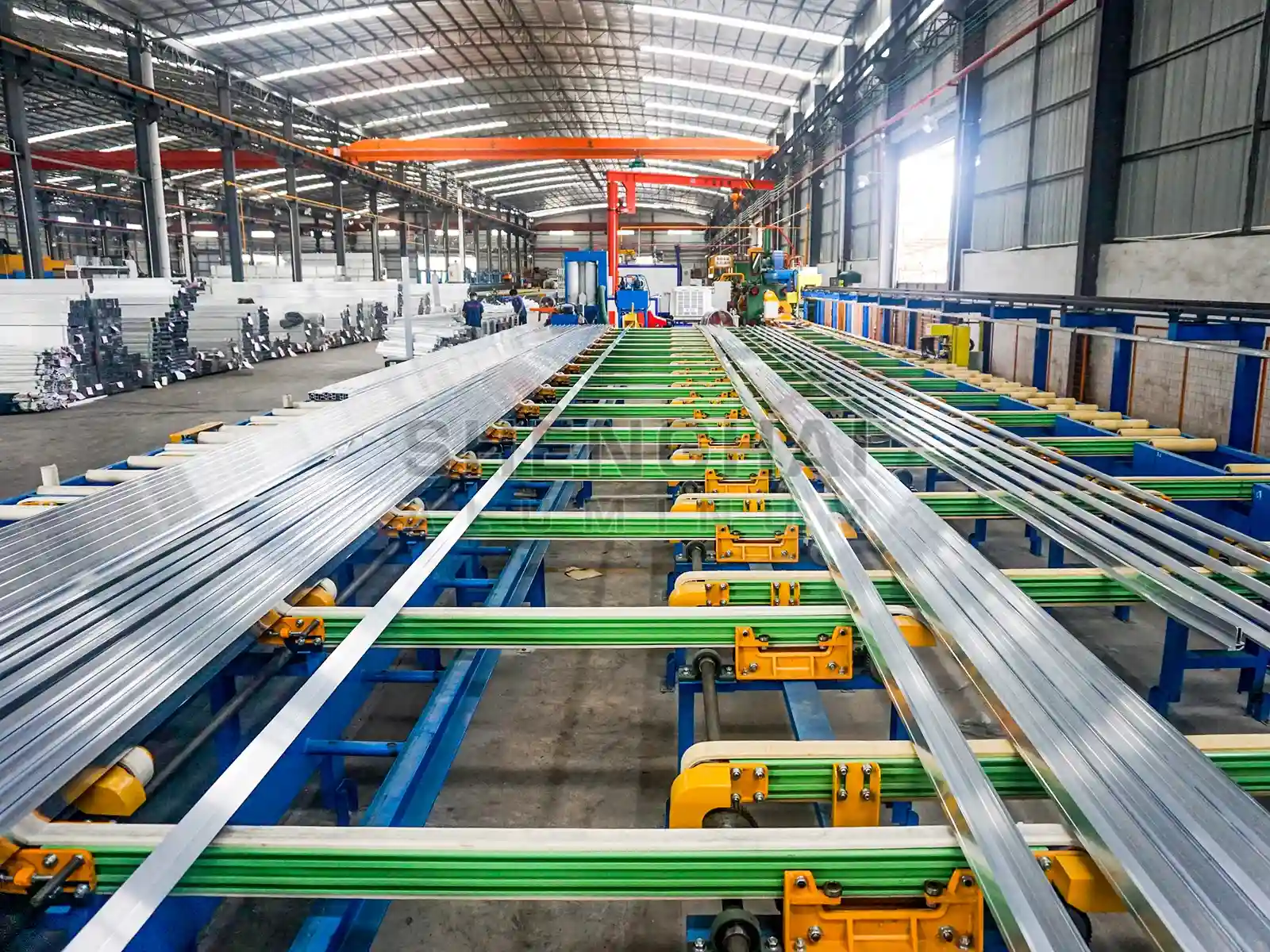
We see these questions constantly. At Shenghai Global, we push thousands of tons of aluminum through our extrusion presses every year inside our 23,000-square-meter facility. We don't guess based on forum threads. We build these thermal solutions daily for global B2B clients. Let’s skip the fluff and look at the actual manufacturing reality of aluminum heat sinks.
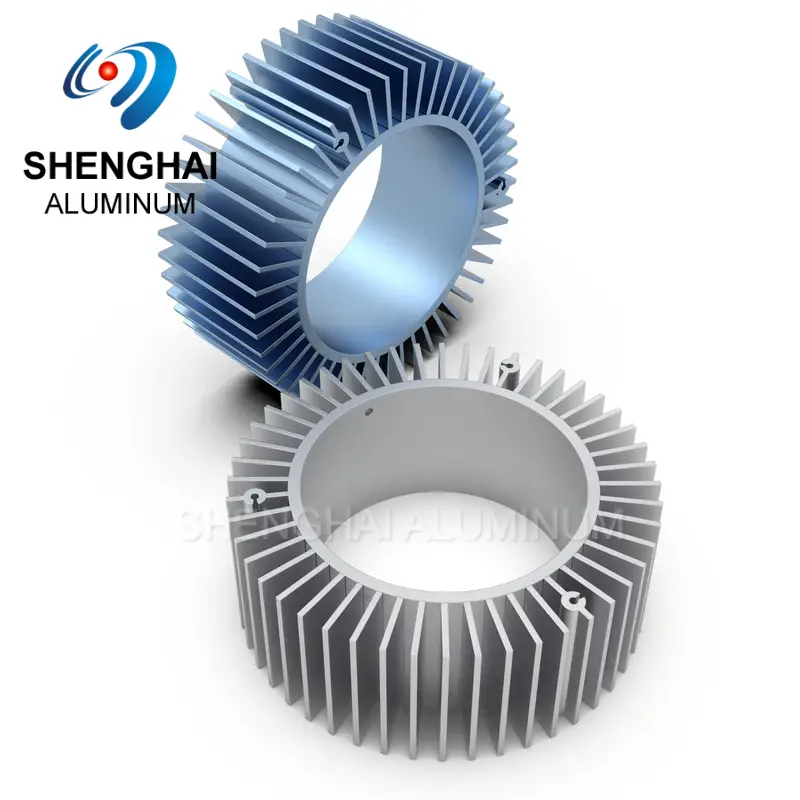
Why Does Aluminum Dominate Thermal Management?
Engineers do not pick aluminum just because it is cheap. They pick it because the math works.
Look at a periodic table and you will see other metals with higher thermal conductivity. But aluminum absorbs and sheds heat incredibly fast while weighing a third of what copper does. When you are quoting a production run of 10,000 LED fixtures or heavy industrial power supplies, weight matters. Shipping costs matter. Aluminum extrusions let us pack a massive amount of surface area into cooling fins without turning the final product into a heavy brick.
The Copper vs. Aluminum Argument
Let's settle this. Copper absorbs heat faster than aluminum. That is basic physics. But here is the catch that a lot of people miss: copper is actually terrible at letting that heat go into the air.
Add the fact that copper is heavy and ridiculously expensive, and you see why it is rarely used alone. Look at high-end CPU coolers. They almost never use solid copper blocks. Instead, they use a small copper base to pull heat off the chip, which is then welded to a huge array of extruded aluminum fins to actually get rid of the heat. For 95% of commercial electronics, a pure extruded aluminum sink is exactly what you need. You get the best performance at the best price.
Why We Push Buyers Away from Die-Casting
A common trap for purchasing teams is asking for die-cast heat sinks just because the design has a complex shape. This is a bad idea for cooling.
Melting aluminum and shooting it into a mold introduces tiny air bubbles. In the industry, we call it porosity. Plus, casting requires specific alloys that simply do not conduct heat well.
Extrusion is entirely different. We take a solid billet of premium aluminum, heat it, and ram it through a steel die with thousands of tons of pressure. This aligns the metal's grain structure. The result? A dense, highly conductive thermal path. If you need serious cooling—especially with straight fins—extrusion beats casting every single time.
The Exact Alloy You Should Be Specifying
No, you cannot melt down scrap metal to cool a high-power system. Waste aluminum is full of iron and silicon impurities that destroy thermal performance. We strictly use virgin billets.
The absolute standard for electronic heat sinks is Aluminio 6063-T5.
Why? It conducts heat beautifully (around 200 W/m·K). It flows smoothly through our extrusion dies to make super thin, tight fin profiles. And it takes anodizing like a champ. In fact, a black anodized 6063-T5 heat sink actually radiates heat better than a raw metal one.
Stop Modifying Fins with Hand Tools
We often read posts about guys sawing or snapping off heat sink fins to make them fit into an enclosure. Please don't do this.
Sawing or bending fins wrecks the airflow channels and weakens the base. Need a weird fin pitch? Specific mounting holes? A step-cut? That is exactly what CNC machines are for. When you work directly with a source manufacturer like Shenghai Global, you get the extrusion, the CNC milling, and the anodizing done under one roof. The thermal dynamics stay exactly how the engineers designed them.
Frequently Asked Questions (FAQ) About Aluminum Heat Sinks
-
Q:What are the main advantages of an aluminum heat sink for a CPU?
A:The primary advantages are its incredible surface-area-to-weight ratio, rapid heat dissipation into the surrounding air, and cost-effectiveness. A well-designed extruded aluminum heat sink prevents the CPU from thermal throttling while keeping the total weight low, ensuring the motherboard is not subjected to excessive mechanical stress.
-
Q:What grade of aluminum are electronics heat sinks made of?
A:The vast majority of professional extruded heat sinks are manufactured using 6063-T5 aluminum. This specific alloy grade provides the optimal mix of high thermal conductivity, structural rigidity, and the malleability required to extrude highly dense, intricate fin profiles.
-
Q:Can I form reliable heat sinks from waste or recycled aluminum?
A:No, this is highly discouraged for commercial or high-performance applications. Waste aluminum contains unpredictable impurities that drastically reduce the thermal conductivity of the metal. For reliable, calculated cooling, manufacturers must use pure, virgin aluminum billets.
-
Q:How should I remove or modify the fins of an aluminum heat sink?
A:You should never attempt to manually break or saw off cooling fins, as this ruins the airflow dynamics and damages the base. Any modifications, step-cuts, or mounting holes must be executed through precise CNC milling by the manufacturer to maintain the heat sink's thermal efficiency.
-
Q:What are the distinct differences between die-cast aluminum and extruded heat sinks?
A:Extruded heat sinks are pressed from solid 6063 aluminum, offering superior thermal conductivity due to a dense, aligned grain structure. Die-cast heat sinks use liquid alloys poured into molds; while they allow for more complex and irregular shapes, their thermal performance is noticeably inferior due to material impurities and microscopic internal porosity.